
REVIEW · NEW ZEALAND KAYAKING TOURS
Whangamata: Donut Island Guided Kayaking Experience
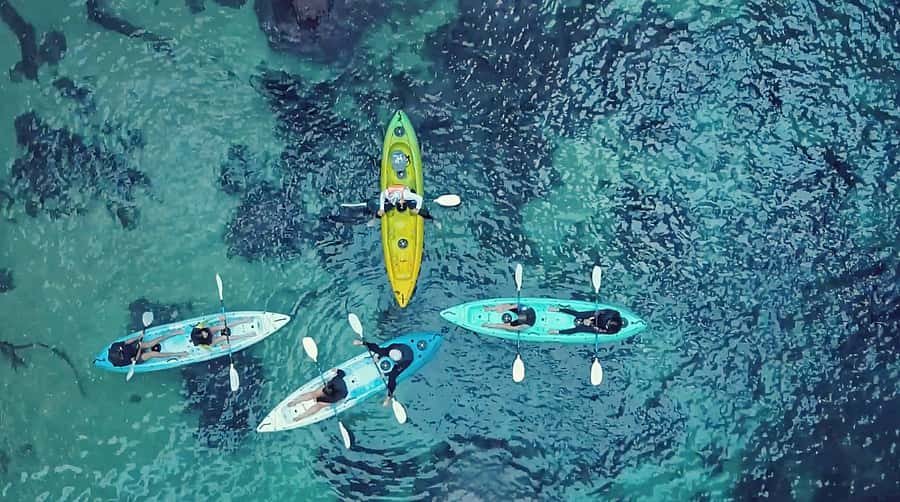
Donut Island is the star here: a short paddle from Whangamata Beach leads to a narrow rocky entrance and, when the sea allows, a turquoise lagoon inside a wildlife sanctuary. The volcanic cliffs, native bush, and quiet water make this feel far removed from town, even though the island sits only about 600 metres offshore.
I like two things in particular. First, the small groups, capped at eight, let guides such as Dylan, Hannah, Mauro, and Francois give hands-on help. Second, the backup plan is worthwhile: a beach stop on another island, often paired with kawakawa tea and local stories, keeps a rough-weather day from becoming a wasted booking.
The main catch is simple: you cannot count on entering Donut Island. Wind, waves, swell, tide, and the narrow opening decide the matter. Kayaking also carries a real risk of capsizing around rocks and moving water, so this is an active outing, not a boat ride with a paddle for decoration.
Key points at a glance
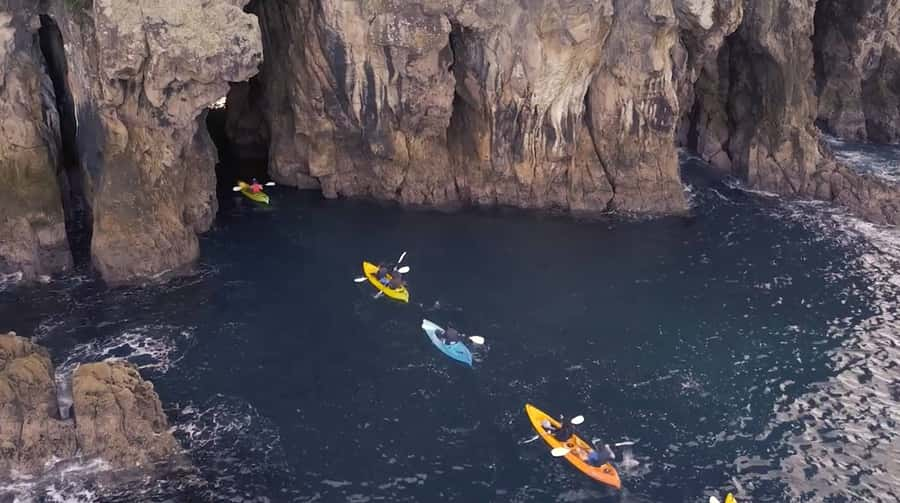
- 600-metre paddle from Whangamata Beach: The short crossing gets you quickly from sand to island scenery.
- A narrow entrance leads to a lagoon: Kayaks and paddleboards are small enough to reach the inner water when conditions are safe.
- Weather controls the main attraction: Rough seas can keep you outside the island, even after you have arrived.
- Small groups make a difference: No more than eight people join each outing, with an English-speaking local guide.
- Kawakawa tea adds a local touch: The alternative island stop can include tea made from native leaves and time on a remote beach.
- Swimming is optional: Bring swimwear, a towel, sunscreen, water, sandals, and dry clothes.
Why Donut Island is worth the short paddle
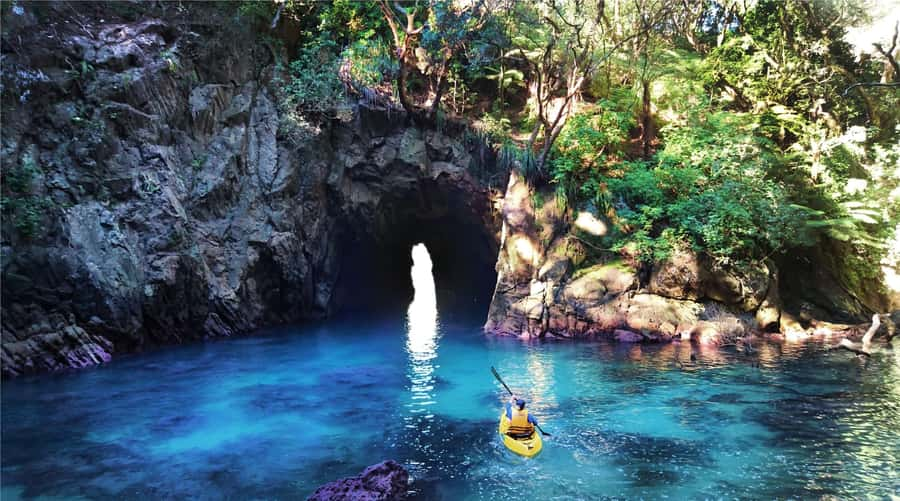
Donut Island, also known as Whenuakura, is part of a group of offshore islands with wildlife sanctuary status. Its shape does much of the work: from the outside, it is a rocky island with native growth; inside, a narrow opening reveals a lagoon ringed by volcanic rock.
That entrance is the reason this trip feels special. A standard sightseeing boat cannot simply push through the opening. A kayak or paddleboard can fit through when the swell, wind, and water level cooperate, bringing you into a sheltered space that feels completely different from the open coast.
I like the scale of the outing. You are not signing up for a full-day expedition or a long transfer by vehicle. The meeting point is at 100 Pipi Road in Whangamata, and the paddle begins from Whangamata Beach. In roughly two hours, you can get on the water, reach the islands, hear about the area, and return.
The sanctuary setting also gives the trip a clear purpose beyond photographs. Guides ask you to treat the islands carefully, since the future of the native plants and wildlife depends on limited disturbance. Keep your hands, food, and rubbish under control, and let the guide set the pace around rocks and bird habitat.
More Island Kayak Tours in New Zealand
- Sunset kayak tour to Rangitoto Island
★ 5.0 · 168 reviews - Day Cruise & Island Tour – Snorkel/Wildlife/Paddleboard/Islands
★ 5.0 · 121 reviews - Day sea kayak tour Rangitoto Island
★ 5.0 · 79 reviews
What the two-hour outing feels like
The exact order can change with the sea, but the basic rhythm is easy to understand. You meet the guide, collect a kayak and paddle, put on a life jacket and wetsuit, and receive instructions before setting off. A dry bag is included for small essentials, but you should still keep your packing light.
From the beach, the group paddles the short distance toward Donut Island. Six hundred metres is not a major crossing, but wind can make it feel much longer. You will be working with the water, not simply floating toward the island, and the guide will watch the group closely.
This is a good place for first-time kayakers to learn the basics. Several guides have been praised for calm assistance and clear support when someone capsized or struggled in rough water. That does not remove the need for care, but it means you are not left to solve every problem alone.
Expect splashes. A swimsuit under the wetsuit is sensible, and a change of clothes is more than a nice extra. Beach sandals can help around the shore, while sunscreen, a hat, and drinking water cover the simple needs of a sunny day.
Entering the volcanic island lagoon
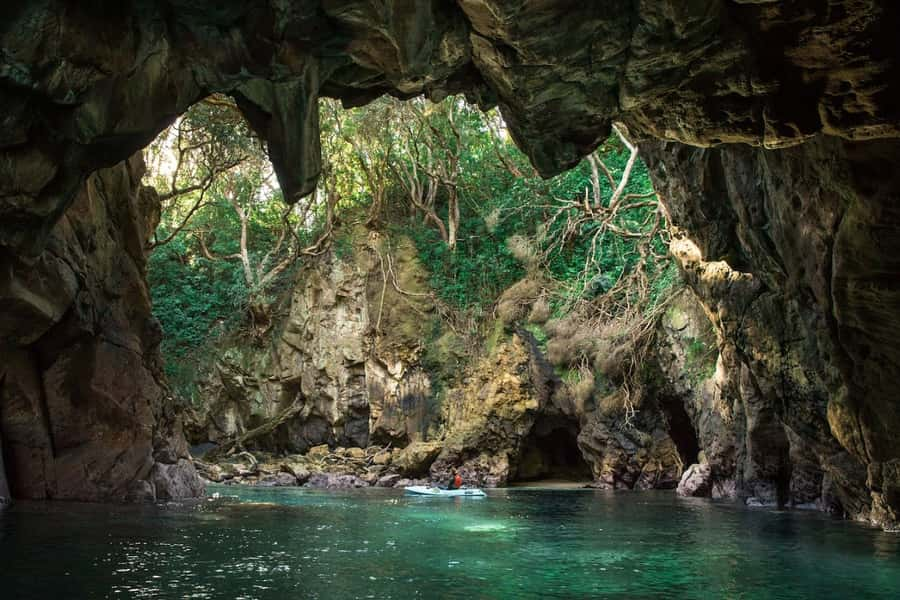
The approach is the most exciting section of the paddle. You move from open coastal water toward dark volcanic rock, native bush, and a small entrance where the sea can push through with surprising force. The guide decides if the opening is safe to enter.
At high or more favorable water conditions, the kayaks can pass into the lagoon. One person described the opening as smaller than expected at low tide, with rough water making the entry harder. That is useful advice: a photograph can make the cave-like entrance look generous, but the real passage depends on water movement and timing.
Inside, the reward is not a long walk or a large attraction. You remain in the kayak and take in the enclosed water, steep rock, and plant life from close range. The inner space is compact, so the visit may feel brief. The magic comes from the contrast between the exposed coast and the calm, unusual shape of the lagoon.
Bring a camera only if you can keep it secure. The included dry bag helps, but you should not expect to stand on the island for an extended exploration. One practical criticism of the outing is that more time could be spent inside Donut Island rather than taking photographs from the kayak or moving on to the second stop.
The alternative island stop and kawakawa tea
If Donut Island is unsafe to enter, the guide may steer the group toward another island beach. This is not a token consolation. You can still see coastal rock, native vegetation, and remote shoreline, then pause on the beach instead of turning straight back.
The stop can include kawakawa tea, made from local leaves. It is a small detail, but it gives the trip a stronger connection to place than a quick paddle and a few scenic photos. Guides also share information about Whenuakura, local wildlife, conservation, culture, and the history of the Whangamata area.
I would value this backup most on a windy day. Several guides have been praised for making rough conditions feel manageable, and the alternative beach and tea have turned an obstructed Donut Island visit into a satisfying morning. Still, you should book with the right expectation: the backup visit is worthwhile, but it is not the same as paddling into the lagoon.
Same water, a different paddle:
- Cathedral Cove Kayak Tour
★ 5.0 · 887 reviews - Twilight Glowworm Kayak Tour – Lake Karapiro
★ 5.0 · 493 reviews - Wildlife Sea Kayaking Tour – Kaikoura
★ 5.0 · 467 reviews - Seal Kayaking Adventure in Kaikoura
★ 5.0 · 422 reviews
Wildlife, plants, and responsible access
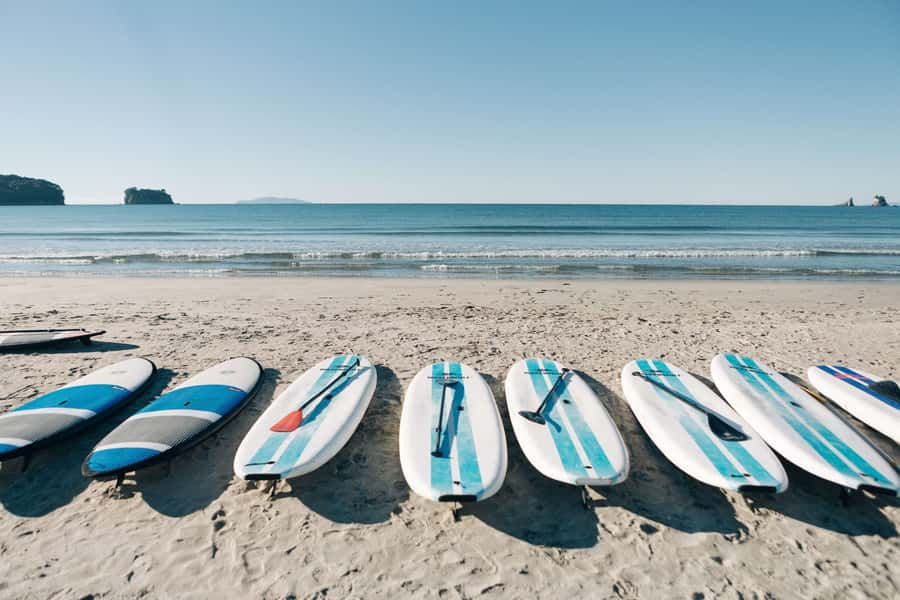
The islands have wildlife sanctuary status, so the natural setting is not just decoration around the kayaking. You may notice native bush and birdlife from the water, and blue penguins have been seen around the cave area. Wildlife sightings are never promised, and you should not approach or disturb animals to get a better view.
The guides also explain why access is limited. The islands are being protected, and a small, guided group has less impact than a steady stream of independent visitors. That makes the group limit of eight especially useful. You get a quieter experience and reduce pressure on a fragile site.
You will probably spend most of the tour looking outward from the kayak rather than walking inland. The value lies in seeing a protected island from the water, listening to local explanations, and understanding why the entrance and shoreline need care.
How difficult is the kayaking?
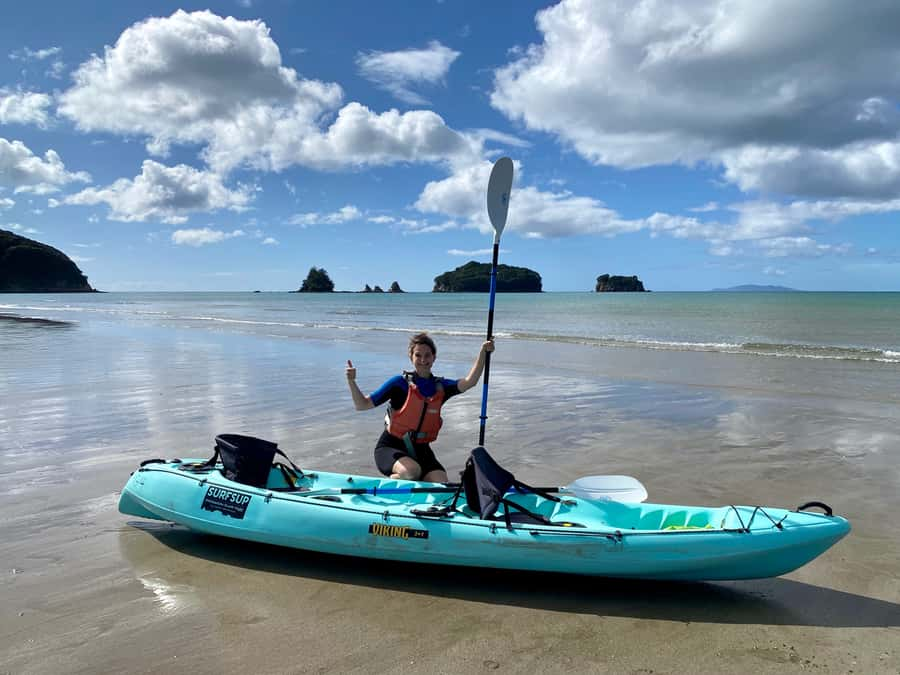
The company presents this as suitable for people new to kayaking, and the short duration helps. You do not need to commit to a long coastal trip. Guides provide the kayak, paddle, life jacket, wetsuit, and basic support.
Still, first-time friendly does not mean effortless. Wind and waves can make the paddle demanding, especially near the island entrance. The stated risks include capsizing in deep water, contact with rocks, waves, and changing wind. You should be comfortable getting wet and following safety instructions.
If you fall in, the group and guide can help, but you should still be honest about your health before starting. Existing health problems should be disclosed. The activity is not suitable for pregnant women, wheelchair users, visually impaired people, or anyone over 275 pounds, or 125 kilograms.
Swimming is allowed when conditions and the guide make it sensible. Do not treat that option as guaranteed free time. The sea remains the sea, and the guide controls the safe parts of the outing.
Guides and group size
The guide is a major part of this experience. Names attached to recent outings include Dylan, Dakota, Hannah, Mauro, Francois, Molly, G, Jim, Ben, Elliot, and Bella. Staff can change, but the pattern is clear: expect an English-speaking local guide who manages the route, watches the weather, and explains the islands.
The strongest guide moments involve practical help. Dylan and Dakota assisted a participant who fell in, while Jim and Ben helped a group feel at ease in rough conditions. Mauro has been praised for sharing information about wildlife and the island, and other guides have added humor, conservation details, and stories about local culture.
With a maximum of eight participants, the outing should feel more personal than a large group excursion. The limit also matters for safety. In changing water, a guide can keep the kayaks closer together and respond more quickly if someone needs help.
Weather is the deciding factor
I would check the forecast before leaving for Whangamata, then call the operator if conditions look uncertain. The sea can change from one day to the next, and even from one hour to the next.
The local provider can cancel if weather makes the trip unsafe. The usual solution is an alternative date or another activity, with a full refund if neither option works. You can also cancel up to 24 hours before the start for a full refund, which is helpful when your plans are still moving around.
Do not judge the outing only by the forecast for Whangamata town. Wind and swell around the island entrance are what matter most. A day that looks fine from the beach may still prevent entry into the lagoon, while a cloudy day can produce calm enough water for the main route.
Is $62 a fair price?
At $62 per person, the price is reasonable for a guided two-hour water activity, especially since it includes the kayak, paddle, life jacket, wetsuit, dry bag, and local guide. You are paying for equipment, instruction, route planning, and access to a place where independent entry is not always practical.
The value is strongest when you enter Donut Island and get a calm period inside the lagoon. That is the experience most people picture when booking. The value becomes less direct if rough conditions lead to the alternative island, though the beach stop, tea, local information, and guided coastal paddle still provide a complete outing.
Food and drinks are not included. Bring water and eat before or after, since two hours on the water can feel surprisingly tiring. You should also budget a little time for changing clothes after the paddle.
Who should book this experience?
I would choose this tour if you want a short, scenic adventure rather than a long kayak trip. It suits couples, friends, solo visitors, and first-time kayakers who can handle splashes and basic physical effort.
It is also a good choice if you care about local stories and conservation, not just a striking view. The kawakawa tea and explanations about Whenuakura add meaning to the scenery without turning the trip into a lecture.
I would think twice if your entire reason for booking is the inner lagoon. Conditions may prevent entry, and even a successful visit is likely to be a short kayak-based look rather than a long island exploration. If that possibility would ruin your day, wait for a favorable forecast and keep your schedule flexible.
Practical details before you go
Meet at 100 Pipi Road, Whangamata 3620. Check the available start times when booking, since the tour runs for two hours and departure times can vary.
Wear swimwear under the provided wetsuit. Pack a beach towel, sunscreen, hat, water, sandals, and a full change of clothes. Alcohol and drugs are not allowed.
The outing is conducted in English. You can reserve now and pay later, and free cancellation is available up to 24 hours before the activity. These policies help, but weather remains the key uncertainty.
Should you book Donut Island kayaking?
Yes, if you want a compact Whangamata adventure with real scenery, a small group, and a guide who can adapt to the sea. The lagoon, volcanic entrance, wildlife sanctuary, and local tea make this more memorable than a routine beach paddle.
Book it with an open mind about the route. Donut Island itself is not guaranteed, and the water can be rough. If you accept that, the alternative beach and cultural details make the $62 price fair. For the best chance of entering the lagoon, choose a calm-looking day, arrive prepared to get wet, and give the guide the final say.
FAQ
How long is the Donut Island kayaking experience?
The activity lasts two hours, including the paddle from Whangamata Beach, time around the islands, and the return.
How far is Donut Island from Whangamata Beach?
Donut Island is about 600 metres from Whangamata Beach.
Is kayaking into the lagoon guaranteed?
No. Wind, swell, waves, rocks, and water conditions can prevent safe entry. The guide may use an alternative island beach instead.
What equipment is included?
The tour includes a kayak, paddle, life jacket, dry bag, wetsuit, and local English-speaking guide.
What should I bring?
Bring a hat, swimwear, sunscreen, water, a beach towel, beach sandals, and a change of clothes.
Can beginners join the kayaking tour?
Yes. The experience is described as doable for first-time kayakers, but you must understand the risk of capsizing and be able to manage changing water conditions.
What happens if the provider cancels because of weather?
The provider will seek an alternative date or activity. If neither is possible, you receive a full refund.
Newest paddling trips we have reviewed in New Zealand
- Auckland City Lights Night Kayaking Tour★ 5.0 · 21 reviews
- Motukorea / Browns Island Sea Kayak Journey★ 5.0 · 35 reviews
- Auckland Bioluminescence Kayak Tour★ 5.0 · 31 reviews
- Browns Island Motukorea Sea Kayak Tour★ 5.0 · 9 reviews
- Sunrise wildlife sea kayaking in Akaroa marine reserve★ 5.0 · 123 reviews
- Small group guided sea kayaking in Akaroa marine reserve★ 5.0 · 116 reviews
- Guided Electric Mountain Bike & Sea Kayak Tour in Akaroa★ 5.0 · 22 reviews
- Tauranga: Evening Glowworm Kayak Tour★ 4.8 · 206 reviews
Island Kayak Tours, compared.
Phang Nga Bay Sea Cave Canoeing & James Bond Island by Big Boat
Read our review →
Halong Bay Day Tour With Titop Island, Cave, Kayak & Lunch
Read our review →
James Bond Island Longtail Boat and Sea Canoe Tour
Read our review →
Islands & Caves Ha Long Cruise with Lunch & Kayaking
Read our review →
Kailua Bay, Oahu: Epic Kayak and Snorkel to Islands
Read our review →
James Bond Island with Canoeing and Lunch by Speedboat
Read our review →
Easy Ride Pedal Kayak Tour Marco Island & Naples (Pedal or Paddle
Read our review →Browse the lists this tour appears in