
REVIEW · NEW ZEALAND KAYAKING TOURS
Sunrise wildlife sea kayaking in Akaroa marine reserve
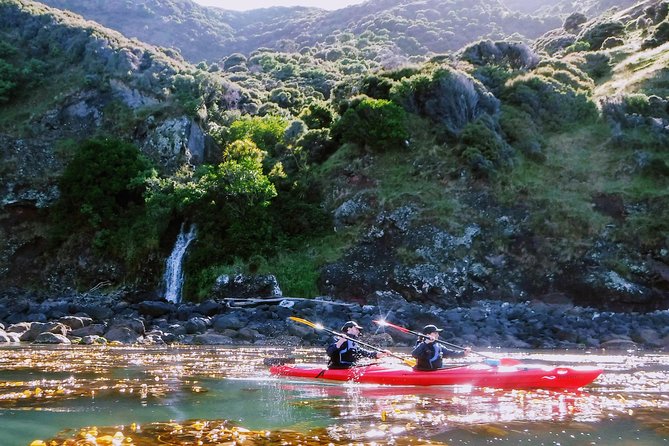
Akaroa’s best wildlife show starts early, when the water is calm, the light is soft, and the marine reserve is still quiet. You paddle through an extinct volcanic basin, first in sheltered harbor water and then along the open coast, with a real chance of seeing Hector dolphins, seals, seabirds, and perhaps penguins.
I like the small groups, capped at 15, and the fact that you get on the water before tour boats fill the harbor. I also like the practical extras: light refreshments and photographs taken from the water, so you can focus on paddling instead of protecting your phone.
The main catch is the early start and the weather dependence. You need to meet at 7:30 am, have moderate fitness, and accept that wildlife sightings are never guaranteed. Tandem kayaks may also be used, so ask if you have your heart set on a single boat.
Key points at a glance
- Sunrise departure: Start at 7:30 am, when conditions are often quiet and the harbor has fewer boats.
- Volcanic setting: Paddle inside Akaroa’s extinct volcanic basin, then head toward the rugged coastline.
- Wildlife possibilities: Keep watch for Hector dolphins, white-flippered penguins, orcas, seals, and native birds.
- Small-group format: A maximum of 15 people allows the guides to give closer help and personal commentary.
- Useful inclusions: Light refreshments and on-water photographs are included, but lunch and transport are not.
- Plan for real paddling: Children must be at least 10 and accompanied by an adult, and everyone needs moderate fitness.
Why the 7:30 am start matters
This is not a lazy breakfast excursion. You meet at the Akaroa Bowling Club on Rue Jolie at 7:30 am, then prepare for roughly three hours on the water. That early hour is the heart of the experience, not an inconvenience added to the schedule.
The operators aim to be the first kayaks out each day. That gives you a quieter harbor before larger tour boats begin moving around. Early water can also be gentler, which matters when you are learning how to steer, paddle in tandem, and handle a spray skirt for the first time.
The timing leaves most of the day open. After returning to the meeting point, you can eat lunch, explore Akaroa, or continue around Banks Peninsula without losing a full afternoon. If you are visiting from Christchurch, the tour is promoted as being about 80 minutes away, though you still need to allow enough time to arrive before the start.
I would book this only if you can manage an early morning and feel comfortable with the possibility of cool, damp conditions. One participant enjoyed the trip even in rain, while another found the tandem kayaks different from what they expected. That tells you what to pack mentally as well as physically: be flexible.
More Sea Kayaking in New Zealand
- Wildlife Sea Kayaking Tour – Kaikoura
★ 5.0 · 467 reviews - Shore Excursion Guided Sea Kayaking through Akaroa Marine Reserve
★ 5.0 · 160 reviews - Small group guided sea kayaking in Akaroa marine reserve
★ 5.0 · 116 reviews
Setting out inside an extinct volcanic basin
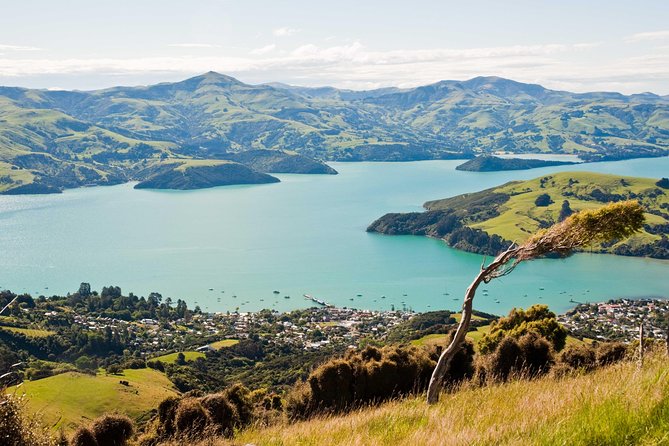
The first stage is a guided kayak safari around Akaroa Harbor. The basin was formed by volcanic activity long ago, and the enclosed water gives you a striking sense of place from the first few strokes. You are not simply paddling on a generic stretch of sea. The harbor’s shape, steep coast, and sheltered corners frame the trip.
Before heading out, you receive an orientation and basic paddling instruction. This is especially useful if you have never worn a spray skirt or shared a tandem kayak. The first part takes place in shallower water, where you can test your stroke, learn how the boat responds, and get used to working with your partner.
That practice period is valuable for families and mixed-ability groups. You do not need to arrive as an expert kayaker, but you should be ready to follow instructions and keep paddling for a substantial part of the outing. The tour is not a motorboat cruise with a few minutes of casual paddling.
The small-group limit helps here. With no more than 15 people, a guide can watch how the group is moving and offer corrections. Guides such as James, John, and Peter have been praised for clear explanations, local facts, and friendly help. James, in particular, brought plenty of regional detail to his morning groups, while Peter handled explanations during a rainy sunrise outing.
From sheltered water to the open coast
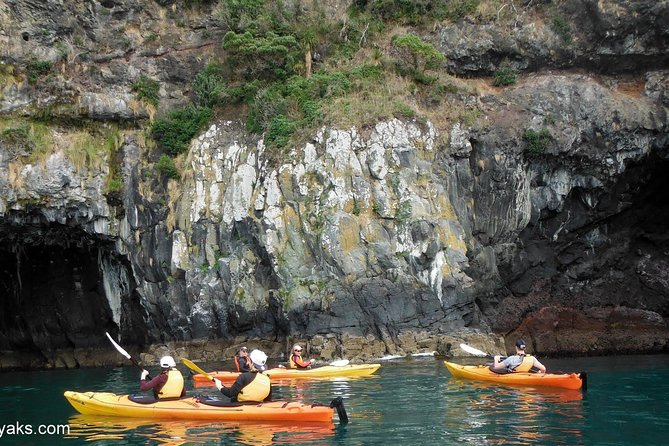
Once everyone is comfortable, the group can move beyond the shallows. You may paddle onto gently rolling waves and follow the harbor toward more open sections of coastline. Conditions and the group’s ability shape the exact route, so do not expect a fixed path on every date.
That flexibility can improve the day. A group once changed plans because the weather was good and went farther out than expected. The guide explained the adjustment clearly, which is exactly what you want when sea conditions change. A responsible guide should put safety before a promised route, even if that means less distance.
The coast gives you broad views over Akaroa’s rugged edges. From a kayak, you sit close to the water and move quietly, without an engine between you and the surroundings. That low-noise approach is one of the strongest reasons to choose this trip over a larger wildlife boat.
The trade-off is that the sea can feel more physical than the harbor. Even gentle waves require balance and teamwork, especially in a tandem boat. If you are new to kayaking, listen closely during the orientation and tell the guide if you need help. The stated fitness level is moderate, not strenuous expedition level, but you should still expect active participation.
Wildlife without engine noise
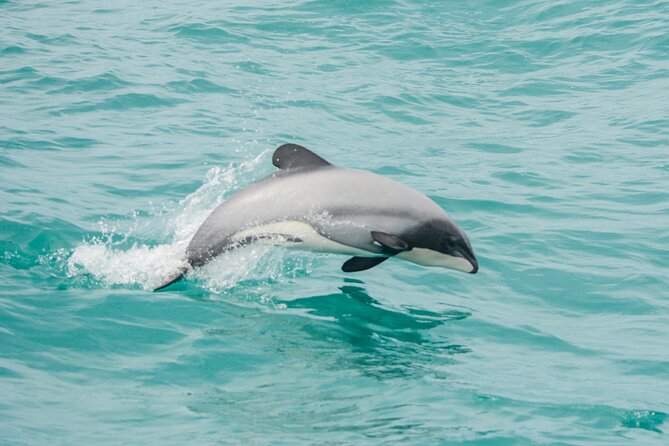
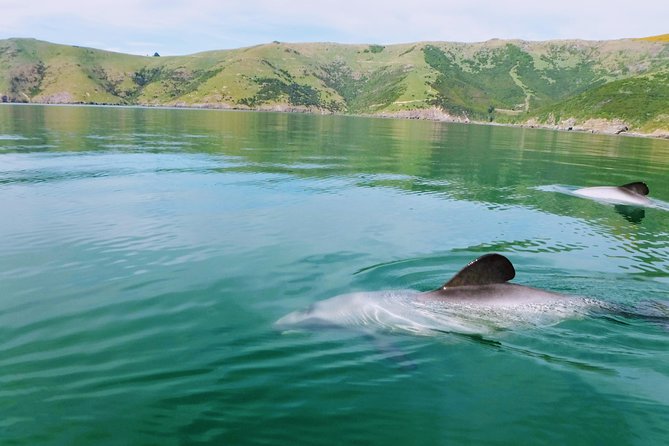
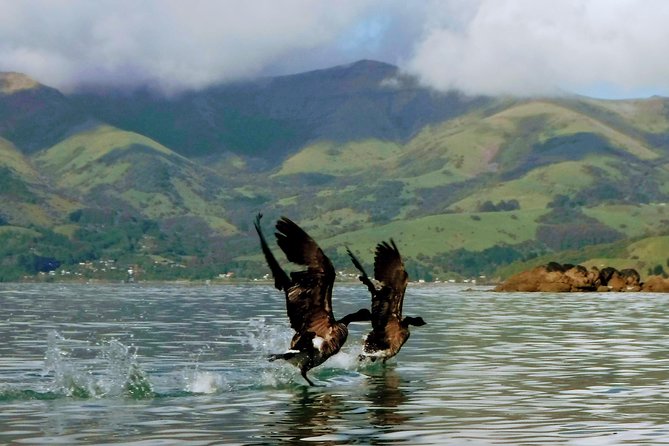
The wildlife is the main prize, but it is best approached with realistic expectations. The route passes through an area where you may see native marine life, including Hector dolphins, white-flippered penguins, orcas, seals, and birdlife. Sightings depend on weather, season, animal movement, and plain luck.
Hector dolphins are a particular draw. They are among the rarest dolphins in the world, and the chance to see them from a quiet kayak gives the encounter a different feel from watching wildlife from a powered vessel. A small group also makes it easier to pause, spread out appropriately, and avoid unnecessary noise.
One group saw Hector dolphins near the start, then found sea stars in a cave later in the route. Another saw a dolphin and a young one. These details show how varied the outing can be, but they should not be read as a promise. You might see dolphins close to the beginning, or you might spend more time appreciating the coast and birdlife.
The tour also mentions white-flippered penguins and orcas in the harbor. Those are exciting possibilities, not guaranteed stops. The same goes for seals and native birds. I would choose this tour for the quiet access and the chance of wildlife, not because you need a particular animal checked off a list.
The low-impact approach is a real benefit. Kayaks produce no engine noise and no fuel pollution while you are moving through the reserve. You can observe without bringing a large boat close to the animals. That does not make wildlife viewing fully predictable, but it does make the setting feel less manufactured.
More Wildlife Kayak Tours in New Zealand
- Seal Kayaking Adventure in Kaikoura
★ 5.0 · 422 reviews - Kaikoura: Half-Day Wildlife Kayaking Tour
★ 4.6 · 390 reviews - Day Cruise & Island Tour – Snorkel/Wildlife/Paddleboard/Islands
★ 5.0 · 121 reviews - Kaikoura: Seal-Watching Pedal Kayak Tour
★ 4.8 · 91 reviews
What the guides add to the morning
A good kayak guide has to do more than point out animals. You need clear safety instructions, useful paddling advice, route judgment, and enough local context to make the scenery meaningful. This tour seems strongest in that mix.
James has been singled out for his energy and broad range of local facts, even though he had recently moved from the North Island to the South Island. John led a highly praised morning on the water, and Peter provided detailed explanations during a wet sunrise trip. Allie and Greville are associated with the family business and have also helped with practical arrangements when a participant’s transport plans fell through.
The names matter because they show that the experience is guide-led rather than automated. Your guide controls the pace and may adjust the route when conditions allow. You should expect commentary about the area, advice for other nature outings, and help with the mechanics of kayaking.
You will also work in pairs if tandem boats are used. That can turn the trip into a pleasant teamwork exercise, but it may frustrate someone who expected a solo kayak. If you are particular about the boat type, confirm before booking. The available information does not promise single kayaks for every departure.
Photos and refreshments on the water
The included photographs are a practical touch. Sea kayaking makes it awkward to handle a camera, especially when you are wearing spray gear and trying to keep your balance. Having the guide or operator take photographs means you can stay focused on the group, the route, and the wildlife.
The photos are also useful proof that you were out on the water rather than simply standing at a harbor viewpoint. Do not assume the package includes a full professional photo shoot or a set number of images, since those details are not specified. Think of the pictures as a welcome record of the morning.
Light refreshments are included. That is enough to take the edge off after an early start, but lunch is not included. Eat appropriately before meeting the group and plan another meal afterward. With a 7:30 am departure and up to three hours of activity, a little preparation will make the trip more comfortable.
Bring clothing suited to changing conditions. The tour runs only in favorable weather, but a day can still be cloudy or damp. A participant described rain during a memorable sunrise outing, while calm conditions allowed another group to paddle farther than planned. You want layers that can handle spray and a forecast that may shift.
The price and what you receive
At $96.19 per person, this is not the cheapest way to look at Akaroa Harbor, but it offers more than a basic equipment rental. Your price covers a local guide, taxes, light refreshments, and on-water photographs, plus a guided route through the marine reserve.
The small group is important to the value. A maximum of 15 keeps the outing more personal than a large boat departure, and the guide can help with paddling technique and changing conditions. You are paying for instruction, local interpretation, and access by kayak, not just for time on the sea.
The value is strongest if you care about quiet wildlife viewing and active participation. If you only want guaranteed animal sightings or a relaxed ride with no effort, a larger boat tour may suit you better. Here, the reward comes partly from earning the views with your own paddle strokes.
The overall rating is 4.9 from 123 ratings, with 97 percent recommending the experience. Those figures suggest a strong record, but the isolated poor rating is worth understanding. That complaint centered on a reservation problem involving the booking platform, not on the kayaking itself. Still, it is a useful reminder to check your confirmation, date, and meeting details as soon as you book.
The cancellation terms are strict: the experience is non-refundable and cannot normally be changed. The exception is poor weather. If the operator cancels for that reason, you can choose another date or receive a full refund. I would not book this as a last-minute activity if your schedule cannot absorb a weather change.
Who should book this kayak safari
This is a strong choice for active families with children aged 10 or older, couples who want a quiet start to the day, and nature-focused visitors who prefer a small craft to a crowded boat. It also suits people who like a little uncertainty and understand that wildlife watching is about opportunity, not a guaranteed performance.
The trip is less suitable if you dislike early mornings, cannot paddle for several hours, or need a fully predictable itinerary. It may also disappoint solo paddlers who specifically want a single kayak, since tandem boats may be used.
You do not need advanced kayaking experience. The orientation and shallow-water practice help beginners get settled. But you should have moderate fitness and be willing to work with a partner. Children must be accompanied by an adult, and the minimum age is 10.
Transport to the attraction is not included. The meeting point is the Akaroa Bowling Club at 42 Rue Jolie, and the area is near public transportation. The tour ends back at the same meeting point, which makes planning easier once you arrive.
Should you book it?
Book this sunrise safari if you want quiet water, active wildlife watching, and local guiding in one compact morning. The chance to paddle inside Akaroa’s volcanic basin before the larger boats arrive is the experience’s strongest feature.
I would especially recommend it for someone who values the setting even if the animals stay out of sight. Hector dolphins, penguins, seals, and orcas may appear, but the calm harbor, rugged coast, and engine-free approach still make the outing worthwhile.
Skip it if you need a guaranteed wildlife encounter, dislike tandem paddling, or cannot handle a 7:30 am start. For everyone else, the combination of a small group, skilled guides such as James, John, and Peter, included photos, and a free afternoon makes the $96.19 price reasonable.
FAQ
Where does the Akaroa sunrise kayaking tour meet?
The meeting point is the Akaroa Bowling Club at 42 Rue Jolie, Akaroa, Banks Peninsula, New Zealand.
What time does the tour begin?
The tour starts at 7:30 am and lasts approximately three hours.
What wildlife might I see?
Possible sightings include Hector dolphins, white-flippered penguins, orcas, seals, and native birdlife. Sightings are not guaranteed.
Is kayaking experience required?
No advanced experience is stated as required. You receive an orientation and practice in shallow water, but you should have a moderate level of physical fitness.
What is included in the price?
The tour includes a local guide, local taxes, light refreshments, and photographs taken on the water.
What happens if bad weather cancels the tour?
If poor weather causes the operator to cancel, you can choose an alternative date or receive a full refund. Normal cancellations and amendments are non-refundable.
Newest paddling trips we have reviewed in New Zealand
- Motukorea / Browns Island Sea Kayak Journey★ 5.0 · 35 reviews
- Auckland City Lights Night Kayaking Tour★ 5.0 · 21 reviews
- Auckland Bioluminescence Kayak Tour★ 5.0 · 31 reviews
- Browns Island Motukorea Sea Kayak Tour★ 5.0 · 9 reviews
- Small group guided sea kayaking in Akaroa marine reserve★ 5.0 · 116 reviews
- Guided Electric Mountain Bike & Sea Kayak Tour in Akaroa★ 5.0 · 22 reviews
- Tauranga: Evening Glowworm Kayak Tour★ 4.8 · 206 reviews
- Taupo: Maori Rock Carvings Kayaking Tour★ 4.8 · 130 reviews
Wildlife Kayak Tours, compared.
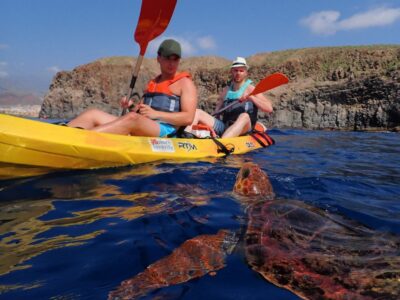
Kayak and Snorkel with Turtles, Wetsuits Included
Read our review →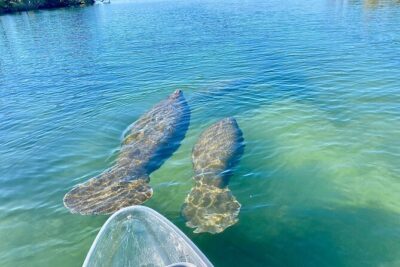
Crystal River Three Sisters Springs and Manatee Clear Kayak Tours
Read our review →
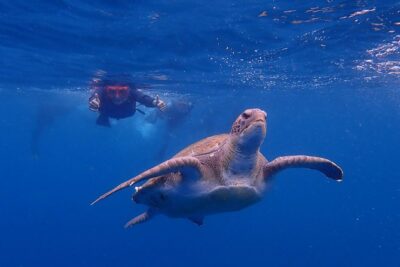
Turtle & Dolphin Kayak Tour with Snorkel & Wetsuit
Read our review →
Mangroves and Manatees – Guided Kayak Eco Tour
Read our review →
Dolphin, Manatee and SeaTurtle SUP Adventure Tour of St Augustine
Read our review →
Manatees and Mangrove Tunnels Small Group Kayak Tour
Read our review →
Mangroves, Manatees, and a Hidden Beach: Kayak Tour
Read our review →Browse the lists this tour appears in