
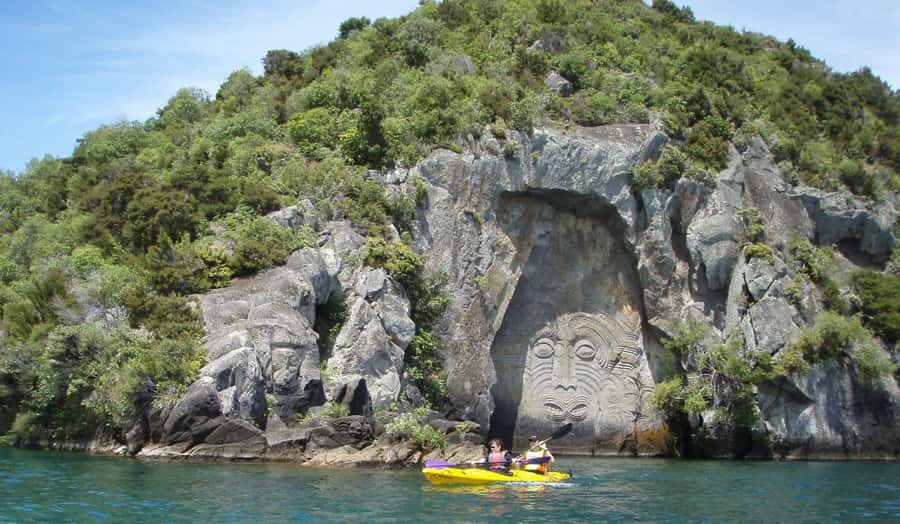
REVIEW · NEW ZEALAND KAYAKING TOURS
Taupo: Maori Rock Carvings Kayaking Tour
The best part of this Lake Taupo outing is that you reach the Māori rock carvings by your own effort. You paddle across clear freshwater, hear local stories from guides such as Glen, Eloise, and Connell, then arrive at the carvings from the water rather than simply viewing them from a boat. I especially like the small groups of up to eight and the chance to stop for a swim or rock jump in the lake.
I also like the care taken with changing conditions. Guides have moved groups to calmer water or offered another plan when waves made the carvings unsafe. The tradeoff is simple: this is a real physical paddle, with some trips taking about 1.5 hours each way. Wind can turn an easy outing into a hard one, and the $80 price does not include the separate $8.83 community entrance fee.
Key points at a glance
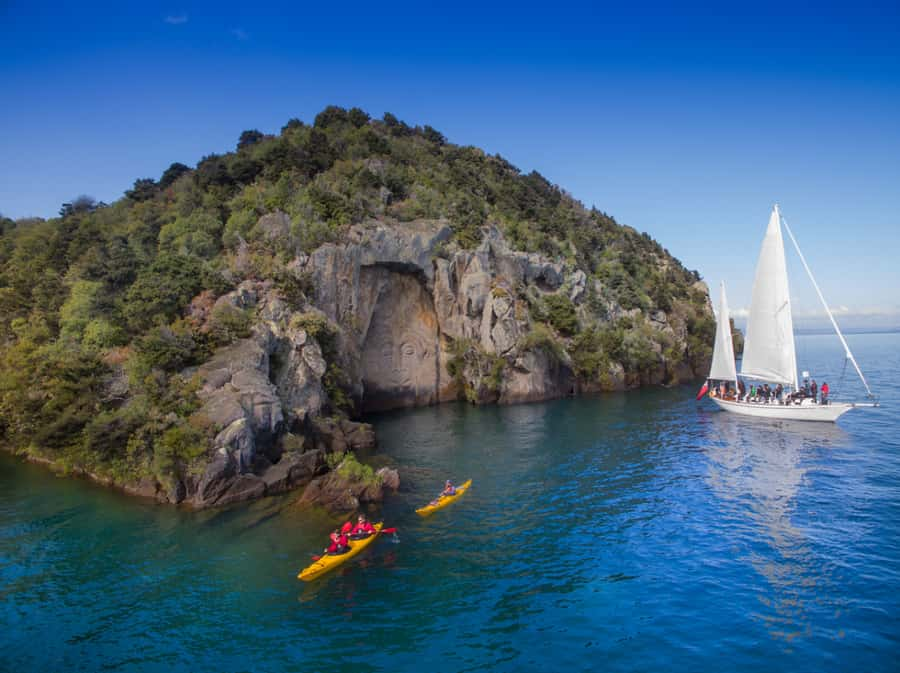
- Paddle roughly four kilometres to the carvings: The route gives you time on the water, not just a quick photo stop.
- Small groups make a difference: With no more than eight participants, guides can watch the group and help if someone struggles.
- Hear Māori stories along the way: Guides explain the carvings, local legends, the battle of the mountains, and nearby native flora.
- Swimming is part of the fun: Bring swimwear and a towel for a stop in the lake, with rock jumping possible when conditions allow.
- Weather controls the itinerary: Choppy water may mean a calmer alternative, or a cancellation for safety.
- Pack for sun and wet weather: Sunglasses, a hat, sunscreen, comfortable shoes, warm layers, and a waterproof jacket all make sense.
Why the carvings are worth the paddle
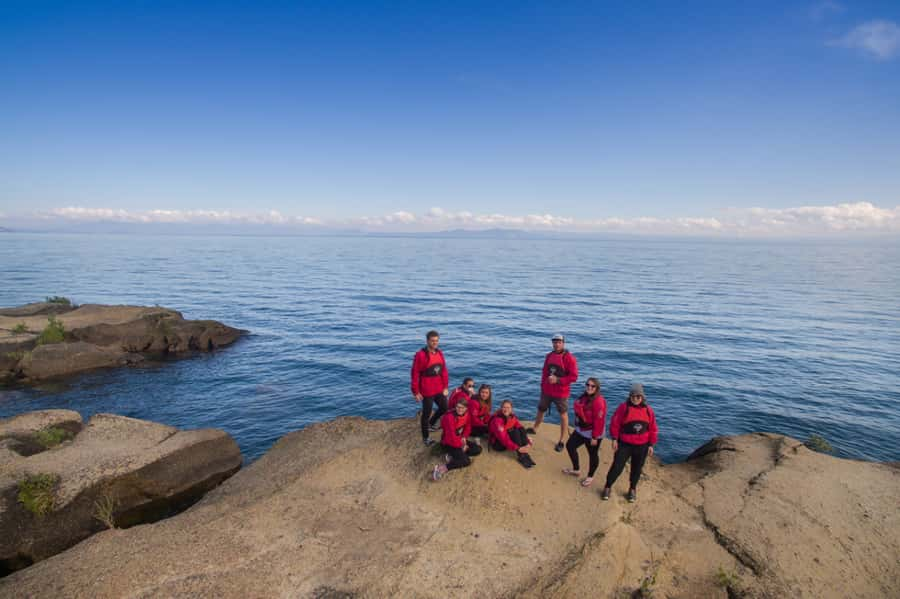
Lake Taupo is huge, clear, and shaped by volcanic forces. The Māori rock carvings sit at Mine Bay, where the journey itself becomes part of the attraction. You do not simply arrive, snap a picture, and leave. You spend hours moving across the lake, watching the shore recede and listening as your guide connects the scenery with Māori stories.
The main carving is impressive in scale and meaning. Your guide explains its history and the stories tied to the local area, giving the work more context than you would get from a quick look at the rock face. The tour also includes smaller carvings and details that are easy to miss if you arrive without a guide.
I like this approach because it puts the carvings in their proper setting. They are not an isolated monument. They belong to the lake, the cliffs, the volcanic region, and the Māori traditions connected with the area. Guides have also shared the story known as the battle of the mountains, along with facts about native plants and local birdlife.
The carvings are not described as ancient works in the usual archaeological sense. They were created in the late twentieth century, but they draw on Māori traditions and symbolism. Your guide is the person who makes that distinction useful, explaining what you are seeing rather than leaving you to guess.
More Kayaking Trips in New Zealand:
- Cathedral Cove Kayak Tour
★ 5.0 · 887 reviews - Twilight Glowworm Kayak Tour – Lake Karapiro
★ 5.0 · 493 reviews - Wildlife Sea Kayaking Tour – Kaikoura
★ 5.0 · 467 reviews
Meeting the group at Canoe & Kayak Taupo
You meet at the Canoe & Kayak Taupo shop and should arrive 15 minutes before departure. There is no hotel pickup, so arrange your own way to the meeting point and allow time to check in without rushing.
The staff provide the kayak, safety gear, and a waterproof jacket. You receive a safety briefing before heading to the lake, and the guide checks that you understand the basic instructions. This matters more than it may sound. Conditions can change quickly on a large lake, and the provider can remove anyone who appears likely to put themselves or others at risk.
The group limit of eight is one of the strongest features of the outing. It keeps the session from feeling like a floating queue and lets the guide speak with people individually. That personal attention has been especially useful for first-time kayakers and for anyone who needs help getting back into a kayak after a capsize.
Several guides have led this trip, including Glen, Eloise or Elouise, Connell or Conall, Lisa, and George. Names and staffing can change, but the experience depends heavily on having a guide who can manage both the paddling and the conversation. The strongest guides combine safety instructions with stories, practical advice, and a relaxed sense of humor.
The first paddle across clear freshwater
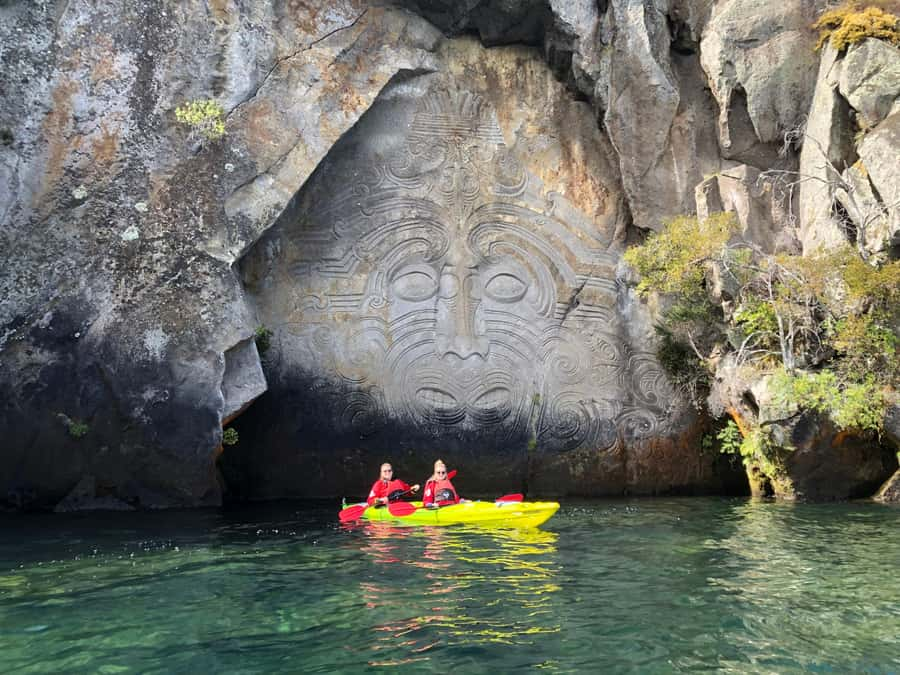
Once you launch, the rhythm settles into steady paddling. The exact distance can vary with the route and conditions, but one account describes about four kilometres to the carvings and roughly 1.5 hours each way. That is a useful warning for anyone imagining a short, gentle paddle.
You are not racing. The guides set a manageable pace and keep the group together. On a calm day, the crossing feels peaceful, with clear water beneath the kayak and broad views across Lake Taupo. The lake can look almost still in warm, settled weather, making the outward trip easy for people with reasonable fitness.
You should still treat this as an active half-day, not a sightseeing cruise. Your shoulders, arms, and hands do the work, and one person developed blisters during a rainy outing. Wear suitable clothing, use a sensible grip, and tell the guide early if something hurts. There is no prize for quietly struggling.
The scenery gives you plenty to watch while you paddle. Across the lake, you can see three live volcanoes from afar. The view is a reminder that Taupo is part of an active volcanic region, even when the water looks calm and friendly.
The guides also point out native flora and birdlife. These details may be brief, but they make the crossing feel connected to the place rather than like a workout with a monument at the end.
Learning local stories from Glen, Eloise, and the guide team
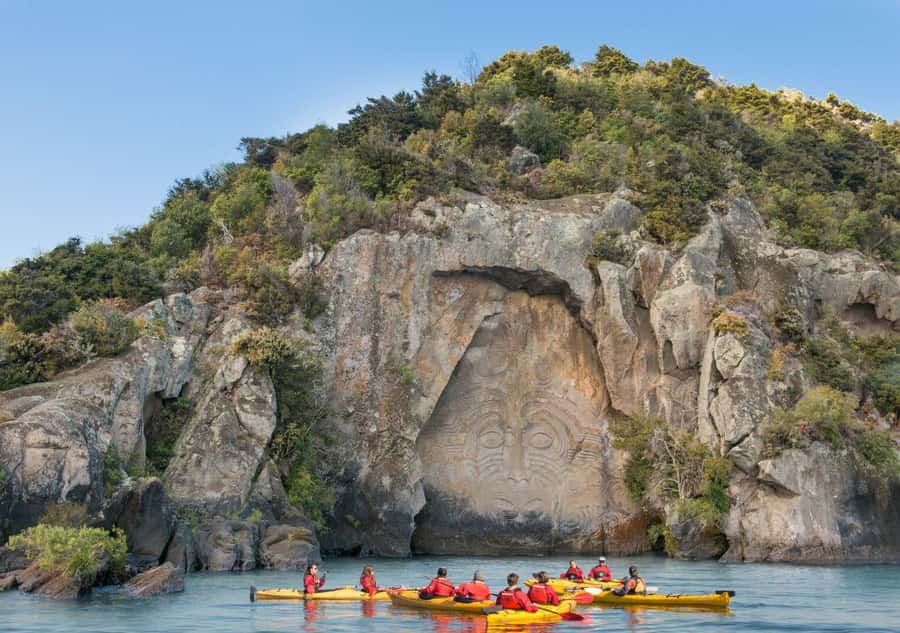
The history and legends are a major reason to choose a guided kayak trip instead of renting a boat or kayak on your own. As you move toward Mine Bay, the guide explains the carvings and shares Māori legends tied to the area.
Guides such as Glen and Eloise have been praised for keeping the talk lively while still looking after the whole group. Connell has also led trips with an easy, friendly manner. The most useful conversations happen when the guide can answer questions while paddling, then pause near the carvings for a fuller explanation.
The small group format helps here. You can hear the guide without a large crowd around you, and the guide can speak with individuals instead of delivering one hurried speech. Solo visitors may share a kayak with another person, which can be a practical way to meet someone while keeping the price manageable.
Do not expect a formal cultural lecture with every detail covered. This is an outdoor activity first. The stories come in between paddling instructions, scenery, and rest stops. For most people, that balance works well. You get enough background to understand the carvings without spending the whole morning sitting still.
Same water, a different paddle:
- Seal Kayaking Adventure in Kaikoura
★ 5.0 · 422 reviews - Small-Group Kayak Adventure from Franz Josef Glacier
★ 5.0 · 393 reviews - Kaikoura: Half-Day Wildlife Kayaking Tour
★ 4.6 · 390 reviews - Rotorua: Glow Worm Kayak Tour
★ 4.9 · 351 reviews
Reaching the Māori rock carvings by kayak
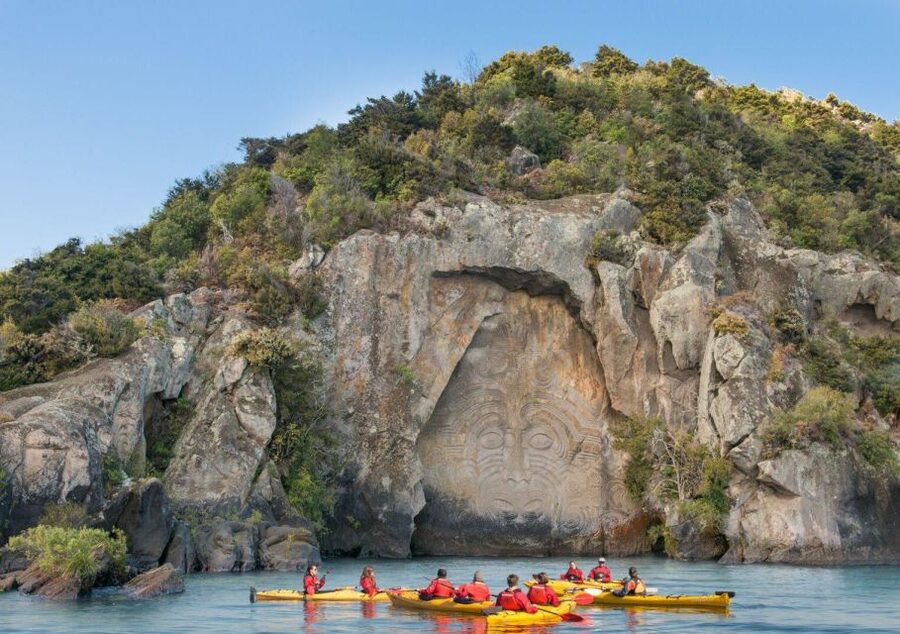
The arrival at the carvings is the clear high point. Coming in from the lake gives you time to see the rock face from a distance before getting close. The guide positions the group so you can look up at the carvings and take photographs when conditions allow.
The scale and setting make them memorable. They are cut into the rock above the water, with Lake Taupo in front and volcanic country beyond. The view feels more rewarding because you have paddled there, not because the site is difficult to access by land.
Your guide explains the symbols and meaning, then gives the group time to look. On calm days, you may get close enough for a good photo. High waves can make that impossible or limit how long the group stays nearby. Do not treat a missed photo as a failure of the trip. Safety comes first, and the lake itself remains the main setting.
The provider has changed plans when waves were too high, including moving a group to a calmer bay. On another windy outing, the group reached the carvings but found the paddle harder than expected. This flexibility is important. The tour is built around the carvings, but a responsible guide will not force the route in unsafe water.
Swimming, rock jumps, and the welcome hot drink
The stop after the carvings adds a playful side to the trip. When the weather and water conditions suit, you can swim in Lake Taupo and possibly jump from rocks. The water is described as wonderfully clear, but it can also be very cold.
Bring swimwear and a towel even if you are unsure about swimming. One participant wished they had known in advance and arrived without bathers. You can choose to stay dry, but the stop is a good chance to cool off and enjoy the lake without a paddle in your hands.
Some trips include hot coffee or tea and biscuits during the break. This is not listed as a formal inclusion, so consider it a welcome extra rather than something guaranteed on every departure. After a cold swim or a windy paddle, a hot drink can feel like a small luxury.
Rock jumping is not the main purpose of the tour, and you should follow the guide’s instructions carefully. The provider requires a liability release and can remove anyone who ignores safety directions. The right attitude is easy: enjoy the fun parts, but let the guide decide what the conditions allow.
The return paddle is where weather matters most
The way back can be the hardest section. Afternoon wind, rain, or rougher water can make the return slower and more tiring than the outward trip. Several outings remained enjoyable in poor weather, but the physical challenge was real.
On a calm day, the return is a pleasant final stretch across open water. On a windy day, you may need to concentrate on your stroke, stay close to the group, and accept that the trip will feel more like exercise than relaxation.
This is why I would not book the tour solely because you have four free hours. You need to be comfortable with sustained paddling and open-water conditions. The minimum age is 12, and minors must be accompanied by an adult who ensures they follow instructions. The trip is not suitable for pregnant women.
The guide’s role becomes especially important here. A good guide watches the weather, adjusts the plan, and helps if someone tips over. One guide assisted two people back into their kayak after a capsize. That kind of practical support is more valuable than polished commentary when the water turns rough.
What to bring for a comfortable four hours
The supplied waterproof jacket is useful, but it should not replace your own weather planning. Pack clothing suited to the forecast, plus a warm layer for the return trip if conditions are cool.
Bring:
- Comfortable shoes
- Sunglasses
- A sun hat
- Sunscreen
- Swimwear
- A towel
- Weather-appropriate clothing
Do not wear jeans. They become heavy and uncomfortable when wet and are a poor choice for a kayak. You should also protect your hands if you are not used to paddling, since blisters are possible.
Food and drinks are not included. A hot drink and biscuits may appear during the break, but bring anything else you need for the four-hour outing. You should not count on a full meal.
Is $80 good value?
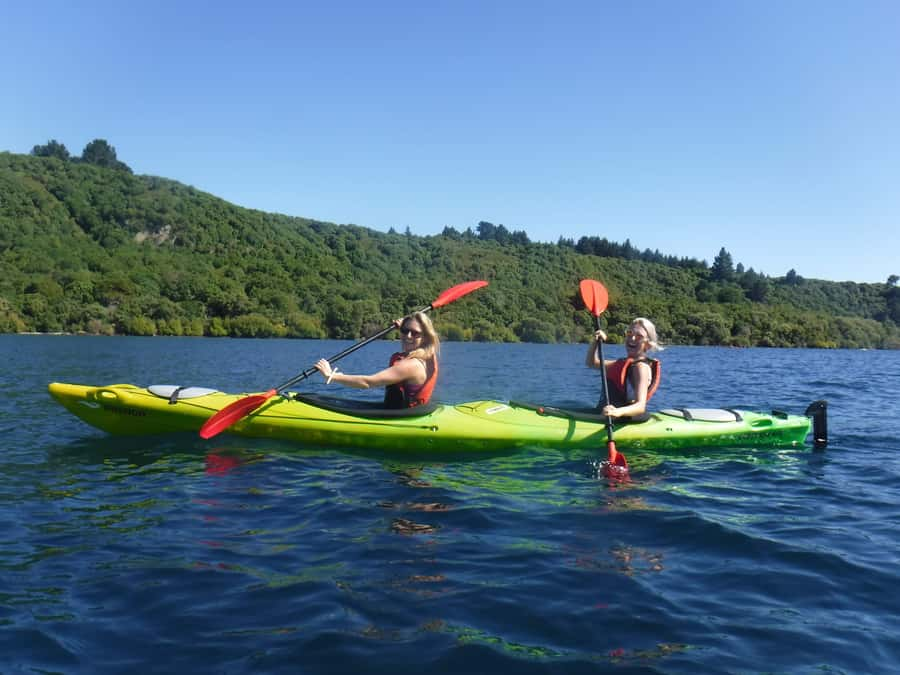
At $80 per person, this is fairly priced for a four-hour guided activity that includes the kayak, safety equipment, waterproof jacket, guide, and tour photos. You are paying for more than equipment rental. The price also covers route planning, safety support, local interpretation, and the chance to reach the carvings under the care of someone who knows the water.
There is one extra cost to remember: the $8.83 entrance fee paid to the Māori community on site. That brings the base outing to $88.83 per person before any personal food or transport costs.
The value depends on how you like to experience a place. If you want the quickest way to see the carvings, a motorized option may suit you better. If you want an active outing with local stories, a small group, a swim, and time on the lake, the kayak trip earns its price.
The included photos are useful, especially when you are busy paddling or when the guide is the only person positioned to capture the group. Picture availability can depend on wind and waves, so do not book mainly for a guaranteed set of perfect images.
Who should book this Taupo kayak tour?
I would choose this for adults, older children aged 12 and above, solo visitors, couples, and small groups who want a half-day activity with cultural context. It suits people with at least moderate comfort on the water and enough fitness for several hours of paddling.
First-time kayakers can manage it when the weather is calm. The guide explains safety and pacing, and the small group makes it easier to ask for help. Still, beginners should not assume the lake will remain flat for the entire outing.
I would think twice if you dislike cold water, open-lake paddling, or changing weather. You may enjoy the scenery but find the return trip tiring. Pregnant women and children under 12 cannot join, and anyone who refuses safety instructions may be removed from the activity.
The tour runs throughout the year in good weather, but the best experience depends on conditions. Flexible plans help. The booking terms allow free cancellation up to 24 hours before departure, and you can reserve now and pay later.
Should you book it?
Book this tour if you want to earn your view of the Māori rock carvings and enjoy the lake as much as the destination. The small group, capable guides, local legends, clear water, volcano views, and possible swim make it one of Taupo’s more complete half-day activities.
Skip it if you want a guaranteed calm crossing or a short, effortless visit. Wind can change the route, and the paddle can be demanding. For everyone else, bring swimwear, prepare for weather, listen closely to the guide, and allow four hours for a memorable mix of culture, scenery, and exercise.
FAQ
How long is the Māori rock carvings kayaking tour?
The tour lasts four hours. The paddle to the carvings can take about 1.5 hours each way, depending on the route and weather.
How much does the tour cost?
The listed price is $80 per person. You also pay an $8.83 entrance fee to the Māori community on site.
What is included in the price?
The tour includes a guide, kayak use, safety gear, waterproof jackets, and images from the tour. Food and drinks are not included.
Where do I meet the guide?
Meet at the Canoe & Kayak Taupo shop. You should arrive 15 minutes before the scheduled departure.
Can I swim during the tour?
Yes. The itinerary includes a stop for swimming, and rock jumping may be available when conditions allow. Bring swimwear and a towel.
What should I bring?
Bring comfortable shoes, sunglasses, a sun hat, swimwear, a towel, sunscreen, and clothing suited to the weather. Do not wear jeans.
Is the tour suitable for children or pregnant women?
The tour is not suitable for children under 12 or pregnant women. All minors must be accompanied by an adult and must follow the guide’s instructions.
Newest paddling trips we have reviewed in New Zealand
- Auckland City Lights Night Kayaking Tour★ 5.0 · 21 reviews
- Motukorea / Browns Island Sea Kayak Journey★ 5.0 · 35 reviews
- Auckland Bioluminescence Kayak Tour★ 5.0 · 31 reviews
- Browns Island Motukorea Sea Kayak Tour★ 5.0 · 9 reviews
- Sunrise wildlife sea kayaking in Akaroa marine reserve★ 5.0 · 123 reviews
- Small group guided sea kayaking in Akaroa marine reserve★ 5.0 · 116 reviews
- Guided Electric Mountain Bike & Sea Kayak Tour in Akaroa★ 5.0 · 22 reviews
- Tauranga: Evening Glowworm Kayak Tour★ 4.8 · 206 reviews
New Zealand Kayaking Tours, compared.
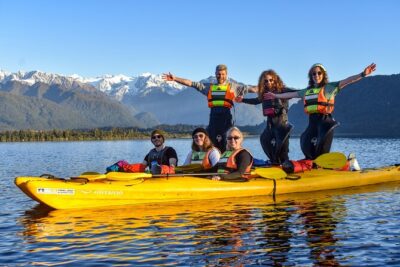
Small-Group Kayak Adventure from Franz Josef Glacier
Read our review →
Dart River Canoe and Jet Boat Experience from Queenstown
Read our review →Browse the lists this tour appears in