
REVIEW · SPAIN KAYAKING TOURS
Kayaking tour through volcanoes of Cabo de Gata Natural Park
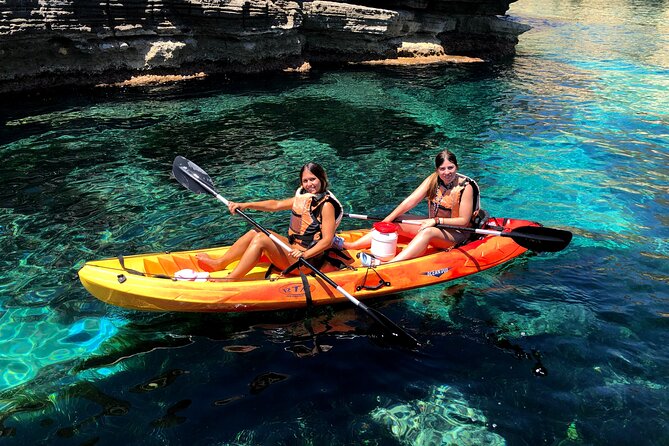
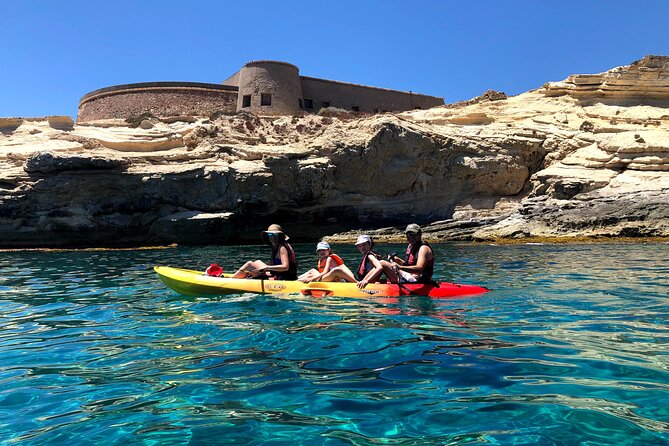
Cabo de Gata is best seen from the water, where dark volcanic cliffs, small coves, caves, and clear shallows line up in one three-hour outing. You paddle a stable two-person sea kayak, with a guide choosing the route to suit the day’s sea conditions.
I especially like the gentle start for beginners and the snorkeling stop, which gives you a look at the underwater habitat instead of keeping you above it. The guides, including Pedro, José, and Abel on some outings, are also praised for staying close to the group and keeping the mood light. The main catch is wind: a sunny day does not guarantee a departure, and weather-related decisions can come quite late.
Key points to know
- Cala del Cuervo departure: Meet at wecamp Cabo de Gata in Las Negras, beside the cove.
- Beginner-friendly boats: Stable two-person kayaks and an opening lesson make this a sensible first kayaking trip.
- Volcanic coast by water: The route explores coves, caves, cliffs, and the area near the lighthouse, depending on conditions.
- Snorkeling stop included: You get time to enter the sea with goggles and see the underwater habitat and posidonia seagrass.
- Guide-led and small enough to manage: The maximum group size is 24, with guides leading the route and watching safety.
- Weather matters: The activity may be canceled or altered for wind, even when the beach looks sunny and calm.
Why Cabo de Gata looks better from a kayak
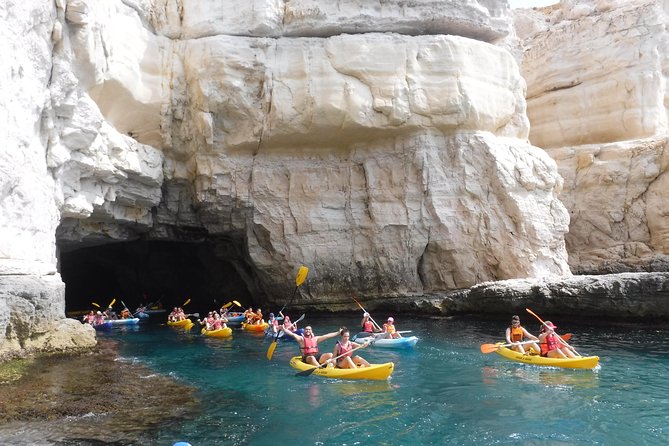
Cabo de Gata-Níjar Natural Park has a dry, rugged coastline that can be difficult to appreciate from roads and viewpoints alone. From a kayak, you move at the water’s pace, close to cliff faces and small inlets that are easy to miss from land.
The setting is volcanic, and the coast has a sculpted quality: dark rock, pale coves, clear water, and sharp headlands. The exact route changes, but the guide may take you toward sheltered coves, sea caves, and a point near the lighthouse when the sea allows.
That flexibility is useful. You are not simply following a fixed line on a map. The guide can shorten or adjust the route if wind rises, or choose calmer water for a group with first-time paddlers.
I would not book this as a high-speed sports outing. The appeal is the setting and the access. You get a close view of the coast without needing advanced kayaking skills or your own equipment.
More Kayaking Trips in Spain:
- Tenerife: Kayak and Snorkel with Turtles, Wetsuits Included
★ 4.6 · 7,215 reviews - Ibiza Beach Hopping Cruise with Paddleboards, Drinks and Food 6h
★ 5.0 · 5,588 reviews - Barcelona Costa Brava Kayak, Snorkel & Cliff Jump Day Tour
★ 5.0 · 3,872 reviews
The meeting point at Cala del Cuervo
The activity begins at wecamp Cabo de Gata, Cala del Cuervo, s/n, 04116 Las Negras. It ends at the same meeting point, and hotel pickup is not included, so plan your own way there.
This detail deserves attention when you book. The meeting point is associated with Cala del Cuervo near Las Negras, while some people may expect to meet directly on Las Negras beach. Check the exact confirmation carefully and allow time to find the departure point.
The area is near public transportation, according to the supplied details, but no transfer service is provided. If you are staying elsewhere in Almería or elsewhere in the park, you need to arrange your own transport to Las Negras.
Bring what you need for several hours outdoors. The supplied information confirms the life jacket and snorkeling portion, but it does not list hotel transfers, meals, or personal belongings storage. Keep your packing simple and practical.
The opening kayak lesson for first-timers
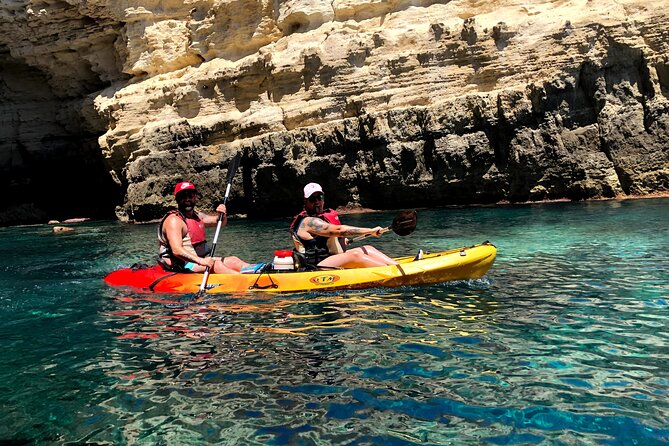
Before setting out, the guide gives you an introduction to kayaking. This covers the basic way to handle the boat and paddle, with the goal of getting even complete beginners moving within minutes.
That matters more than it may sound. A two-person sea kayak works best when both paddlers find a comfortable rhythm. The guide can help you understand how to steer, how to coordinate with the person in front or behind, and how to keep the boat moving without wasting energy.
The boats are described as stable two-person kayaks, and several people have found them easy to use. One useful clue is that the route can involve close to two hours of paddling without leaving participants completely worn out. Still, you should expect real physical activity. The sea may be calm, but you will be using your arms, shoulders, and torso.
Life jackets are included and used for safety. Guides stay with the group, explain what is happening, and keep an eye on conditions. The instruction is not a formal certification course, so you should see it as a practical orientation rather than advanced technical training.
Paddling past coves, caves, and volcanic cliffs
Once the group gets moving, the guide leads the way along the coast. The route is selected from different possible options, which allows the team to work around wind and sea conditions.
The most rewarding sections are likely to be the places you cannot easily reach on foot. A kayak can slip into a small cove, approach a cave entrance, or pause below a cliff for a better view. You are close enough to notice the color and texture of the rock, while the open water gives you a broad view back toward the shore.
The tour’s strongest quality is its sense of access. You are not looking at Cabo de Gata from a distant lookout. You are moving through it, with the water providing the route.
Guides also stop to explain the area. The amount of commentary can vary with the conditions. If wind picks up, the guide may shorten explanations or concentrate them into fewer stops so that safety and group control come first. If you want to learn about the park’s geology, plant life, and marine environment, listen closely during each pause and ask questions.
The group limit is 24 people. That is not a private trip, but it is still a manageable number for a guided activity, especially with more than one instructor available. The overall feel will depend on the final group size and the number of guides working that day.
Same water, a different paddle:
- Ibiza: Beach Hopping Cruise w/ Paddleboard, Food, & Drinks
★ 4.5 · 3,224 reviews - Tenerife: Kayak Safari and Snorkel in a Marine Reserve
★ 4.5 · 3,214 reviews - Nerja: Guided Kayak Tour Nerja Cliffs and Maro Waterfall
★ 4.7 · 2,916 reviews - Barcelona: Costa Brava Kayak, Snorkel & Cliff Jump & Lunch
★ 4.9 · 2,391 reviews
The snorkeling pause above posidonia seagrass
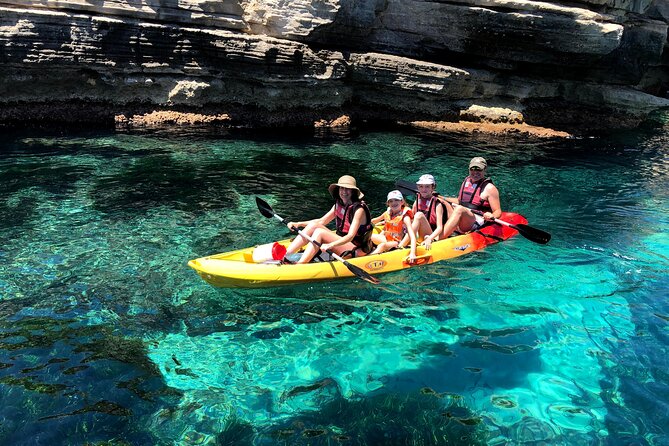
A stop partway through the route gives you time to leave the kayak and snorkel. The point is not just a quick swim. The guides introduce you to the marine habitat, including the posidonia seagrass meadows that help support life in the water.
Clear conditions make this part particularly worthwhile. You may see small marine creatures and different forms of underwater life, although the exact view depends on water clarity, light, and the season. The supplied information promises the snorkeling opportunity, not a guaranteed list of species.
This pause also breaks up the paddling. If your arms are working harder than expected, the time in the water gives you a chance to reset before the return journey. You should still remember that you are taking part in a sea activity, not a beach swim with unlimited free time. The guide controls the stop and keeps the group together.
The snorkeling equipment is not itemized in the booking details, though the activity description refers to diving goggles. Confirm what is supplied if you have specific equipment needs. Life jackets are included.
The lighthouse section and the return paddle
The most dramatic part of the route can be the final point near the lighthouse. A participant specifically singled out the view behind the lighthouse as the highlight of the trip. That makes sense: headlands often give a stronger feeling of open sea and a wider view along the coast.
The route may not always reach the same point. Wind, waves, and the group’s pace affect how far the guide can go. You should treat the lighthouse section as a possible feature rather than a fixed guarantee.
After the coastal stops and snorkeling break, the group paddles back to the original meeting point. The tour lasts about three hours in total. That includes the briefing, route, pauses, snorkeling, and return, so the full time spent paddling will be less than three hours.
Several people describe the time as passing quickly. That is usually a good sign for a sightseeing activity, but it also means you should not expect a long, slow beach stop. The outing has a steady rhythm: instruction, paddle, explanation, water stop, more paddling, and return.
What the $58 price covers
At about $58, the price is reasonable if you want a guided introduction to Cabo de Gata from the sea. You are paying for the guide, the kayak activity, life jacket, snorkeling portion, national park fees, and photos taken along the way.
The value is strongest for first-time paddlers. Renting a kayak alone might cost less, but you would then have to choose a route, understand local conditions, find the accessible coves, and manage your own safety. This tour packages those decisions into one short outing.
It is also useful if you are visiting Cabo de Gata for a limited time. Three hours leaves room for other parts of the park during the same day, though you need to account for your own transport and arrival time.
The price is less compelling if you already own sea-kayaking equipment, know the coast well, and prefer to explore independently. It is also not the right choice if you want a private guide or a guaranteed long route. The group may include up to 24 people, and conditions can change the plan.
Photographs are taken during the trip, which adds some value. You do not have to spend the whole outing trying to capture yourself on the water, though the details of how or when the photos are delivered are not specified.
Wind is the key practical concern
Cabo de Gata can look perfect from shore while conditions on the water are unsuitable. The provider has explained that it does not operate above roughly 15 knots of wind. In one case, a forecast of 18 knots led to a cancellation even though the air temperature was 25 Celsius and the sky was sunny.
That policy is sensible from a safety point of view. Kayaks are more difficult to control in wind, especially for beginners, and a return journey against the wind can turn an easy outing into hard work.
The frustrating part is timing. Weather decisions may be made close to departure, and one cancellation was reported about two and a half hours before the start. The provider has also moved the start time earlier to try to avoid forecast wind, though conditions can change sooner than expected.
If poor weather cancels the trip, you are offered another date or a full refund. You can also cancel for a full refund up to 24 hours before the scheduled start. Cancellations within 24 hours normally receive no refund, so read the weather terms and keep your schedule flexible.
I would check the wind forecast the day before and again on the morning of the trip. Do not judge the decision only by sunshine or temperature. The wind is the important factor.
Guide style and the quality of the explanations
The guides are a major part of the outing. Pedro is named for answering questions and offering flexibility in one account, while José and Abel are praised for staying attentive and explaining unusual details about the area. Depending on the day, you may meet one of them or another member of the multilingual team.
The tone is described as friendly, professional, and reassuring. Guides give the opening lesson, lead the route, watch safety, organize the snorkeling pause, and take photographs. That range of duties explains why the tour can work for people who have never kayaked before.
The one area to keep in mind is the depth of the commentary. Explanations may be shorter when the wind is up, and not every outing will feel like a geology lecture. If learning about Cabo de Gata is your main purpose, ask questions during calm stops rather than waiting for a long formal talk.
Language should not be a major barrier for most people, since the guide may be multilingual. Still, the exact language mix is not guaranteed in the supplied details. If you need a specific language, confirm it before booking.
Who should book this kayak tour
I would recommend it to you if you want an active way to see Cabo de Gata and prefer a guide to handle the route. It is especially suitable for:
- First-time kayakers who want a stable boat and an opening lesson
- Couples or friends happy to share a two-person kayak
- Families whose children can take part in the activity, with the understanding that the sea and wind still set the limits
- Visitors who want both coastal views and a snorkeling stop
- Anyone who would rather learn about the park while moving than spend the whole day at one beach
You should think twice if you dislike changing plans, need guaranteed calm water, or want to paddle alone. The activity depends on the weather, and the chosen route can change.
You should also be comfortable meeting at the Las Negras area rather than being collected from your hotel. The return to the same meeting point is convenient once the activity is over, but the journey there is your responsibility.
Should you book it?
Book this tour if the idea of paddling beneath Cabo de Gata’s volcanic cliffs, stopping to snorkel above posidonia, and learning the basics from an attentive guide appeals to you. At $58, it offers solid value for a three-hour introduction that includes equipment, park fees, instruction, and photographs.
Go in with realistic expectations. The route is weather-dependent, the group may be as large as 24, and the amount of explanation can vary. Check the meeting point, watch the wind forecast, and keep your schedule flexible.
For a first kayaking trip in Cabo de Gata, I think it is a sensible choice. It gives you access to coves and coastal views that are difficult to reach on foot, without asking you to organize the equipment or route yourself.
FAQ
Where does the kayaking tour start?
It starts at wecamp Cabo de Gata, Cala del Cuervo, s/n, 04116 Las Negras, Almería, Spain.
Where does the tour finish?
The activity ends back at the original meeting point.
How long does the experience last?
The tour lasts approximately three hours.
Is the tour suitable for beginners?
Yes. The guide provides an introduction to kayaking, and the stable two-person boats are suitable for people who are new to the activity.
Is snorkeling included?
Yes. The route includes a stop where you can enter the sea with goggles and observe the marine habitat.
Are life jackets provided?
Yes. Life jackets are included as part of the activity.
Are national park fees included?
Yes. National Park fees are included in the price.
Is hotel pickup included?
No. You must make your own way to the meeting point.
What happens if the weather is poor?
If poor weather causes the activity to be canceled, you will be offered a different date or a full refund. The activity may also be adjusted because of wind conditions.
Newest paddling trips we have reviewed in Spain
- Paddle Surf in Cantabria★ 4.5 · 21 reviews
- Kayak Route + Snorkel in Cantabria★ 4.5 · 9 reviews
- Moonlight Kayak with Dinner Included★ 4.5 · 6 reviews
- Route in Kayak Moraira★ 5.0 · 28 reviews
- Paddle Board Paradise: Magical Snorkel & Cave Exploring SUP Tour★ 5.0 · 10 reviews
- Kayak routes through the Coves of Villajoyosa★ 4.5 · 42 reviews
- Small Group Paddle Surf Experience in Benidorm★ 4.0 · 7 reviews
- Kayak route through Cala Granadella★ 5.0 · 27 reviews
Spain Kayaking Tours, compared.
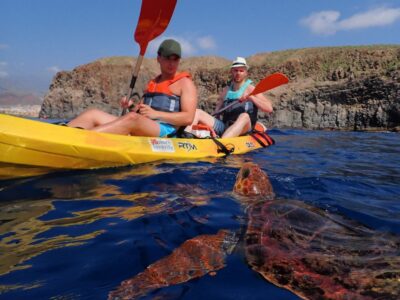
Kayak and Snorkel with Turtles, Wetsuits Included
Read our review →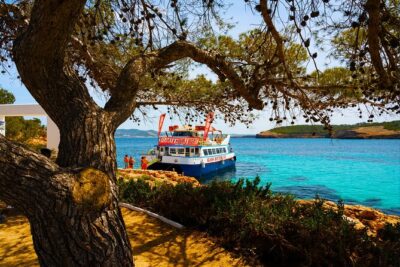
Ibiza Beach Hopping Cruise with Paddleboards, Drinks and Food 6h
Read our review →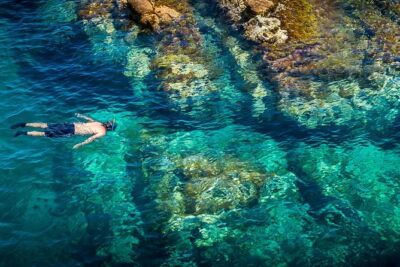
Barcelona Costa Brava Kayak, Snorkel & Cliff Jump Day Tour
Read our review →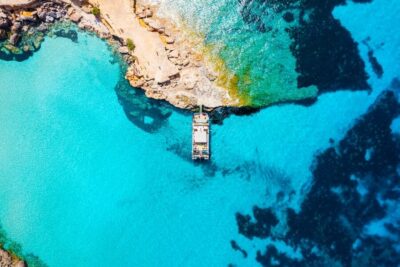
Beach Hopping Cruise w/ Paddleboard, Food, & Drinks
Read our review →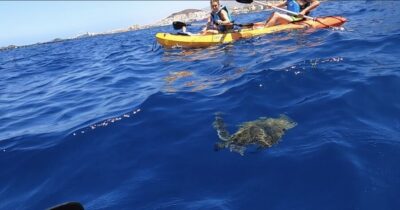
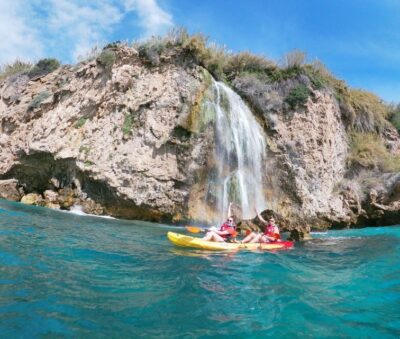
Guided Kayak Tour Nerja Cliffs and Maro Waterfall
Read our review →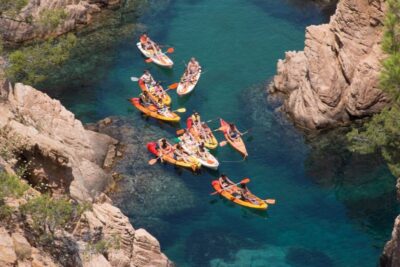
Costa Brava Kayak, Snorkel & Cliff Jump & Lunch
Read our review →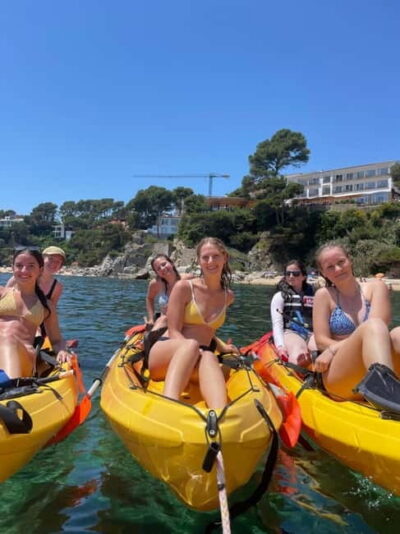
Browse the lists this tour appears in