
REVIEW · USA KAYAKING TOURS
Kayak Day Paddle on Yellowstone Lake
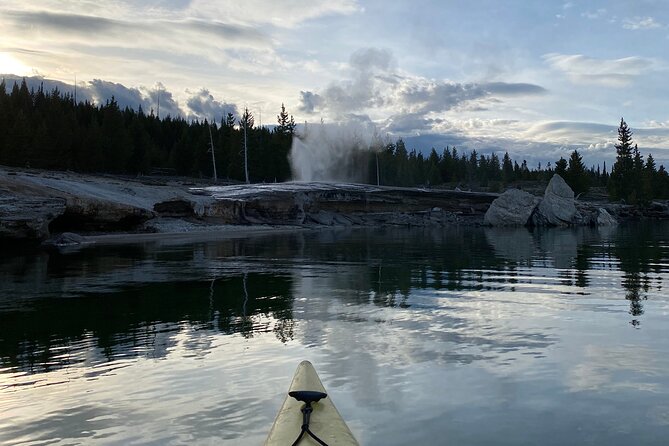
Yellowstone’s famous hot springs look different from a kayak. From the water, you can reach shoreline features that have no boardwalks, signs, or crowds. Guides such as Alex, Brian, Thai, Max, Tom, Peter, Jason, and Ben have helped make this a calm, informative introduction to the lake and its geology.
I like the small groups, which give you better access to the guide and make it easier to ask questions. I also like the provided picnic on a quiet beach, a welcome pause during a half-day paddle. The main concern is wind: the trip can become a solid workout on the return, and cold weather can arrive fast.
Key points to know before you book
- Geysers from the water: Paddle toward West Thumb Geyser Basin and see geothermal features that are hard or impossible to reach from land.
- Beginner-friendly instruction: You receive basic paddling guidance and all required equipment, with no previous kayak experience needed.
- Small-group setting: The maximum group size is 12, allowing more direct help from the guide.
- A real outdoor outing: You will get wet, and wind can make the return paddle tiring even on a sunny day.
- Lunch on a secluded beach: A provided picnic breaks up the paddle and adds welcome time on shore.
- Family rules matter: Children 12 and under must share a tandem kayak with an adult.
Why Yellowstone Lake looks better from a kayak
Most people experience Yellowstone from a road, trail, or boardwalk. A kayak gives you a quieter angle on the park. You move along the shoreline at water level, with the lake between you and the geothermal areas.
The route heads toward the West Thumb Geyser Basin, an area known for hot springs and geysers along the edge of Yellowstone Lake. Some features can be seen from land, but the kayak route reaches more remote spots. You may pass geothermal features that have no signs or viewing platforms, which changes the feeling from a marked sightseeing stop to a small piece of wild Yellowstone.
I especially like the contrast here. Yellowstone’s geothermal areas are usually linked with crowds and boardwalks. On the lake, you can look toward the shore and see hot water and steam in a setting that is much less developed. The guides also explain the lake’s geology and local history as you paddle, so the scenery has context rather than being just a pretty view.
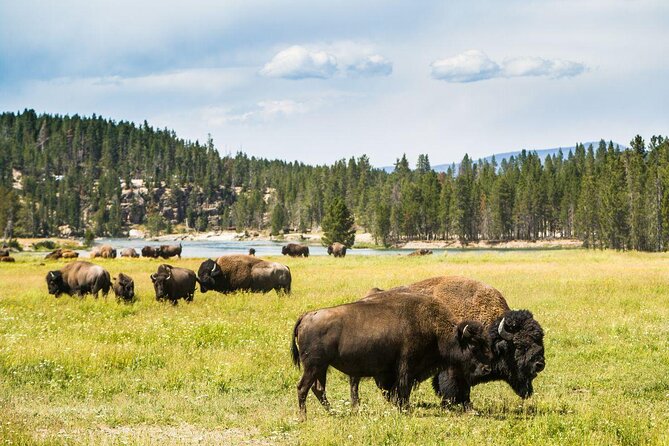
Wildlife sightings are possible but not promised. One outing included two bald eagles and other waterfowl. Another day might offer little wildlife at all. Book this for the unusual view of the geyser basin first, with animals as a bonus.
More Lake Kayak Tours in the USA:
- Mendenhall Glacier Lake Canoe Tour
★ 5.0 · 1,269 reviews - Page/Lake Powell: Guided Kayak & Water Antelope Canyon Tour
★ 4.9 · 477 reviews - Kayaking 2 Hr Canyon & Cliffside on Saguaro Lake
★ 5.0 · 410 reviews
Starting at Grant Marina at 9 a.m.
You meet at Grant Marina Road in Yellowstone National Park at 9 a.m. There is no hotel pickup, so you need to arrange your own way to the marina and arrive ready to start. The activity ends back at the same meeting point.
The morning start makes sense on a mountain lake. Conditions can change quickly, and an early departure gives you a good part of the day on the water. Still, the exact rhythm of the morning may not be perfectly clockwork. One outing began late because of a reservation mix-up and delayed arrivals, leaving part of the group waiting in the parking area.
That is useful to know if you have a tightly packed Yellowstone schedule. Allow extra room around this activity rather than planning a major drive or timed visit immediately afterward. The stated experience lasts about five hours, though some bookings have been described with a longer morning-to-afternoon window.
At the launch point, the guides provide kayaks, paddles, safety equipment, and an introduction to basic technique. You can choose a single kayak if you are at least 13, or a tandem kayak shared by two people. Children 12 and under must paddle with an adult in a tandem boat.
Learning to paddle before the shoreline route
You do not need prior kayaking experience. The introduction covers the basic techniques needed to move and steer the boat, and the guides keep an eye on the group once you are on the lake.
That makes this a good first kayak trip, but it does not mean the outing is effortless. The lake can be calm at one point and windy later. A few hours of repeated paddling requires moderate physical fitness, especially if you are in a boat that catches a headwind on the way back.
Guide support is one of the strongest parts of the experience. Alex has been praised for explaining geysers, geology, fish, the lake, and park history while also watching first-time paddlers. Brian and Ben have provided help with equipment and conditions, while guides including Thai, Max, Tom, Peter, and Jason have been noted for patient instruction and clear local information.
The exact guide team can change, so do not book on the assumption that a particular person will lead your departure. The important point is the guide-to-group setup. With a maximum of 12 people, you are not left as a tiny boat in a large flotilla.
Following the shore toward West Thumb Geyser Basin
Once underway, the group follows the shoreline toward West Thumb. This is the heart of the trip. The guides talk about the lake’s volcanic setting and point out geothermal features along the shore and in the water.
The water-level view is the main reason to choose this over a standard stop at a geyser basin. You may see hot water or geothermal activity from a distance, then learn how the feature fits into the larger volcanic system. Some of the more remote sites are not accessible by road or boardwalk, so the kayak provides access that a normal park visit does not.
The guide usually sets the pace and keeps the group together. You should stay close enough to hear instructions, especially when the wind rises or the shoreline route becomes spread out. One person found it difficult to hear at times while trying to keep up with the guide, even in a group of seven. That is a fair reminder to remain near the lead kayak and speak up if you lose the explanation.
The route can feel peaceful, but it is not a passive sightseeing cruise. You are working the paddle, correcting your direction, and keeping pace. On a calm day, that physical effort is part of the pleasure. On a windy day, it can become the dominant feature of the return journey.
More Kayaking Trips in the USA:
- Clear Kayak Tour of Shell Key Preserve and Tampa Bay Area
★ 5.0 · 5,800 reviews - Half-Day Emerald Cave Kayak Tour with Optional Hotel Pickup
★ 5.0 · 4,978 reviews - Emerald Cave Kayak Tour: Scenic Paddle with Optional Shuttle
★ 5.0 · 2,858 reviews - Rock Springs 2-Hour Glass Bottom Guided Kayak Eco Tour
★ 5.0 · 2,459 reviews
Seeing geothermal features without a boardwalk
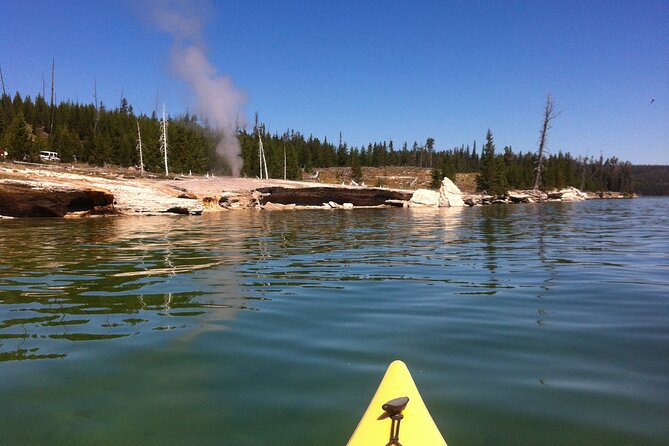
Yellowstone’s boardwalks are useful, but they also tell you exactly where to stand and what to look at. From a kayak, the experience is less packaged. The guide may point out a feature along the shore or in the lake, and you view it from the boat instead of from a fenced path.
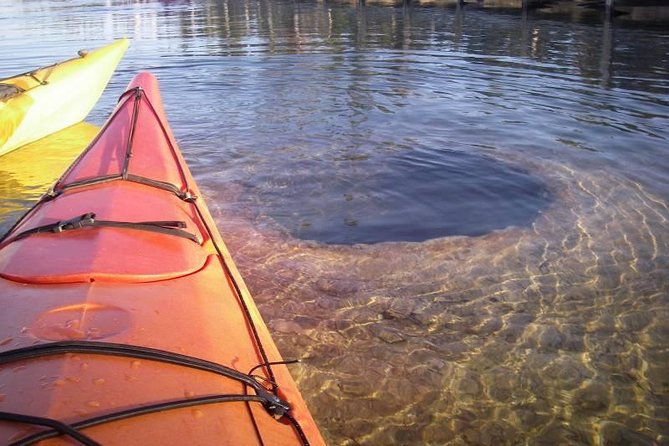
That perspective can be striking. One group saw a geyser erupt that could not be seen by people on land, then felt the water grow warmer nearby. That kind of moment depends on timing and local conditions, so it should not be treated as guaranteed. Still, it shows what makes this route different from a regular geyser stop.
The water also gives you a better sense of scale. Yellowstone Lake is broad and exposed, while the geothermal features sit at the edge of a much larger volcanic area. You are not simply moving from one marked attraction to another. You are watching the relationship between the lake, shoreline, and hot ground.
Your guide’s explanations add value here. The most useful commentary covers how the geothermal features form, how the lake fits into Yellowstone’s geology, and what you are seeing beneath or beside the kayak. Guides have also discussed local history, fish, and birds, giving the paddle more substance than scenery alone.
A picnic beach stop in the middle of the paddle
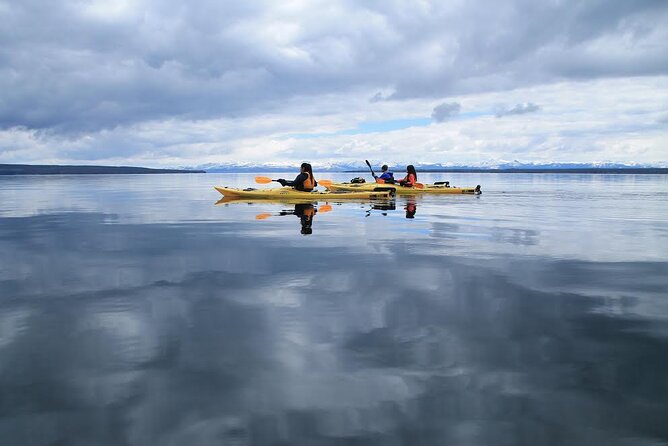
Lunch is included, and the group stops at a secluded beach. This is more than a convenient meal break. It gives your shoulders a rest, lets you warm up if the morning has been cold, and provides time to take in the shoreline without paddling.
The lunches have been described as filling, with enough food that some people could not finish everything. Vegetarian and gluten-free options are available if you provide the request when booking. If you have dietary needs, do not wait until the morning of the tour.
A beach stop also helps keep the five-hour outing from feeling like one long physical push. That matters for families and first-time paddlers. You can eat, ask the guide questions, and enjoy the setting before getting back into the boat.
You should still pack your clothing with the stop in mind. A warm layer that stays dry can make a large difference if the weather turns cool. The provided equipment helps, but it does not replace sensible clothing.
Cold mornings, wet clothes, and sudden wind
Yellowstone often feels colder than expected, especially early in the day and near the lake. Summer temperatures can reach the upper 60s to low 80s, but nights and mornings may be cold. Afternoon showers and thunderstorms can also pass through the mountains.
The tour runs in rain or sunshine when conditions allow, so dress for changeable weather. Wear layers, synthetic shorts or wind pants, and shoes you do not mind getting wet. While you will not be submerged, splashes and paddle drips are part of the activity.
A rain or wind jacket is a smart choice. Extra warm clothing or a dry change of clothes for afterward is also useful. The outfit you would wear for a warm park drive is not enough by itself.
The guides can provide waterproof jackets and dry bags, as noted by one group, but you should still arrive prepared. Ask about the available equipment at the start if you are unsure what needs to stay dry. A phone, camera, and other small items are safer in a dry bag than in an ordinary backpack.
Wind is the biggest physical variable. Several outings were enjoyable in good weather but became harder on the return because the group was paddling against the wind. If you want a relaxed float with little effort, this is not the right activity. If you are comfortable with moderate exercise and changing conditions, the effort is part of the adventure.
Choosing between a single and tandem kayak
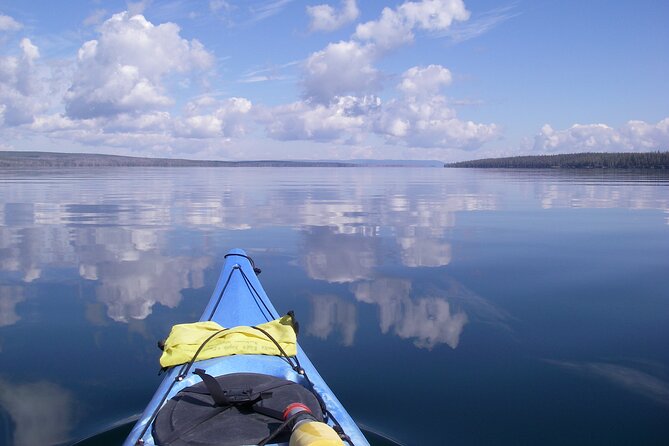
Single kayaks give you independent control, while tandem boats allow two people to share the work. The pricing also differs: a single kayak is charged per person, while a tandem kayak is charged per kayak for two people.
For adults, the choice comes down to comfort and coordination. A tandem can be useful if one person has more paddling experience or if you prefer to work with a partner. A single boat gives you more control over your own pace, but it also means doing all the paddling yourself.
Families need to follow the age rule. Children 12 and under must use a tandem kayak with an adult, and you need to select the tandem option when booking. Single kayaks are not available for children under 13.
Because the group size is capped at 12, the guides can provide more individual help than on a large commercial outing. That is especially valuable when several people are new to kayaking or when wind makes boat control harder.
Is the experience worth the price?
No price is provided here, so I cannot judge the exact cost. I can judge what you receive for it. The package includes professional guiding, instruction, all kayaking equipment, and lunch, with access to remote shoreline features that you could not easily reach by road.
That makes the value strongest for you if this is your first or only chance to see Yellowstone Lake from the water. You are paying for access, guidance, and a less common view of the park, not just for a kayak rental.
The value is weaker if you already paddle Yellowstone Lake independently or want a short, easy outing. You must reach the marina yourself, spend several hours on the water, and accept the chance of wind, cold, or rain. The experience also requires a moderate fitness level, so the price is not the only cost. Time and energy matter too.
Group discounts are available, which may help families or larger parties. Since tandem pricing is per kayak for two people, compare that option carefully with single-kayak rates before booking.
Who will enjoy this Yellowstone kayak tour?
I would choose this for an active couple, a family with older children, friends who want a different side of Yellowstone, or a solo visitor who likes guided outdoor activities. It suits you if you want scenery plus information and do not mind getting wet.
First-time paddlers are welcome, provided they can manage moderate physical activity. The guides offer instruction and safety support, but you still need to paddle for much of the outing.
I would think twice if you dislike cold water, have limited mobility, or need a guaranteed finish time. The activity requires getting in and out of a kayak, staying with the group, and handling a possible headwind. It is also not ideal for a tightly scheduled day because delays or weather can affect the timing.
Book as early as you can if your dates are fixed. Space is limited, and the group cap is part of what makes the instruction useful.
Practical details before you reserve
Confirmation is provided at booking, and mobile tickets are available. The meeting point is Grant Marina Road in Yellowstone National Park, with the return to that same location.
You can cancel for a full refund if you do so at least 24 hours before the local start time. Changes or cancellations made within 24 hours are not accepted for a refund. If poor weather causes the operator to cancel, you are offered another date or a full refund.
Guide gratuities are not included. They are appreciated but not required.
For the smoothest morning, arrive dressed for cold and wet conditions, bring a warm dry layer for afterward, and disclose dietary needs when reserving. Keep your schedule flexible enough to handle a late start or changing lake conditions.
Should you book the Yellowstone Lake paddle?
Book it if you want to see West Thumb and Yellowstone’s geothermal shoreline from a viewpoint most park visitors miss. The small group, capable guides, instruction, and beach lunch make the outing feel more personal than a basic kayak rental.
Skip it if you want a short, gentle activity or cannot handle several hours of paddling. The return may be tiring in the wind, and the weather can turn quickly.
For the right person, this is one of the more memorable ways to experience Yellowstone Lake: quiet water, unusual geothermal views, good local explanation, and a picnic on shore. Bring the right clothes, allow extra time, and treat the wind as part of the deal.
FAQ
Where does the kayak tour begin?
The tour begins at Grant Marina Road, Grant Marina Road, Yellowstone National Park, Wyoming 82190.
What time does the tour start?
The stated start time is 9 a.m.
Where does the activity finish?
The activity ends back at the meeting point at Grant Marina.
How long does the experience last?
The tour lasts approximately five hours.
Do I need previous kayaking experience?
No. The guides provide an introduction to paddling techniques and instruction during the activity.
What is included?
The experience includes professional guides, kayaking equipment, paddling instruction, information about Yellowstone Lake’s history and geology, and lunch.
Are single and tandem kayaks available?
Yes. Single and double kayaks are available. Children 12 and under must use a tandem kayak with an adult.
How are tandem kayaks priced?
The tandem rate is per kayak for two people. A single kayak rate is charged per person.
Can I request a vegetarian or gluten-free lunch?
Yes. Vegetarian and gluten-free lunches are available if you provide the request in the special requirements field when booking.
What should I wear?
Dress in layers for cold, changing weather. Wear synthetic quick-drying shorts or wind pants and shoes that can get wet. A rain or wind jacket and a dry change of warm clothes are also recommended.
Is hotel pickup included?
No. Hotel pickup and drop-off are not included.
How many people can join the tour?
The maximum group size is 12 people.
What happens if the weather is poor?
The experience requires suitable weather. If it is canceled because of poor conditions, you are offered another date or a full refund.
Can I cancel for a full refund?
Yes. You can cancel at least 24 hours before the local start time for a full refund. Cancellations or changes made less than 24 hours before the start time are not accepted for a refund.
Newest paddling trips we have reviewed in the USA
- Park and Paddle Package★ 5.0 · 39 reviews
- Inflatable Kayak Half-Day Excursion from Kremmling★ 5.0 · 27 reviews
- Madison River Guided Kayak Tour★ 5.0 · 186 reviews
- Wailoa River to King Kamehameha Statue Kayak Adventure★ 4.5 · 16 reviews
- Wa’a Rides and Charters – Hawaiian Outrigger Canoe Excursions★ 5.0 · 19 reviews
- Historic Hilo Bay & Coconut Island SUP Adventure★ 5.0 · 6 reviews
- Midday Meander – Kealakekua Bay Kayak and Snorkel Adventure★ 5.0 · 68 reviews
- Morning Magic Kayak and Snorkel Adventure in Kealakekua Bay★ 5.0 · 183 reviews
Lake Kayaking, compared.
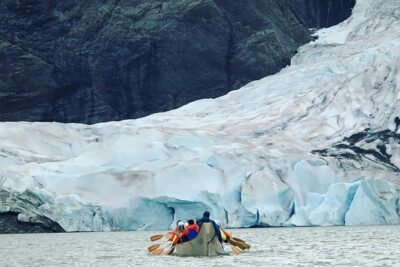
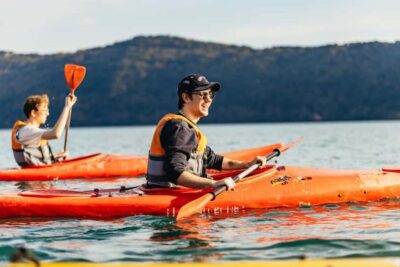
Popes’ Lake, Kayak Tour with Swimming & Roman Pizza
Read our review →
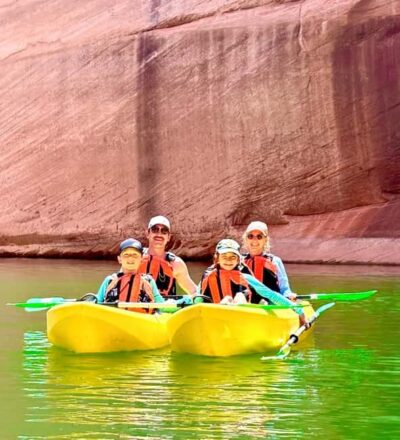
Page/Lake Powell: Guided Kayak & Water Antelope Canyon Tour
Read our review →
Winter Kayak Tour of the Turquoise Lake Brienz
Read our review →Browse the lists this tour appears in