
REVIEW · SPAIN KAYAKING TOURS
Cabo de Gata: Natural Park Kayaking and Snorkel Excursion
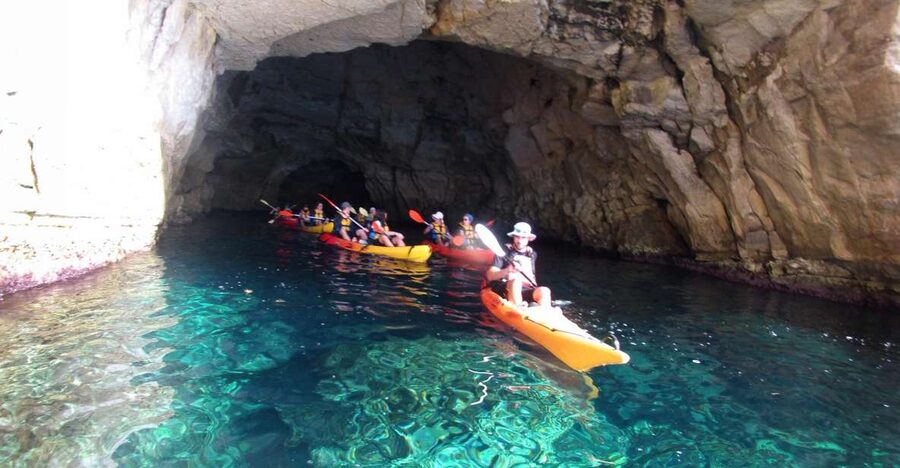
Cabo de Gata is best understood from the water. From a kayak, you see volcanic cliffs, small coves, sea caves, and stretches of coast that walkers cannot reach. The route includes a swim and snorkel stop in a marine reserve, with time to watch the underwater world through clear water.
I like the safety-minded guides and the useful introduction to paddling before you set off. I also like that the price includes a photo album, underwater pictures, equipment, water, insurance, and a support boat. The main caution is the three-hour paddle: it can feel demanding for a first-time sea kayaker, and the meeting point may change with the wind.
At a glance
- See Cabo de Gata from sea level: Paddle beside volcanic cliffs, rocky coves, and formations hidden from the road.
- Enter coastal caves: The route includes paddling in and out of rocky caves when conditions allow.
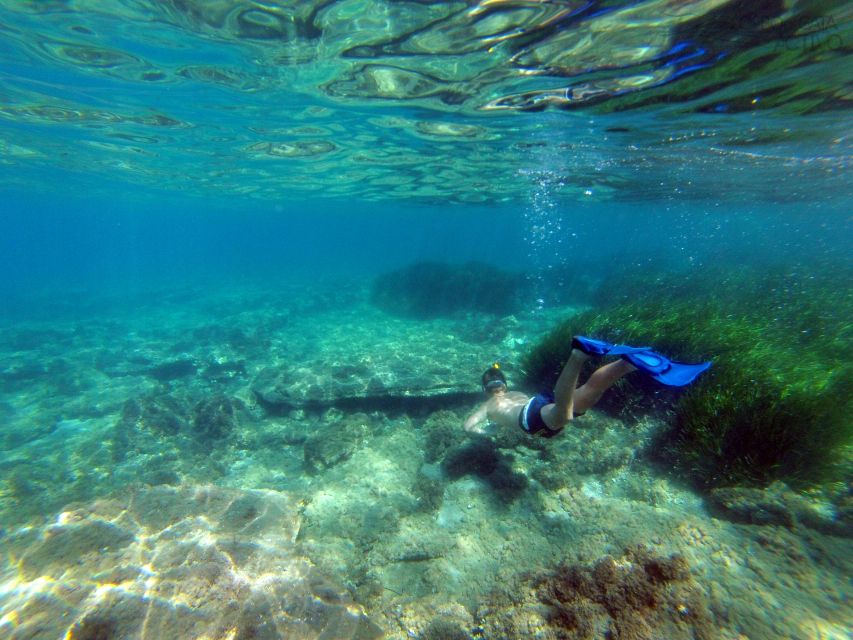
- Snorkel in a marine reserve: Stop at a sheltered cove for swimming, snorkeling, and a closer look at marine life.
- Guides stay involved: English and Spanish commentary covers local wildlife, geology, history, and safety.
- The route follows the wind: Your final meeting point may be La Fabriquilla, Agua Amarga, Cala del Cuervo, or Cala del Embarcadero.
- Good value for active visitors: At $53 per person, the tour includes kayaks, safety gear, snorkeling equipment, water, insurance, and downloadable photos.
Why the coast is better from a kayak
The Cabo de Gata-Níjar Natural Park is one of Spain’s most protected areas, valued for its ecological, geological, historical, and anthropological importance. The sea gives you a fresh view of it. Instead of looking down on the coast from a road or trail, you move beside the cliffs and see how the rock meets the water.
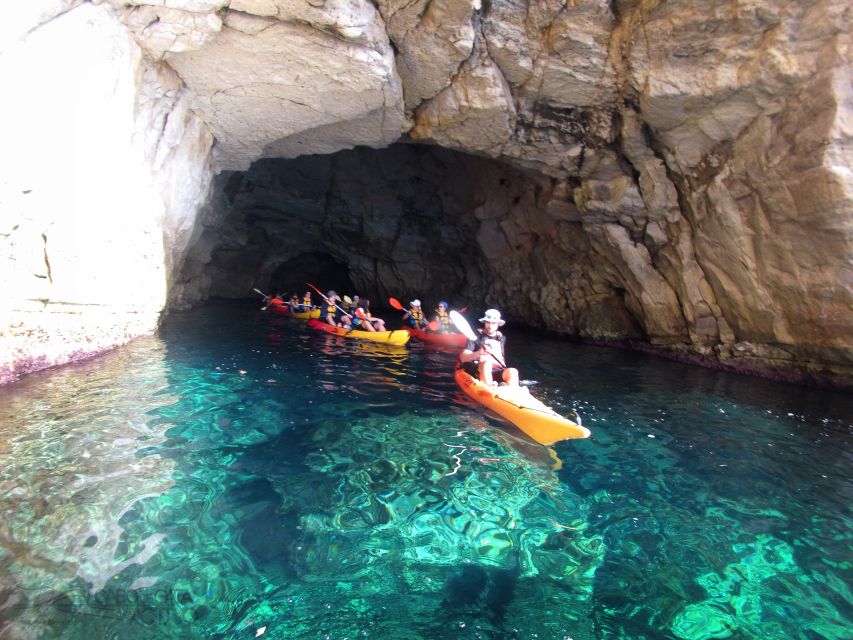
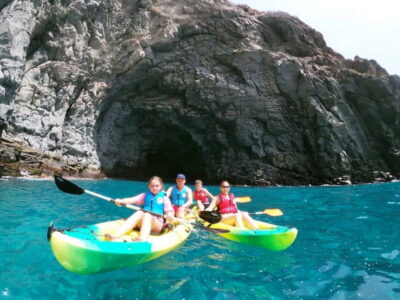
That change in viewpoint is the heart of the trip. You can reach coves that are inaccessible by land, paddle close to sheer volcanic walls, and look into openings in the rock. The guide adds context along the way, explaining the local plants, animals, geology, and the story behind the coast.
This is not a quiet boat ride where you sit back and let someone else do the work. You paddle your own double, triple, or four-person kayak. The pace is guided, and the support boat stays with the group, but your arms still have a job.
For many people, that is the appeal. You get a close, active look at one of Andalusia’s most striking natural areas without needing advanced kayaking skills. Still, three hours on the sea is a real physical outing. If you have never kayaked before, you should be ready for steady paddling, sun exposure, and some effort getting in and out of the boat.
More Kayak and Snorkel Tours in Spain
- Tenerife: Kayak and Snorkel with Turtles, Wetsuits Included
★ 4.6 · 7,215 reviews - Barcelona Costa Brava Kayak, Snorkel & Cliff Jump Day Tour
★ 5.0 · 3,872 reviews - Tenerife: Kayak Safari and Snorkel in a Marine Reserve
★ 4.5 · 3,214 reviews
Starting at Playa de La Fabriquilla
The usual starting point is Playa de La Fabriquilla de Cabo de Gata, but do not treat that as guaranteed. The operator chooses the route according to the wind, and the final location arrives by WhatsApp the day before.
With east wind, the meeting point may be La Fabriquilla or Agua Amarga. With west wind, it may move to Cala del Cuervo in Las Negras or Cala del Embarcadero in Los Escullos. The message from the operator is the one you should follow, not the automatic location sent by the booking platform.
This matters. A change of beach can affect your driving time, parking plan, and the amount of time you need before the start. Enter an active WhatsApp number with the international code when you book, and check the message carefully the day before. If you are visiting from another country, save the location link and compare it with your map before leaving.
The changing start point is not just a nuisance. It lets the crew choose a more sheltered section of coast when the wind shifts. That can make the paddle safer and more pleasant, but it means you need to stay flexible. You are booking a day and time, not one fixed route.
Fifteen minutes of instruction before launch
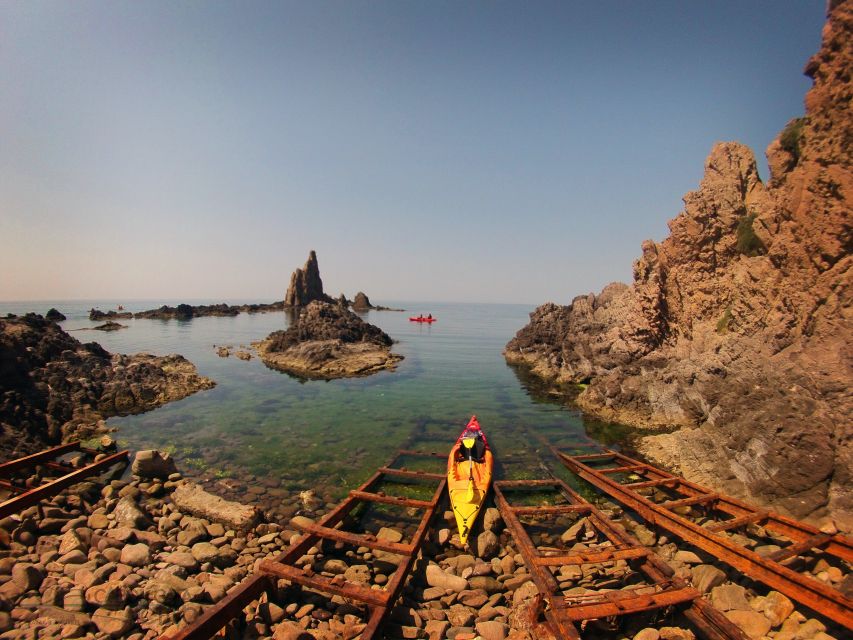
The first part takes about 15 minutes. You learn basic paddling and sea kayaking techniques, hear the safety instructions, and get familiar with the paddle, life vest, and boat.
That short lesson is especially useful if this is your first time in a sea kayak. You will learn how to coordinate with the person sharing your boat and how to follow the guide’s pace. The tour uses double, triple, or four-person kayaks, with a minimum booking of two people.
The support boat is another practical feature. It gives the guides a way to keep the group together and provide help if someone struggles. Several comments about the guides point to careful attention to safety and to people who fall behind. One guide stayed back with a parent and 11-year-old son, while another crew helped a participant whose injury made getting in and out of the kayak difficult.
That does not mean the activity is suitable for everyone. You must be able to swim and paddle. It is not suitable for non-swimmers, pregnant women, people with back or mobility problems, people with certain medical conditions, or anyone with a low level of fitness. The weight limit is 264 pounds, or 120 kilograms.
The first 75 minutes along the volcanic coast
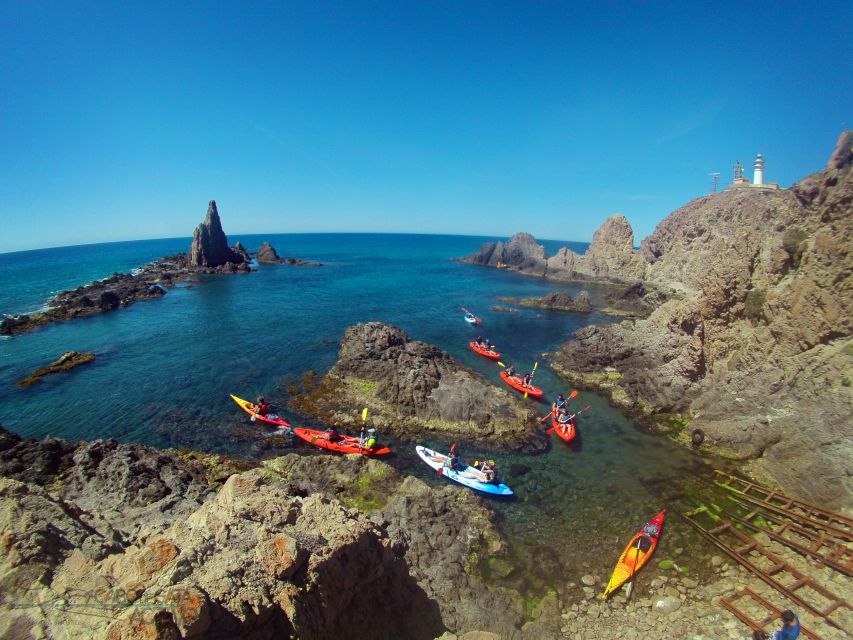
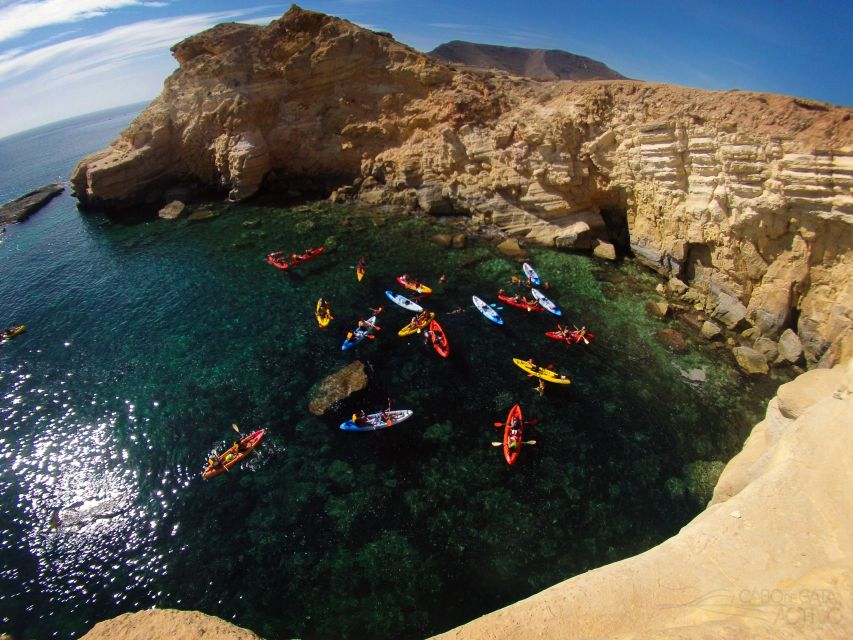
After the briefing, you spend about 75 minutes paddling along the coast. This is the main sightseeing section, with photo stops, guided commentary, views from the sea, and opportunities to watch wildlife.
The exact route depends on the weather and the selected beach, so you should not expect one fixed set of caves or cliffs every time. The basic character remains the same: rocky formations, narrow coves, high volcanic faces, and sections that are difficult or impossible to reach on foot.
The guide points out features of the coast and explains the geology of the park. That commentary gives the rocks more meaning than a simple paddle past them. You are not just looking at a wall of stone. You are learning why the area is protected and how its natural features fit into the wider story of Cabo de Gata.
Caves are one of the most enjoyable parts of the route. The kayaks can move in and out of rocky openings when sea conditions permit. They are not grand show caves with walkways and lights. Expect natural coastal formations viewed from a small boat, with the guide deciding what is safe on the day.
The sea also changes the way you see distance. A cliff that looks modest from a road can feel much larger when you are close to its base. A cove that seems inaccessible from shore may open naturally from the water. I would bring a waterproof phone case if you want your own pictures, but you also receive a downloadable FullHD+ photo album and underwater photographs after the tour.
Same water, a different paddle:
- Ibiza Beach Hopping Cruise with Paddleboards, Drinks and Food 6h
★ 5.0 · 5,588 reviews - Ibiza: Beach Hopping Cruise w/ Paddleboard, Food, & Drinks
★ 4.5 · 3,224 reviews - Nerja: Guided Kayak Tour Nerja Cliffs and Maro Waterfall
★ 4.7 · 2,916 reviews - Barcelona: Costa Brava Kayak, Snorkel & Cliff Jump & Lunch
★ 4.9 · 2,391 reviews
The 30-minute cove stop
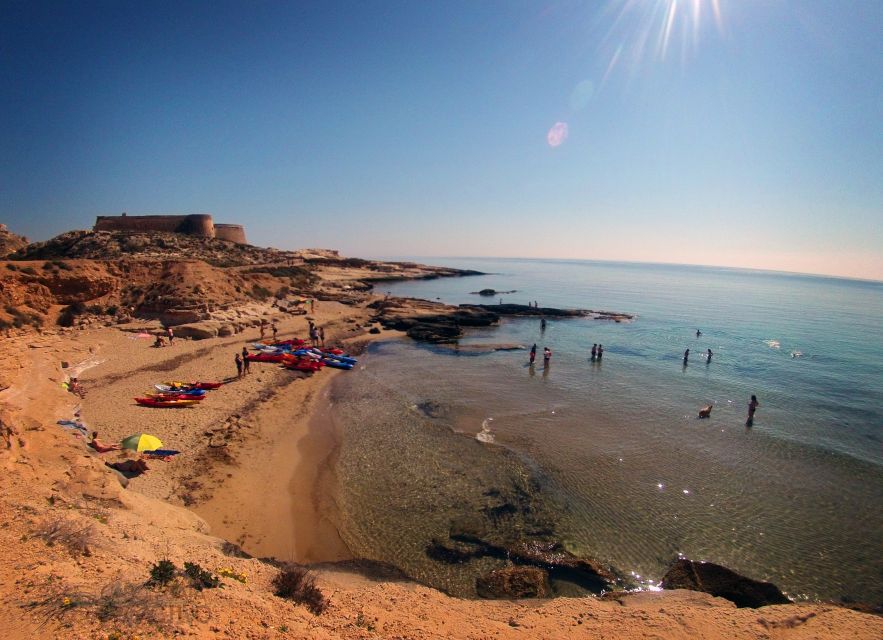
After the first paddle, the group pauses for roughly 30 minutes at a hidden cove in the marine reserve. This is the relaxed middle section, with free time for swimming, snorkeling, photos, and a closer look at marine life.
Goggles and a snorkel tube are included, and you can bring your own equipment as well. Snorkeling depends on sea conditions, so do not book this solely for a guaranteed underwater session. On a calm day, the clear water can make this the most memorable part of the outing. On a windy day, the swimming conditions or visibility may be less rewarding.
The stop also breaks up the paddling. That matters because three hours in a kayak can feel long, especially for a beginner. You can get out of the boat, cool off, and rest your shoulders before the return journey.
Take water shoes. The coves are rocky, and one person hurt a foot after not receiving enough warning about the rocks. Water shoes also make entering and leaving the water more comfortable. Bring a hat, sunscreen, swimwear, and drinking water, although bottled water is supplied.
The underwater photographs are a nice extra. They give you a record of the snorkeling stop without asking you to handle a camera while swimming. You should still see the photo package as a bonus rather than the main reason to book. The quality and number of useful images can depend on visibility, light, and sea conditions.
The final hour back to the beach
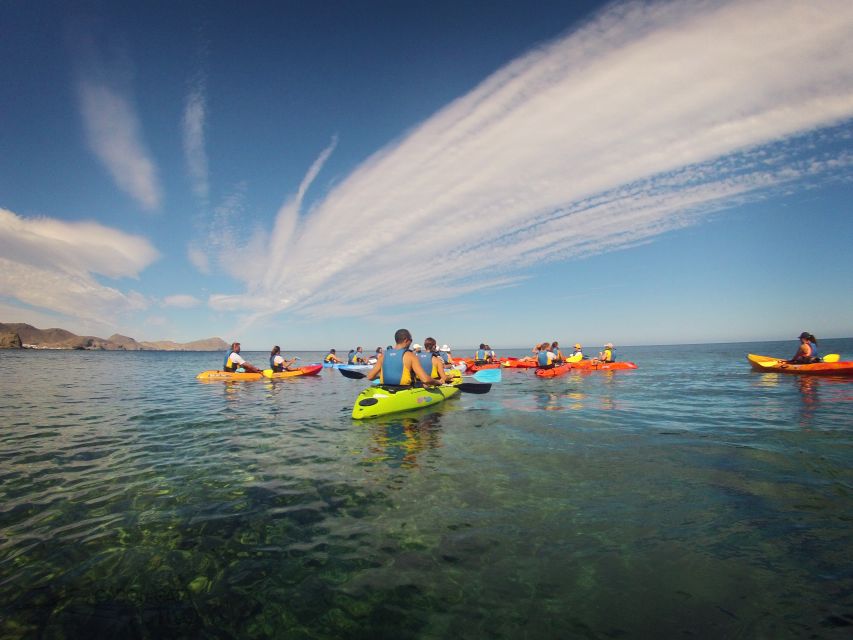
The return paddle takes about an hour. You follow the coast again, with more scenery, wildlife viewing, commentary, and photo opportunities before returning to the starting beach.
This final stretch is where the physical side becomes clearest. At the beginning, the excitement of the cliffs and caves can distract you from the work. After the swim, your arms may feel tired, and the sun can make the last section harder.
The guides generally keep the pace steady and watch the group. If you are new to kayaking, tell the crew early if you are struggling. The experience is easier when the guide knows you need a slower pace or a short break, rather than waiting until you are exhausted.
A steady pace also suits families. Teenagers aged 14 and 17 enjoyed the full three hours, and a parent with an 11-year-old received extra help when they fell behind. The guide’s role is not only to explain the coast. It is also to keep everyone moving safely as one group.
What the guides add
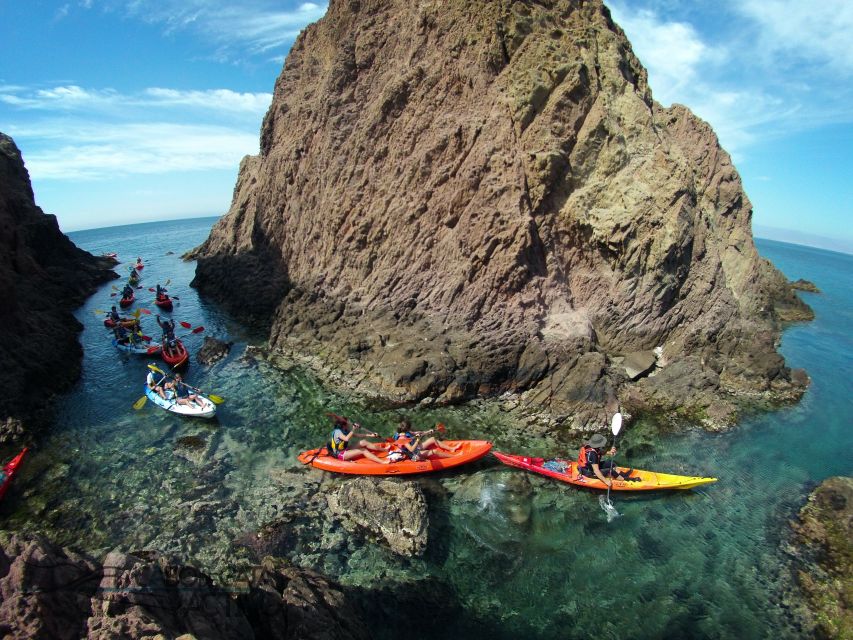
The commentary is available in English and Spanish. Guides such as Jason and Danny have led English-language groups, and both are described as friendly, helpful, and well informed about the area. You can expect information about the coastline, local history, wildlife, and geology rather than a nonstop lecture.
The best guides also make the outing feel human. They answer questions, check that everyone is comfortable, and help new paddlers find a rhythm. One guide even kept the mood light with some playful splashing, which may appeal to families with teenagers but not to anyone hoping for a completely dry outing.
Safety receives repeated attention. The group stays together, the support boat remains nearby, and guides help people who need assistance. That is important on a coastal activity where wind and sea conditions can change. Still, the staff cannot remove the physical demands of kayaking, so you need to arrive prepared.
What $53 includes
At $53 per person, this is a good value if you plan to use the full package. You are paying for three hours of guided activity, not just equipment rental. The price includes:
- Double, triple, or four-person kayak
- Paddle and life vest
- Bottled water
- Goggles and snorkel tube
- Paddling and sea kayaking instruction
- Live commentary in English or Spanish
- Support satellite boat
- Insurance
- Downloadable FullHD+ photo album and underwater photos
The included equipment saves you from arranging a separate kayak rental and snorkeling hire. The guide and support boat also add value, particularly if you are new to sea kayaking.
Transfers are not included. You need to reach the chosen beach yourself, and the route may change the driving distance. Build in extra time and check the WhatsApp location before setting out.
The flexible cancellation policy also helps with planning. You can cancel up to 24 hours before the activity for a full refund, and the reserve-now, pay-later option lets you hold a place without paying immediately.
Who should book this outing
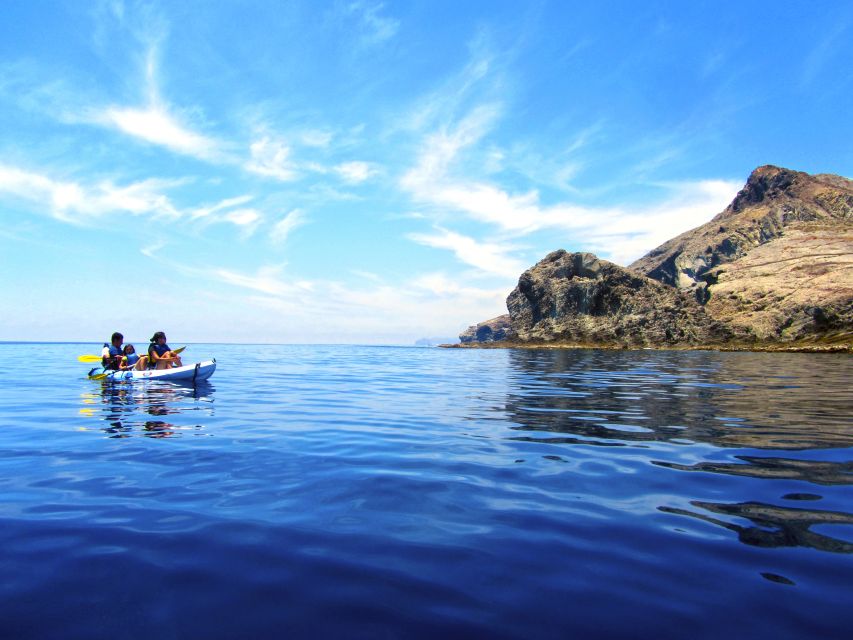
I would choose this for active families, couples, and first-time kayakers who want more than a beach day. It suits people who enjoy scenery, light adventure, swimming, and learning about the place they are visiting.
It is also a strong choice if you want to see Cabo de Gata from a viewpoint that a road trip cannot provide. The caves, cliff faces, and quiet coves feel different from shore, and the snorkeling stop adds variety.
I would think twice if you dislike physical activity, struggle with swimming, have back or mobility problems, or want a completely predictable schedule. The route, beach, and cave access depend on wind and sea conditions. You should also avoid assuming that the three hours will pass as easily as a short boat excursion.
For a first kayaking experience, take the preparation seriously. Wear a hat and sunscreen, bring water shoes, use sun protection, and expect the paddle to require effort. If the operator offers a shorter option on your date, that may be the better fit for a complete beginner or anyone unsure about endurance.
Should you book the Cabo de Gata kayak tour?
Book it if you want an active, well-supported way to see Cabo de Gata’s coast, especially if caves, volcanic cliffs, clear water, and snorkeling appeal to you. The strongest reasons are the sea-level views, the attentive guides, the included equipment, and the support boat.
Skip it if you need a fixed meeting point, cannot swim, or want an easy ride with no physical strain. The shifting route is sensible for safety, but it demands flexible plans. For fit beginners and families with older children, $53 buys a full three-hour outing with useful instruction, local commentary, and photos to take home.
FAQ
Where does the kayaking tour start?
The starting beach changes with the wind. It may be La Fabriquilla or Agua Amarga with east wind, or Cala del Cuervo in Las Negras or Cala del Embarcadero in Los Escullos with west wind.
When will I receive the exact meeting point?
You should receive the exact meeting point by WhatsApp the day before the tour. Use the operator’s message as the correct location rather than the automatic meeting point sent by the booking platform.
How long does the activity last?
The complete activity lasts three hours. This includes a 15-minute safety and paddling briefing, about 75 minutes of coastal kayaking, a 30-minute swimming and snorkeling stop, and about one hour of return kayaking.
Is snorkeling equipment included?
Yes. Goggles and a snorkel tube are included. You may also bring your own snorkeling equipment, but snorkeling depends on the weather and sea conditions.
Do I need to know how to swim?
Yes. You must be able to swim and paddle to join the activity. Non-swimmers cannot take part.
Is the tour available in English?
Yes. The live guide service is available in English and Spanish. English-speaking guides named Jason and Danny have led tours.
What should I bring?
Bring a sun hat, sunscreen, beachwear, and water shoes. Bottled water, a kayak, paddle, life vest, snorkeling equipment, insurance, and downloadable photos are included.
Newest paddling trips we have reviewed in Spain
- Paddle Surf in Cantabria★ 4.5 · 21 reviews
- Kayak Route + Snorkel in Cantabria★ 4.5 · 9 reviews
- Moonlight Kayak with Dinner Included★ 4.5 · 6 reviews
- Route in Kayak Moraira★ 5.0 · 28 reviews
- Paddle Board Paradise: Magical Snorkel & Cave Exploring SUP Tour★ 5.0 · 10 reviews
- Kayak routes through the Coves of Villajoyosa★ 4.5 · 42 reviews
- Small Group Paddle Surf Experience in Benidorm★ 4.0 · 7 reviews
- Kayak route through Cala Granadella★ 5.0 · 27 reviews
Kayak and Snorkel Tours, compared.
Kayak and Snorkel with Turtles, Wetsuits Included
Read our review →
Barcelona Costa Brava Kayak, Snorkel & Cliff Jump Day Tour
Read our review →
Sea Kayaking&Snorkelling Guided Day/Sunset Tours
Read our review →
Costa Brava Kayak, Snorkel & Cliff Jump & Lunch
Read our review →
Kayak & Snorkel with Local Fauna, Photos Included
Read our review →
Half-Day Trip from Key West with Kayaking, Snorkeling & Sunset
Read our review →Browse the lists this tour appears in