
REVIEW · COCOA BEACH KAYAKING TOURS
Bioluminescence Kayak Tour
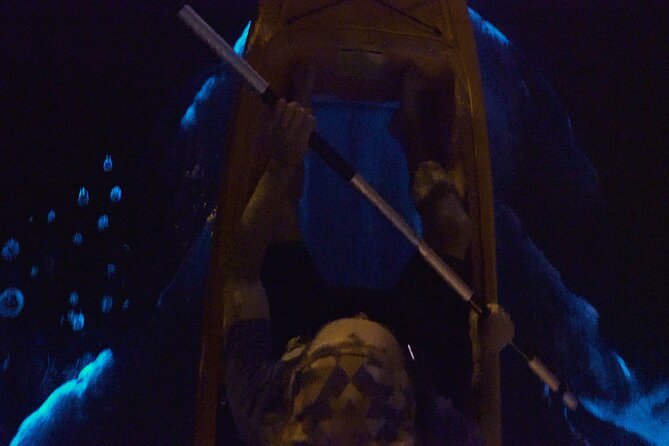
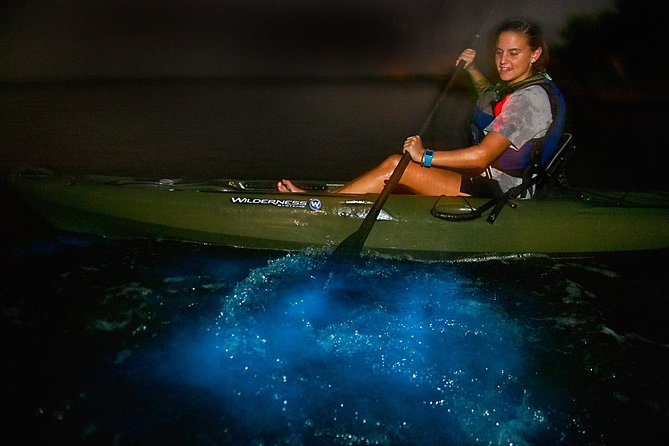
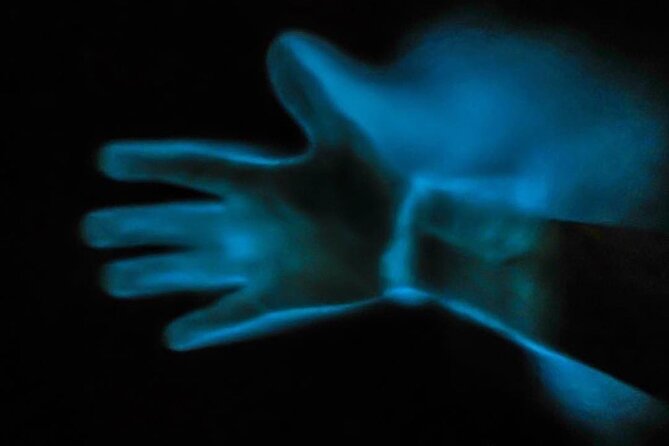
The magic here happens at water level. Near Cocoa Beach, you paddle into the darkness and stir the lagoon with your hands or paddle, watching tiny organisms flash blue-green around you. In cooler months, you may also catch clear comb jellies that glow in your hand but do not sting. I like the close-up wildlife encounters and the way the guides explain the science instead of treating the glow as a simple parlor trick.
I also like that beginners are welcome. Guides such as Aidan, Caleb, Matt, Sean, and Zoey have helped nervous paddlers settle in, and the trip is not especially strenuous. The main drawback is that nature sets the schedule. Bioluminescence can be faint, especially in winter or under local light pollution, so you may spend two hours night kayaking with only a few flashes instead of a glowing lagoon.
Key points to know before you book
- Summer means glowing plankton: Dinoflagellates usually provide the best blue-green, cloudy glow from May through early November.
- Winter means glowing comb jellies: From late November through April, the highlight is often catching harmless, individual jellies.
- You paddle after dark: Expect a calm but unusual outing, with a safety light and flotation device supplied.
- Wildlife is part of the show: Fish, jumping mullet, manatees, and dolphins may appear, but none are guaranteed.
- Beginners can manage it: Guides give paddling help, and several outings have worked well for children and first-time kayakers.
- Bring gear for getting wet: Wear water shoes and clothes you do not mind soaking, then leave a towel and dry clothes in the car.
Why the lagoon glows after dark
This tour takes place around Merritt Island National Wildlife Refuge, near the Indian River and Mosquito Lagoon system north of Cocoa Beach. These protected waters are part of one of North America’s most biologically diverse estuaries, and the darkness lets you notice activity that daylight hides.
In summer, the main attraction is the dinoflagellate. These single-celled organisms emit light when the water is disturbed. A paddle stroke, a fish darting below you, or your hand sweeping through the lagoon can create a brief blue-green flash.
The effect is not always a solid sheet of light. On a strong night, the glow can look like sparks, clouds, or tiny stars scattered through the water. On a weak night, you may see only a few pinpricks. That difference matters, so I would book from May through early November if your main goal is a bright plankton display.
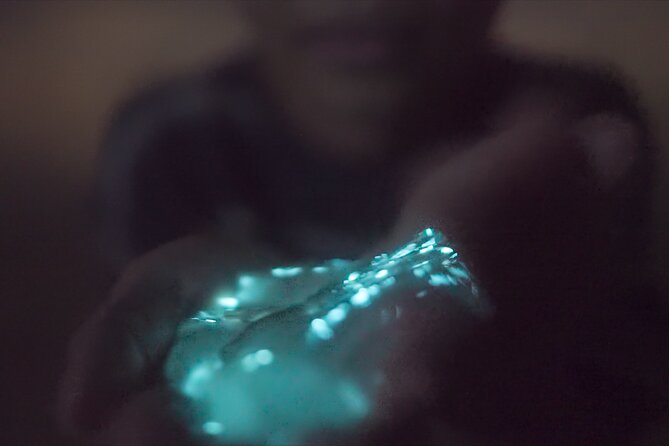
Winter brings a different kind of show. Comb jellies gather in the protected lagoon from late November through April. These clear, rounded animals are not true jellyfish in the way many people imagine, and they do not sting. Guides may use nets so you can look at them closely or briefly hold one in your hands.
If you picture a glowing blue wake behind every stroke, adjust your expectations. The winter display is more about finding individual creatures than lighting up the whole lagoon. Several outings have produced many jellies, while others found only a few. Nature remains in charge.
More Night Kayak Tours in Cocoa Beach
- Bioluminescence Night Kayaking Tour of Merritt Island Wildlife Refuge
★ 4.5 · 605 reviews - Florida Bioluminescence Kayaking Tour (Titusville)
★ 4.5 · 350 reviews - Bioluminescent Clear Kayak Tours in Titusville
★ 5.0 · 321 reviews
From Kiwanis Island to the dark water
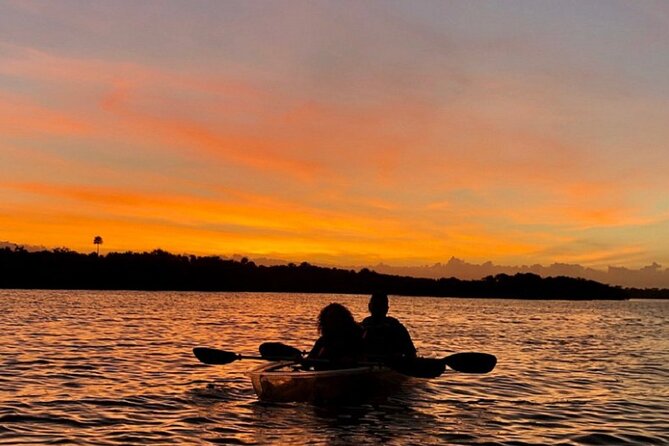
The listed meeting point is 951 Kiwanis Island Park Road in Merritt Island. The tour lasts about two hours and ends where it begins, which keeps the logistics simple if you are staying in Cocoa Beach or nearby.
Allow enough time to find the launch point. One poor outing began with confusion at the meeting area and a delayed start, while another booking had a wrong location in its information. The official meeting point is the address above, but I would still check your confirmation and any last-minute message from the operator before setting out.
At the launch, you receive a kayak, paddle, and personal flotation device. A guide goes over basic paddling and safety instructions before the group leaves shore. This is useful if you have never kayaked. Aidan, in particular, received high marks for helping a nervous first-timer feel ready before entering the water, while Zoey was praised for watching the group’s energy and helping when the water became choppy.
The tour can include up to 42 people, so the feel may vary by departure. A small group can feel calm and personal. A larger group may require more waiting and more attention to staying together. Guides have also handled very small parties, including a trip with only one couple.
What the two-hour route feels like
The first part is practical. You get settled in the kayak, learn how to steer, and begin paddling away from the launch. The water is often calm, but conditions can change. One account described a relaxed float, while another found the paddle longer and rougher than expected.
That is worth noting for older family members or anyone who has not kayaked in decades. Most people can participate, and several children have managed the outing well, including a five-year-old. Still, you need enough mobility to get into and out of a kayak and enough comfort to paddle in the dark.
As the group reaches darker water, the guide begins pointing out signs of life. Jumping mullet can break the surface like small flashes of silver. Fish may streak beneath the boats, and manatees or dolphins sometimes appear close by. One outing included a large manatee surfacing beside a kayak, while another saw dolphins and a huge manatee.
These sightings are bonuses, not promises. You might see only fish, or you might get a memorable encounter with a manatee. The wildlife helps keep the outing worthwhile on nights when the bioluminescence is thin.
The guide also provides the natural history that makes the sight more meaningful. Sean has a talent for explaining the biology in detail, while Caleb has been praised for covering the sea life and local ecosystem in a clear way. Matt has also been singled out for explaining the science behind the glow.
At some point, the guide focuses the group on the bioluminescence. You may be asked to trail a hand in the water, stir the surface with your paddle, or use a net to look for comb jellies. The exact activity depends on the season and what is present that night.
The final portion brings you back to the launch. Since the activity ends at the starting point, you can change into dry clothes and continue your evening without arranging another pickup.
Summer plankton or winter comb jellies?
This is the most important booking choice.
Same water, a different paddle:
- Thousand Island Mangrove Tunnel, Manatee & Dolphin Kayak Tour w/Cocoa Kayaking
★ 5.0 · 923 reviews - Manatee and Dolphin Kayaking | Wildlife Refuge (Titusville)
★ 5.0 · 241 reviews - Wildlife Refuge Manatee, Dolphin & Mangrove Kayak or Paddleboarding Tour!
★ 5.0 · 210 reviews - Dolphin and Manatee Kayak and SUP Adventure Tour of Cocoa Beach
★ 5.0 · 194 reviews
May through early November
Summer is the best period for dinoflagellate activity. Warm water supports the cloudy blue-green effect many people picture when they hear the word bioluminescence.
The display can be strong enough to make every paddle stroke sparkle. One September trip saw an unusually bright show, jumping fish, manatees, and even a special glow described by the guide in scientific terms. A new moon and clear stars can make the sky as memorable as the water.
Summer also has a practical advantage: the water is warmer if you get splashed. You should still wear clothing that can get wet, but the outing may feel more comfortable than a winter paddle.
Late November through April
Winter trips focus on comb jellies. You may catch these clear, harmless creatures in a net and hold them briefly while their internal glow appears. For children and curious adults, this hands-on part can be more memorable than watching plankton flicker at a distance.
The tradeoff is temperature and timing. February can be cold on the water, even in Florida, and late December outings may produce only a few glowing animals. Winter is not a bad time to go, but you should book it for the unusual jelly encounter rather than demand a strong blue-green lagoon.
If you want both kinds of bioluminescence, you would need to return in a different season. There is no single perfect month for every version of the phenomenon.
Guides make a real difference
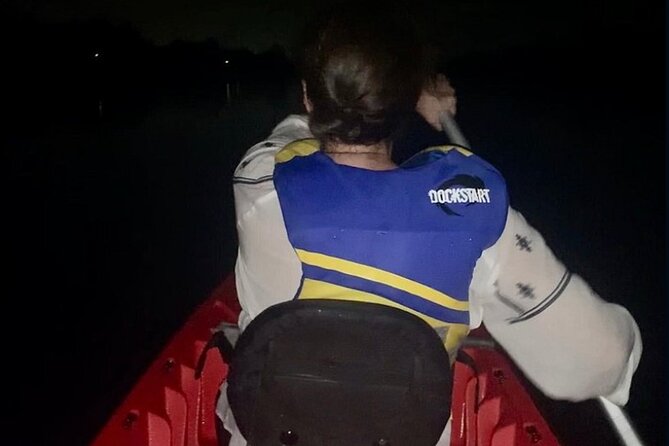
A good night guide does more than lead a line of kayaks. The guide needs to keep the group together, explain what you are seeing, help with paddling, and watch the water and weather.
Several guides have earned particularly strong praise for these jobs. Aidan has helped first-time kayakers feel secure and has been careful about group safety. Caleb has combined wildlife facts with a relaxed pace. Sean has made the biology engaging even for a teenager who did not originally want to go kayaking.
Zoey has also handled small groups with care, including towing a kayak when conditions became harder. Jorge, Lucas, Drew, Jordan, Kurt, Jessie, and Mathew have been noted for humor, local information, and keeping the outing moving.
Guide quality can vary on any operation with several staff members. One poorly run trip involved a late start, weak instructions, and a guide who seemed inexperienced. That appears to be the exception rather than the rule, but it is a fair reason to confirm the meeting instructions and arrive prepared.
How wet and strenuous is the tour?
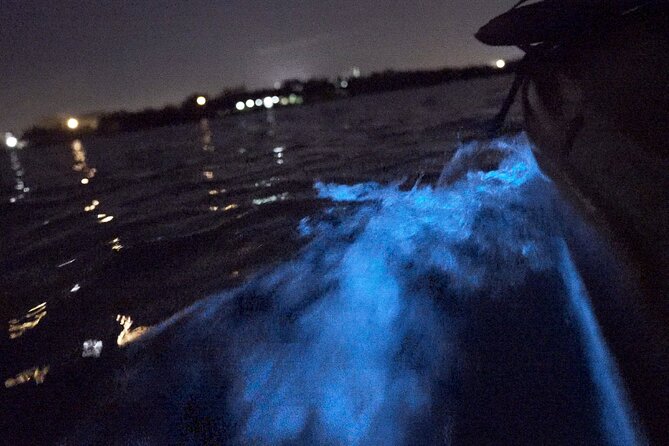
Plan to get wet. The launch and return can splash you, and the water may come over the side of the kayak. One particularly lively outing ended with a clear warning to expect soaking.
Wear a swimsuit or quick-drying clothes beneath a light layer. Water shoes, sandals, or Crocs that can be worn in the water are practical. Leave a towel and a complete change of clothes in your car rather than carrying them on the kayak.
Bring bottled water and snacks if you need them. A dry bag and camera are optional, but ordinary cameras usually cannot capture the glow well. Your camera may be useful for photographing your group, but it is unlikely to reproduce the experience of seeing the light spread around your hands.
A flashlight is allowed, though the operator provides a safety light. Avoid shining a strong beam at other kayakers, since darkness is part of what makes the glow visible.
The paddling is generally low stress, but it is not a passive boat ride. You will need to paddle for much of the two-hour outing, and wind can make the return harder. If your parents or children are joining you, consider their comfort with balance, sitting low, and using a paddle for an extended period.
What does the tour offer for the money?
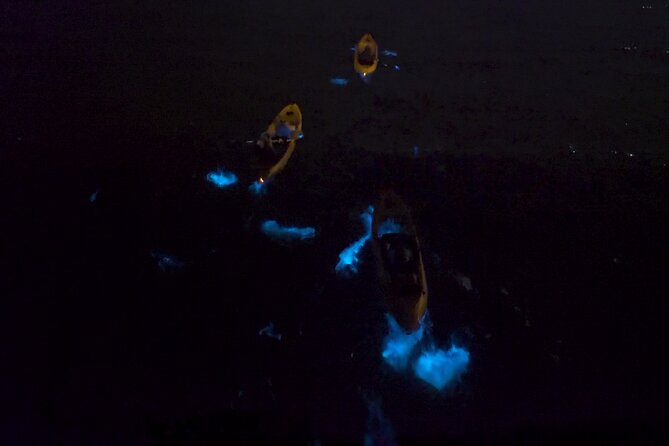
No tour price is provided here, so I cannot judge the exact dollar value. I can judge what you receive: about two hours on the water, a kayak, paddle, flotation device, and professional guide, with the chance to see wildlife and a rare natural event.
That is good value if you treat the outing as a guided night kayak with bioluminescence as the reward. It is weaker value if you view it as a guaranteed light show. A faint night can still offer stars, jumping fish, comb jellies, or a manatee, but the central attraction may be modest.
The high overall rating, 4.8 from 831 ratings, reflects how memorable the best nights can be. It should not hide the basic truth: the natural display changes by season, weather, water conditions, moonlight, and local light pollution.
I would pay more attention to the date than to small price differences. A summer departure gives you the strongest odds of seeing dinoflagellates. A winter departure gives you the best chance to handle glowing comb jellies. If you are flexible, choose the season that matches the sight you want.
Who should book this Cocoa Beach outing?
I recommend it for families with children who can follow safety instructions, couples seeking something different after sunset, and solo visitors who enjoy nature and do not mind joining a group.
It is also a fine first kayak tour. The guide demonstrates what to do, flotation devices are provided, and the paddling is usually manageable. You do not need advanced kayaking skills, but you should be ready for darkness, possible wind, and a wet return.
I would be cautious if you need a fixed, polished schedule or a guaranteed wildlife encounter. One trip began late and felt poorly organized, and another was canceled because of high winds. The operator’s cancellation terms allow a full refund if you cancel at least 24 hours ahead, but changes or cancellations within 24 hours are not refundable. Weather cancellations deserve special attention because one cancellation resulted in a dispute over credit versus refund.
The maximum group size of 42 also matters. If you prefer quiet water and close guide attention, try to choose a smaller departure when the schedule allows.
FAQ
Where does the bioluminescence kayak tour meet?
The listed meeting point is 951 Kiwanis Island Park Road, Merritt Island, Florida 32953. The activity ends back at the same meeting point.
How long does the tour last?
The guided kayak tour lasts approximately two hours.
What kind of bioluminescence can I see?
From May through early November, the main display is usually dinoflagellates, which create a cloudy blue-green glow when the water is disturbed. From late November through April, the focus is often glowing comb jellies.
Do comb jellies sting?
No. The provided tour information describes comb jellies as clear, gentle creatures that do not sting. You may be able to catch and hold them during the winter outing.
Is kayaking experience required?
No. Most people can participate, and the guides provide paddling and safety instructions. The tour is suitable for many beginners, but you should be comfortable getting into a kayak and paddling in the dark.
What should I bring?
Wear clothes you do not mind getting wet and use water shoes, sandals, or Crocs that can be worn in the water. Bring bottled water, snacks, and an optional camera or dry bag. Leave a towel and an extra change of clothes in your car.
What happens if I need to cancel?
You can receive a full refund if you cancel at least 24 hours before the scheduled start time. Cancellations or changes made less than 24 hours before the start are not refundable.
Should you book it?
Book this tour if you want an unusual night on the water and can accept that nature may provide a faint glow instead of a spectacle. I would choose summer for blue-green plankton, winter for hands-on comb jellies, and a smaller departure if possible.
Go prepared to get wet, check the meeting details, and leave your expensive camera expectations at home. With the right timing, a helpful guide such as Caleb, Aidan, Matt, Sean, or Zoey, and a little luck, this becomes one of the more memorable ways to spend an evening around Cocoa Beach.
Newest paddling trips we have reviewed in Cocoa Beach
- Cocoa Beach: Dolphin and Manatee Kayak or Paddle Tour★ 4.3 · 69 reviews
- Bioluminescent Clear Bottom Kayak or Paddleboard Sit-On-Top Kayak Hybrid Tour!★ 5.0 · 109 reviews
- Dolphin and Manatee Kayak and SUP Adventure Tour of Cocoa Beach★ 5.0 · 194 reviews
- Wildlife Refuge Manatee, Dolphin & Mangrove Kayak or Paddleboarding Tour!★ 5.0 · 210 reviews
- Clear Kayak Guided Kayak Tours in Titusville★ 5.0 · 116 reviews
- Clear Kayak Bioluminescence Tour★ 4.5 · 166 reviews
- Bioluminescence Clear Kayak or Paddleboard Tour Near Orlando★ 4.5 · 145 reviews
- Manatee and Dolphin Kayaking | Wildlife Refuge (Titusville)★ 5.0 · 241 reviews
Night and Bioluminescent Kayaking, compared.
Phang Nga Bay Bioluminescent Plankton and Sea Canoes
Read our review →
Night Kayak Tour St. Thomas – Westin Frenchman’s Reef
Read our review →
Hong by Starlight: Sea Cave Kayaking and Loy Krathong Floating
Read our review →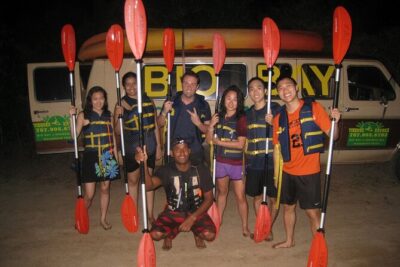

Bioluminescence Night Kayaking Tour of Merritt Island Wildlife Refuge
Read our review →
Browse the lists this tour appears in