
REVIEW · LANGKAWI KAYAKING TOURS
Langkawi : Kilim Geoforest Mangrove Kayak Tour with Lunch
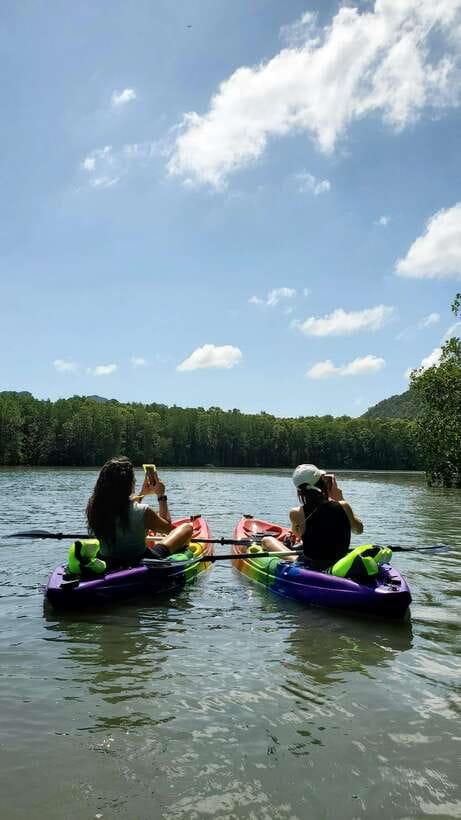
Langkawi’s best wildlife experience may be the one that gets you away from the speedboats. This four-hour trip takes you by short boat ride into the mangroves, then by kayak through narrow channels where larger craft cannot go. You may see eagles, monkeys, mudskippers, monitor lizards, snakes, bats, crabs, and otters, though nature decides the final guest list.
I like the stable sit-on kayaks with back support, especially for first-time paddlers. I also like the tour’s no-feeding approach to eagle watching. You observe animals from a respectful distance instead of helping create the bad habits that can damage the ecosystem.
The main consideration is effort. The tour is beginner-friendly, but paddling can tire your arms, particularly near the end. The lunch is included and well received, though it is simple rather than a full restaurant feast. Guides such as Wan, Sham, Musz, and Wafiq add much of the value with clear instruction, humor, and sharp eyes for wildlife.
Key points to know before booking
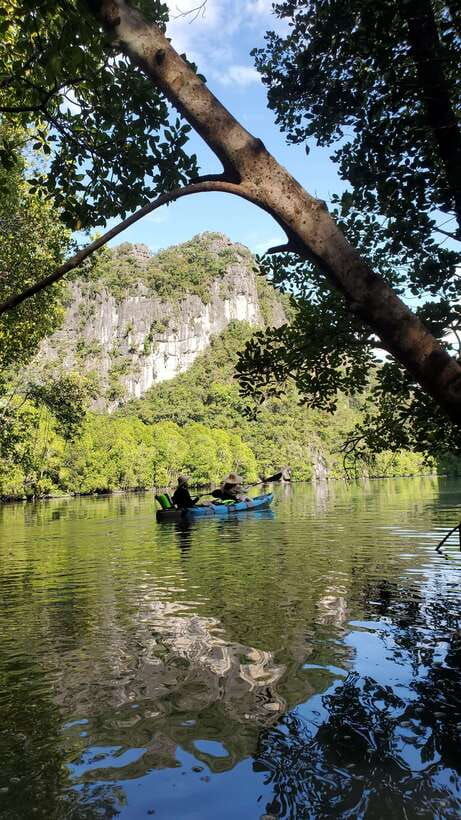
- Kayak where boats cannot go: Narrow mangrove channels give you a quieter, closer look at Kilim Geoforest Park.
- Wildlife stays wild: Eagle watching is done without feeding animals, and you may spot monkeys, bats, snakes, otters, crabs, or monitor lizards.
- Beginner-friendly, not effortless: Stable kayaks and a safety briefing help, but you still need enough stamina for several hours on the water.
- Guides make the difference: Wan, Sham, Musz, Wafiq, and other local guides explain the forest, wildlife, and local culture in English.
- A meal finishes the outing: Lunch or an early dinner is served at a floating restaurant, with simple local dishes and drinking water provided.
- Small groups work best: Groups can be as small as two people and have also been around eight, making the winding channels easier to manage.
Why the mangroves are worth your half-day
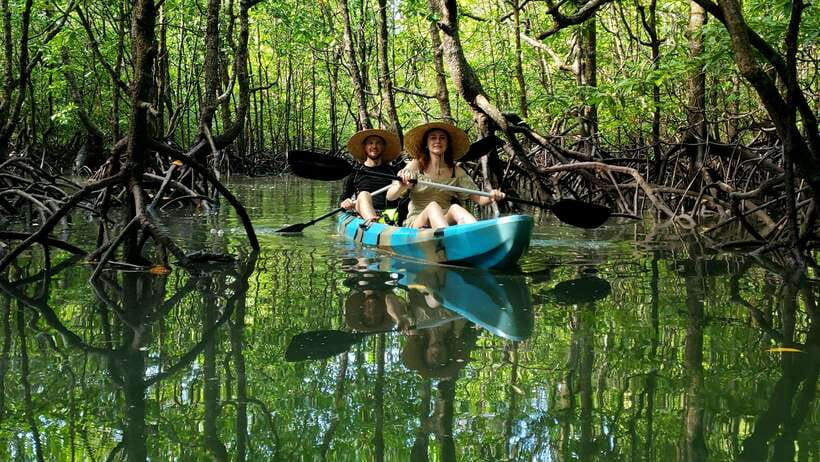
Kilim Geoforest Park is not simply a pretty place to paddle. The mangrove forest protects the shoreline, gives young fish and other creatures shelter, and creates a maze of waterways between Langkawi’s limestone formations. From a kayak, you see this working habitat at water level, not just from a seat on a motorboat.
That difference matters. A boat can cover more ground, but a kayak slips into smaller channels and moves quietly. You may hear water, birds, and paddle strokes instead of a motor. The setting can feel wonderfully still, especially when the group pauses to watch an animal or examine roots and mudflats.
The cliffs add another layer to the trip. Tall limestone walls rise beside the waterways, giving the forest a dramatic frame. The tour is not a rock-climbing outing or a demanding expedition. Its appeal comes from the contrast between calm paddling, dark cave interiors, open water, and sudden wildlife sightings.
You should keep expectations sensible. This is a wild habitat, not a zoo. One group may see several snakes and otters, while another sees mostly eagles, crabs, and fish. The guides are good at spotting small creatures, but no wildlife sighting can be guaranteed.
More Mangrove Kayak Tours in the world:
- Sarasota Guided Mangrove Tunnel Kayak Tour
★ 5.0 · 2,440 reviews - Key West Mangrove Kayak Eco Tour
★ 5.0 · 2,205 reviews - Krabi: Kayak Adventure through Ao Thalane Mangrove Forest
★ 4.6 · 2,024 reviews
Meeting at Kilim Geoforest Park
You meet at Kilim Geoforest Park, at Check Point 1. The practical challenge is finding the right person in a busy park area, so keep your guide’s contact details handy and use the tour’s WhatsApp support if needed. One useful tip is to ask for a photo of the exact meeting point before arrival.
From the meeting area, expect a short walk of roughly 100 meters to the jetty, followed by a brief boat ride to the kayaking hub. This transfer is part of the outing rather than a long sightseeing cruise. It gets you from the park entrance to the floating base where the kayaks and equipment are ready.
Bring only what you need. Oversize luggage, large bags, pets, alcohol, drugs, and red wine are not allowed. You can use the provided waterproof bag or case for small valuables, and some belongings can be left at the kayak base, but I would still arrive with a light day bag.
Getting comfortable in the kayak
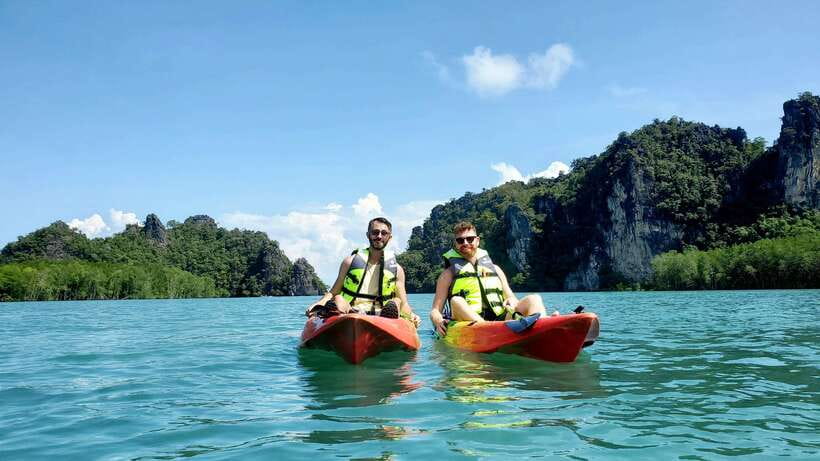
Before paddling, you receive a safety briefing and your equipment. The package includes a kayak with back support, paddle, life jacket, drinking water, a hat, and waterproof storage. The life jackets are described as shoulder-style and are worn from start to finish, which is reassuring when you are moving through unfamiliar channels.
The kayaks are sit-on models. They are stable and easy to maneuver, according to the practical experience described by the guides and participants, but stability does not mean you stay perfectly dry. Wear clothes that can get wet, and pack a change of clothes and a towel.
You do not need advanced kayaking skills. Several guides, including Wan, are used to groups with mixed ability and can show beginners the basic strokes. The first section gives you time to get used to steering and paddling before the route becomes more winding.
Still, do not confuse easy with passive. You will work your arms, and the final part may feel tiring. Normal fitness should be enough, but older people or anyone with limited stamina should think carefully about the four-hour duration. The stated safety limit is under 120 kilograms.
Paddling into the narrow mangrove channels
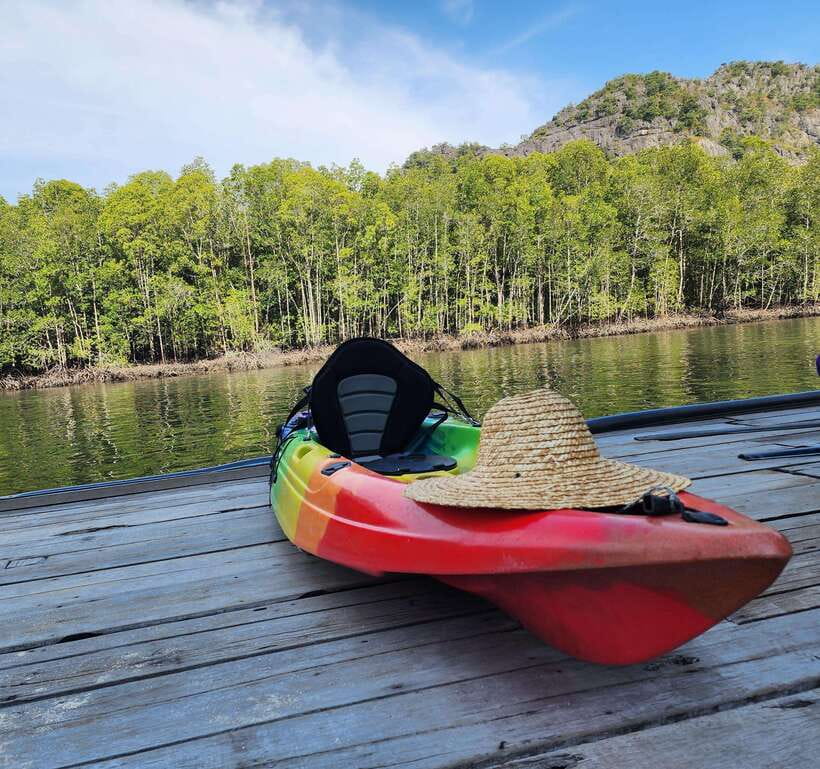
This is the heart of the experience. Once you leave the broader waterway, the kayak can enter channels that larger boats cannot reach. Roots, mud banks, overhanging branches, and shallow water create a more intimate route through the forest.
The guide leads from the front or nearby, keeping an eye on the group and pointing out animals that are easy to miss. A snake resting on a branch, a mudskipper lifting itself from the mud, or a small crab moving between roots can disappear in a second if you are not watching.
This is where a small group helps. A group of eight people using four kayaks is still manageable, while a two-person group can feel almost private. Smaller numbers reduce congestion in the narrow bends and make it easier to stop without blocking the channel.
The guides add context rather than simply naming animals. They explain how the mangroves function, why the forest matters, and how local tourism can either support or harm the area. Guides such as Sham and Musz are especially praised for combining facts with humor and clear English.
More Paddle Days with Lunch in the world:
- Halong Bay Day Tour With Titop Island, Cave, Kayak & Lunch
★ 5.0 · 2,551 reviews - Barcelona: Costa Brava Kayak, Snorkel & Cliff Jump & Lunch
★ 4.9 · 2,391 reviews - Hanoi: Islands & Caves Ha Long Cruise with Lunch & Kayaking
★ 4.4 · 1,317 reviews - Ha Long Bay Cruise Day Tour – Cave, Kayaking, Swimming & Lunch
★ 5.0 · 1,244 reviews
Eagle watching without animal feeding
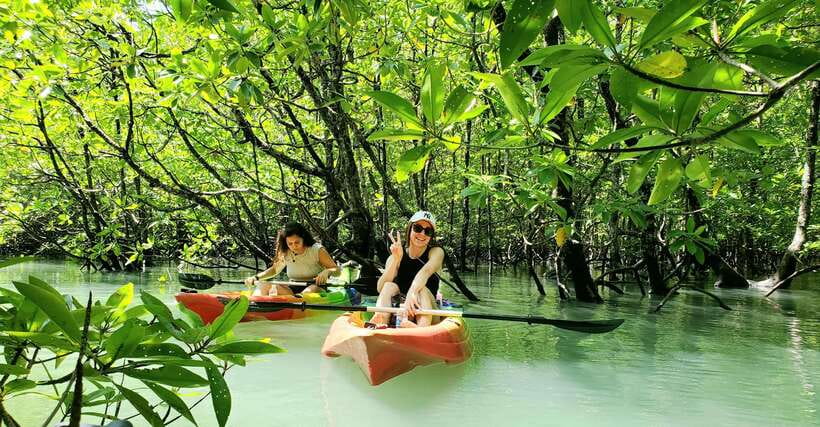
The eagle stop takes you toward more open water. Langkawi is famous for its eagles, and the birds may appear circling above the channels or dropping toward the water. You may also see kites and other birds in the same area.
The important point is that this tour does not feed the eagles. Feeding can alter animal behavior and encourage wildlife to gather unnaturally around boats. Here, you watch from the kayak and allow the birds to behave as wild animals.
That approach may mean the sighting feels less staged. You might not get a close-up view every time, but you get a more honest encounter. The guide can help you locate the birds and give you time to watch before the group moves on.
Bring sunglasses and sunscreen. Even when the mangroves provide shade, the open sections can be bright and hot. Drinking water is included, but I would still treat sun protection as essential.
Wildlife, caves, and the bonus stops
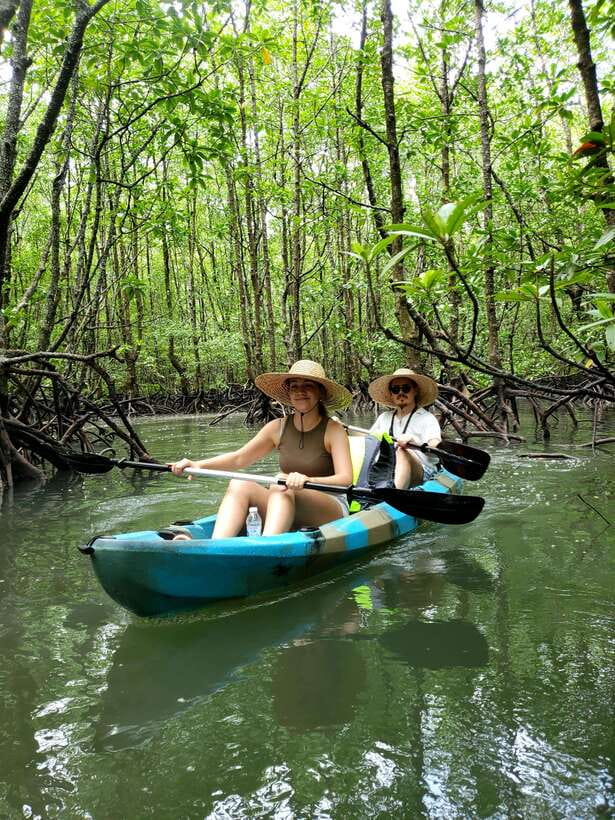
The exact add-on stops can vary, but the bat cave is listed as an optional bonus and appears frequently in the tour experience. The short cave visit offers a change of mood: cool rock, dim light, bats overhead, and limestone formations close at hand.
You may also pass a fishing farm or see animals around the floating restaurant area. Monkeys are a recurring possibility, and guides take care to keep them from bothering the group. Do not feed them or try to touch them. The same rule applies to every animal you see.
Possible sightings include sea eagles, monkeys, monitor lizards, tarantulas, snakes, bats, mudskippers, crabs, fish, and sea otters. Some people see several of these in one trip. Others may have a quieter outing. The guide’s ability to spot wildlife helps, but patience and luck still matter.
The bat cave is not guaranteed as a major scheduled attraction in the same way as kayaking and eagle watching. Treat it as a welcome extra, not the main reason to book.
Lunch at the floating restaurant
After the water activity, you eat at a floating restaurant. It is a sensible finish because a few hours of paddling can leave you hungry, and the meal gives the group time to relax, compare photos, and cool down.
Food commonly includes chicken or vegetable fried rice and tom yam soup, with soft drinks and drinking water available. Vegetarian preferences and spice levels can be accommodated, based on the information provided. The food is generally described as tasty and satisfying, though some diners found it basic.
That is the right way to judge it. You are not paying $59 for a gourmet meal. You are paying for a convenient meal in an unusual setting after an active excursion. The restaurant also adds a view of the waterways and may provide another chance to spot wildlife nearby.
One environmental detail deserves attention. A basin at the restaurant has been noted as draining into the water, with concern about the soap used. The operator’s wider no-feeding policy and conservation message are encouraging, but the restaurant’s washing setup is a fair point to question if environmental standards matter greatly to you.
What the $59 price includes
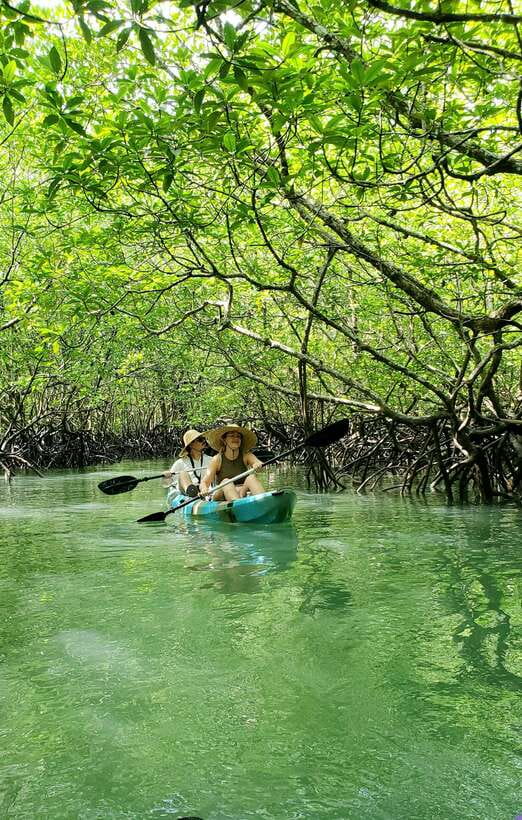
At $59 per person, this is not Langkawi’s cheapest way to see the mangroves. It can still be good value if you want more than a boat ride. The price covers the short boat transfer, guided kayaking, safety equipment, waterproof storage, drinking water, hat, and a meal at the floating restaurant.
It also covers the part that is hard to arrange independently: getting safely into the small channels and having someone identify wildlife and explain the ecosystem. The guide’s skill is central to the value. A quiet paddle without interpretation would be pleasant, but a guide who can point out a hidden viper or explain the role of mangrove roots makes the outing more useful.
Compared with a faster boat tour, this option gives you more physical involvement and access to narrower waterways. Compared with renting a kayak alone, it provides safety support, equipment, local knowledge, and a planned route. You are paying for a half-day activity rather than just boat transport.
Hotel transfers are not listed as standard inclusions, although the operator can arrange them on request for an additional fair price. If you arrive from a cruise ship, allow time to reach the park and confirm where the driver or guide will meet you.
Who should book this experience
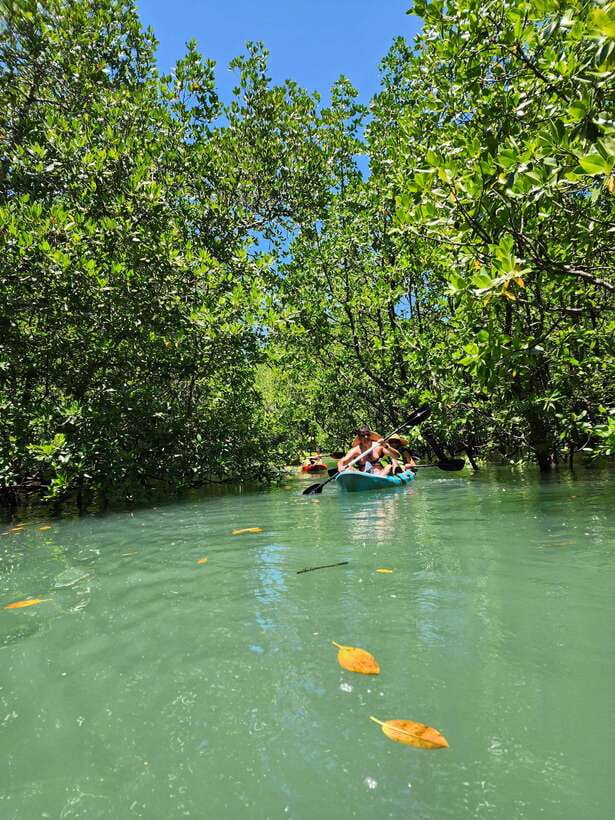
You should consider this tour if you want a nature outing with some exercise and plenty of explanation. It suits beginners, couples, families with older children, mixed-ability groups, and anyone who prefers quiet exploration to a fast ride.
It is particularly good for people who care about responsible wildlife viewing. The no-feeding policy lets you enjoy eagle watching without supporting an artificial spectacle. The guides also talk about keeping the geoforest healthy and, according to the information supplied, the company supports mangrove replanting.
You may want a different activity if you dislike getting wet, cannot paddle for several hours, need wheelchair access, or are looking for luxury dining. Life jackets are not provided for children below three years old, and wheelchair use is not supported. Large luggage cannot come along.
Wear comfortable clothes, insect repellent, sunscreen, sunglasses, and a sun hat. The supplied hat is useful, but bringing your own gives you a better fit. Keep a dry change of clothes in the car or at your accommodation.
The practical verdict
I would book this tour if you want to see Kilim Geoforest Park from inside its mangrove channels rather than only from a motorboat. The strongest reasons are the quiet route, stable kayaks, small-group feel, capable guides, and wildlife policy.
The $59 price makes sense when you use the included equipment, guide, boat transfer, and meal. Just remember that the kayaking takes effort, the food is simple, and wildlife sightings vary. For an active half-day that combines scenery, local interpretation, eagles, caves, and a floating meal, this is one of Langkawi’s better nature choices.
FAQ
Where does the Langkawi mangrove kayak tour start?
The meeting point is Kilim Geoforest Park in Langkawi, Kedah, at Check Point 1.
How long does the experience last?
The tour lasts about four hours, with availability depending on the chosen starting time.
Is kayaking experience required?
No. The activity is described as easy and beginner-friendly, and the guides provide a safety briefing and basic kayak instruction.
What equipment is provided?
You receive a kayak with back support, kayaking equipment, paddle, life jacket, waterproof bag or case, drinking water, and a hat.
Is lunch included?
Yes. Lunch or an early dinner at a floating restaurant is included. Food can include fried rice and tom yam soup, with chicken or vegetable options.
What animals might I see?
Possible sightings include eagles, monkeys, mudskippers, crabs, fish, monitor lizards, snakes, tarantulas, bats, and sea otters. Wildlife sightings are not guaranteed.
Does the tour feed the eagles?
No. The experience follows a no-feeding approach and watches wildlife from a distance.
What should I bring?
Bring sunglasses, sunscreen, insect repellent, comfortable clothes, a towel, and a change of clothes. Wear clothing that can get wet.
Is the tour suitable for children or wheelchair users?
A life jacket is not included for children below three years old, and wheelchair access is not provided. The activity is suitable for people under 120 kilograms.
Newest paddling trips we have reviewed in the world
- Cabo Private Catamaran: Chill Experience with Sup and Float Mat★ 4.5 · 12 reviews
- Park and Paddle Package★ 5.0 · 39 reviews
- Private Kayak Tour in the Venetian Lagoon★ 4.5 · 32 reviews
- Giants Causeway Coast Sea Kayaking★ 5.0 · 12 reviews
- Budva: 2-Hour «Night Lights» Kayak Tour★ 5.0 · 11 reviews
- Skadar Lake on kayaks Experience with Spectacular Views★ 5.0 · 23 reviews
- SUP-board and kayak rental point: from 1 hour to full day★ 5.0 · 8 reviews
- Budva: Kayak & SUP Rental★ 5.0 · 16 reviews
Mangrove Kayaking, compared.
Kayak Adventure through Ao Thalane Mangrove Forest
Read our review →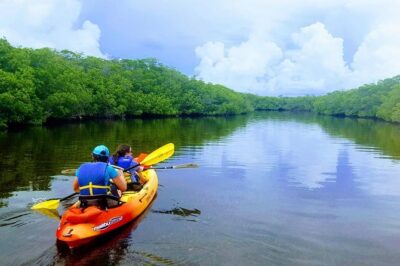
Mangroves and Manatees – Guided Kayak Eco Tour
Read our review →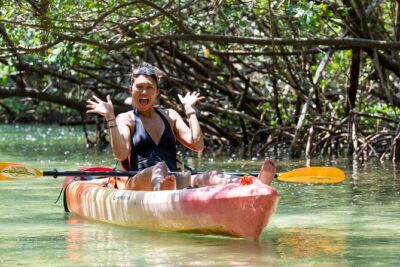
Sarasota Mangrove Tunnel Guided Kayak Adventure
Read our review →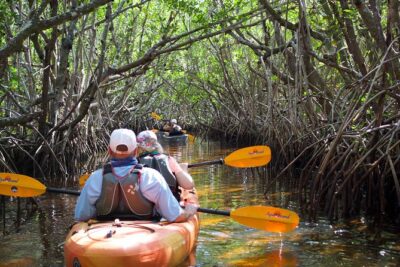
Manatees and Mangrove Tunnels Small Group Kayak Tour
Read our review →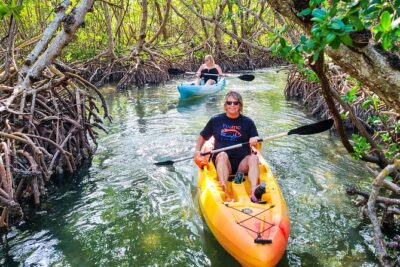
Mangroves, Manatees, and a Hidden Beach: Kayak Tour
Read our review →
Thousand Island Mangrove Tunnel, Manatee & Dolphin Kayak Tour w/Cocoa Kayaking
Read our review →Browse the lists this tour appears in