
REVIEW · NORWAY KAYAKING TOURS
6 Day Fjord Kayaking Trip Norway
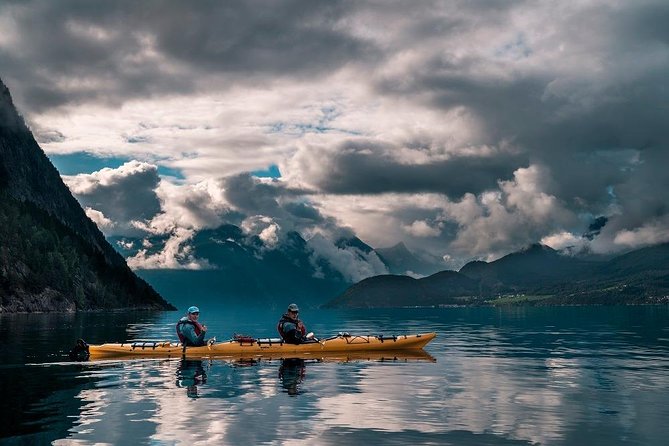
The real draw here is the slow approach to Geirangerfjord by kayak. You leave Ålesund on Norway’s Atlantic coast and work your way inland, trading open water for steep fjord walls, waterfalls, old farms, and quiet camp spots. This is not a quick scenic cruise. You earn the views with several hours of paddling each day.
I like two things right away: the maximum of eight people keeps the trip personal, and the all-in setup removes much of the usual camping fuss. Meals, kayaks, tents, paddling equipment, and an experienced guide are included. The catch is simple: you need solid fitness, swimming ability, and a willingness to help carry boats, pitch tents, and take part in camp chores.
Key points before you book
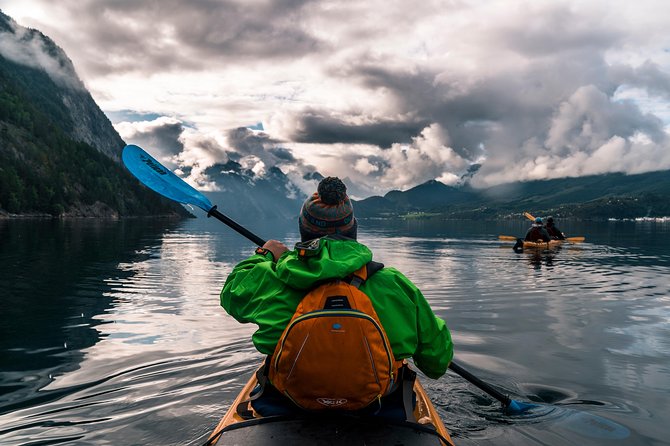
- Paddle from Ålesund toward Geiranger: The route gradually changes from Atlantic coast to narrow, dramatic fjords.
- See Seven Sisters from the water: Geirangerfjord gives you a close view of one of Norway’s best-known waterfall groups.
- Camp for five nights: Camping gear is supplied, but you must bring your own sleeping bag.
- Eat every main meal on the trip: Food begins with lunch on day one and ends with lunch on day six.
- Expect a small international group: The maximum is eight people, which allows the guide to adjust the pace more easily.
- Plan for real physical work: Past trips covered about 100 kilometers, with roughly five hours of paddling per day.
Ålesund is the starting line, not the main event
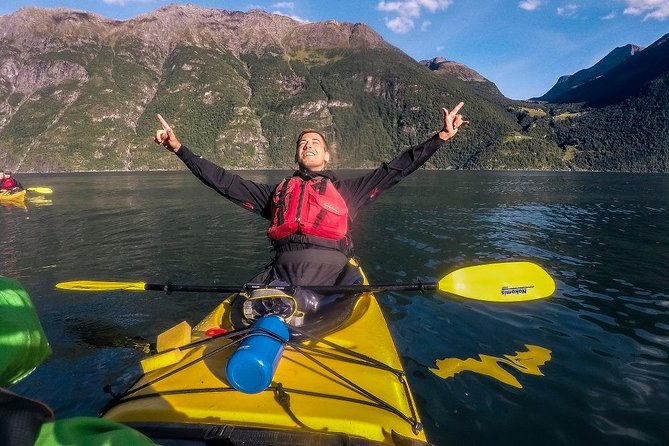
You meet at Volsdalen Camping, Sjømannsvegen 1, in Ålesund at 10:00 a.m. The location is near public transportation, which makes the start fairly practical if you are already in town. You do not need to arrange a separate kayak rental or hunt down a tent before arriving.
The first day includes lunch, then the trip begins its gradual move from the Atlantic coast into the fjords. That change is one of the strongest ideas behind the route. You are not simply dropped at Geiranger for a short paddle. You watch the scenery change over several days as the waterway narrows and the mountains grow more imposing.
The exact day-by-day stopping points are not listed in detail, so you should think of this as an expedition-style route rather than a fixed sightseeing schedule. Weather, wind, waves, and local conditions can affect where you paddle and camp. That flexibility is useful in a place where the water can change quickly, but it also means you should not expect a tightly timed holiday.
Other kayak and canoe trips people book around Norway:
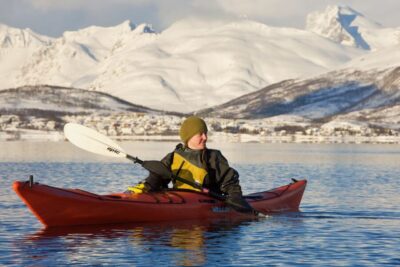
- Tromsø: Winter Sea Kayaking Tour with Wildlife Sightings
★ 4.9 · 591 reviews - Eggum: Lofoten Islands Midnight Sun Kayak Tour
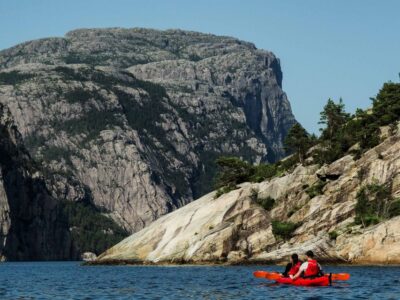
★ 4.9 · 322 reviews - Stavanger: Guided Kayaking in Lysefjord
★ 4.9 · 200 reviews
Storfjord turns kayaking into a moving viewpoint
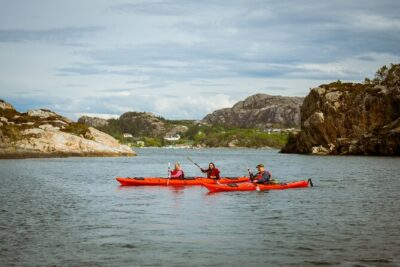
Paddling Storfjord gives you a view that a road trip cannot provide. From a kayak, the water is your path, your resting place, and your viewpoint. You can look back toward the route you have covered, watch the mountains rise beside you, and approach waterfalls without the noise and crowds of a large sightseeing boat.
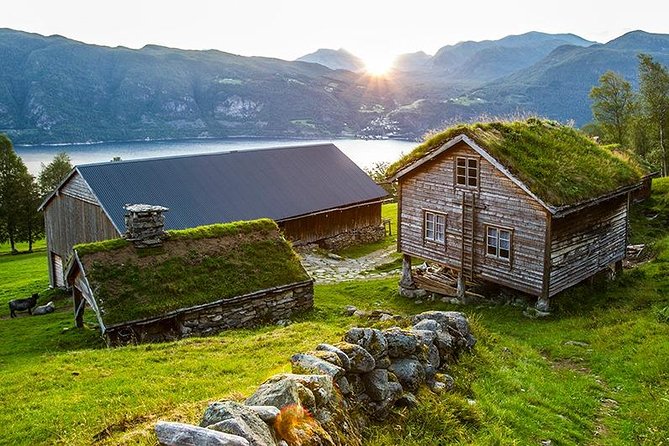
The route is not only about grand scenery. The trip description points to local people, cultural heritage, clean water, and old settlements along the fjords. One past itinerary included Ytste Skotet, a traditional farm and museum high above the water. The exact visit may depend on the day’s route, but the presence of places like this adds useful context. Norway’s fjords are not empty wilderness. People have lived, farmed, and traveled along these steep shores for generations.
You should expect to paddle for hours, with breaks for lunch. One past group covered about 100 kilometers over the six days. That figure gives you a better sense of the commitment than the word adventure alone. You will have time to talk, take photographs, and rest, but this is still an active trip.
Geirangerfjord delivers the biggest scenery
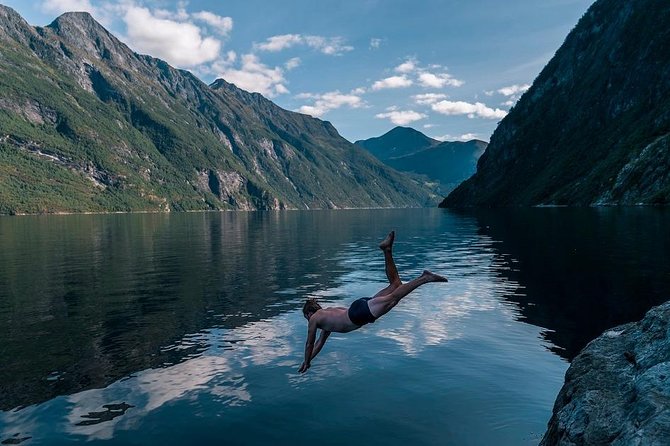
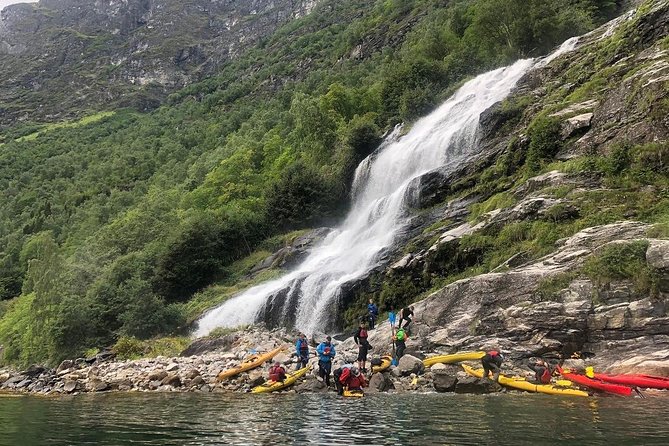
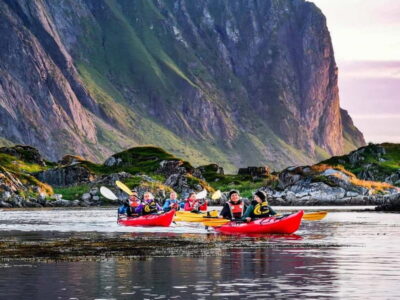
The final approach toward Geiranger is the visual payoff. Geirangerfjord is famous for steep cliffs, green slopes, old farm sites, and waterfalls dropping toward the water. From a kayak, you see the fjord from a low, quiet position rather than from a road or packed deck.
The Seven Sisters waterfall is the signature sight. The falls drop down the mountainside in several separate streams, and seeing them from the water gives you a useful sense of scale. You may also spot wildlife. Past descriptions mention porpoises and sea eagles, though no wildlife sighting can be promised.
Geiranger is also where the route can feel busiest in spirit, even if your exact paddling sections are quiet. The fjord is one of Norway’s most popular scenic areas. The special part of this trip is reaching it under your own power after several days outside, not simply arriving for a short photo stop.
The end-of-route arrangements deserve attention. The information gives Geiranger as the destination, but the meeting-point details also say the activity ends back at the starting point. Transport to and from Norway, travel to Ålesund, and travel from Geiranger are not included. Ask Norway Adventures to confirm exactly where the kayaking finishes and how you should connect onward before paying.
Five nights of camping, with the work shared
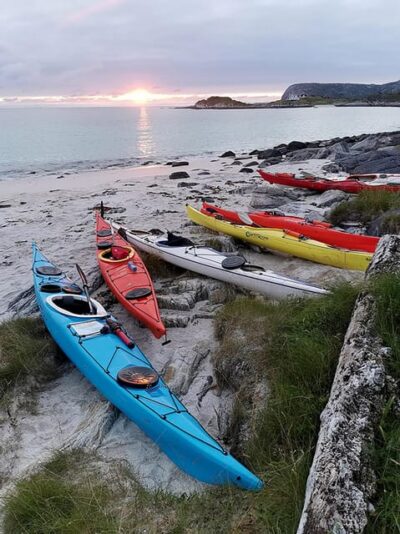
Camping is central to the trip, not just a backup plan. You spend five nights outside, including time on an island, and use the supplied camping equipment. You only need to bring your own sleeping bag.
That arrangement saves you from packing a full expedition kit. The included equipment covers the tent and other camping needs, plus the kayak gear: a single or double kayak, paddle, paddling vest, and waterproof luggage bag. The waterproof bag matters because conditions around a kayak are never perfectly dry, even when the weather is fine.
You should still pack carefully. Your personal gear needs to fit the supplied waterproof luggage bag, and you should expect to handle some of the practical work. Past accounts describe hauling kayaks from the water, setting up tents, and helping with cooking. Those chores are part of the rhythm and help the group function, but they may surprise anyone expecting a fully serviced outdoor holiday.
The camp locations are described as beautiful, quiet, and sometimes remote. That sounds appealing, but remote camping also means fewer comforts. If you need a hotel bed, private bathroom, or easy access to shops each night, this is the wrong format. If you like the simple satisfaction of reaching camp by paddle, it is a strong match.
More Kayaking Trips in Norway:
- Geiranger: Guided Kayak Tour in Geiranger Fjord
★ 4.7 · 192 reviews - Bergen: Øygarden Islets Guided Kayaking Tour
★ 4.8 · 190 reviews - Eggum Lofoten: Kayaking Tour in Lofoten with Snacks
★ 4.9 · 141 reviews - From Tromsø: Sea Kayaking Tour at Sommarøy
★ 4.9 · 115 reviews
Food is a major part of the value
All meals are included from lunch on the first day through lunch on the sixth. You also receive snacks, according to the trip details. That is a practical benefit in a remote setting, since you do not need to carry six days of food or spend time arranging meals between paddling sections.
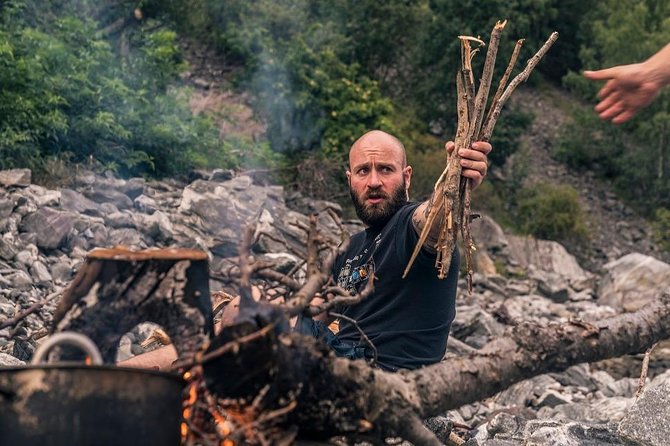
The cooking has received unusual praise for a camping trip. Meals have included tacos, curry, pasta, grilled kebabs, and other hearty dishes. You should not read that as a guaranteed menu, but it does suggest that the food is treated as part of the trip rather than as fuel alone.
You will need to help with some cooking and camp tasks. This is worth considering if you are traveling with a mixed group. A small expedition works best when everyone takes a turn, and the shared jobs can become part of the social side of the trip. Alcoholic drinks are not included, so plan accordingly.
Guides and safety on changing water
The guide is important here. You are not paddling a marked recreational circuit with easy exits at every turn. Wind, waves, cold water, and changing conditions require sound decisions.
The company has used guides including Alex, Nathan, Rogier, Lotte, and Ana on different trips. The guide assigned to your departure may be different, so confirm that before booking if a particular person matters to you. The strongest pattern in the trip feedback is the guide’s role in adjusting the route, giving clear instructions, watching conditions, and keeping the group calm when the water becomes rough.
You must be able to swim and have a strong level of physical fitness. That requirement is not just formal wording. A full day on the water, repeated over several days, places demands on your shoulders, arms, back, and general stamina. You should also be comfortable getting in and out of a kayak, helping move equipment, and camping outdoors.
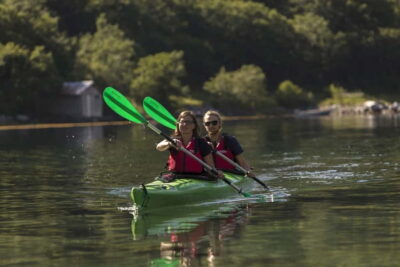
The equipment includes single and double kayaks. A double kayak can make sense if you prefer sharing the paddling work or want a steadier setup. A single kayak gives you more independence. The guide can help determine which option fits your ability and the group.
What the weather can change
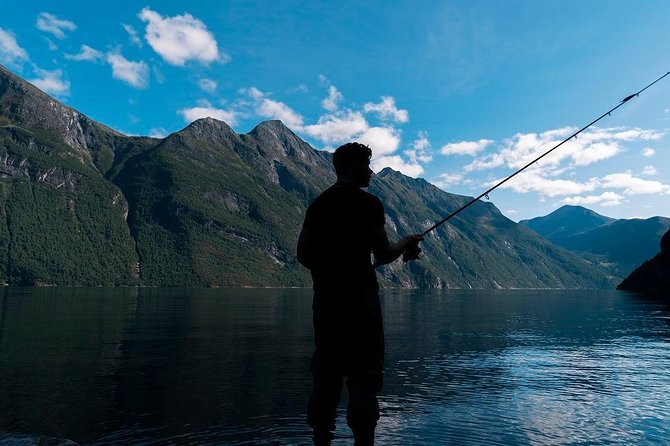
The trip’s best moments depend partly on conditions. Calm water lets you notice reflections, hear waterfalls, and paddle without fighting the kayak. Wind and waves add challenge and can force a change in route or schedule.
Past groups had both nearly perfect weather and periods of wind and waves. The important point is that the trip is not built around guaranteed sunshine. You should bring suitable outdoor clothing and expect wet conditions, even if the forecast looks favorable at the start.
A weather change can also alter the balance between paddling and short hikes. Some groups have included little walks along the route. These breaks add variety, but they are not presented as a formal hiking program with a fixed set of trails.
Is the $2,199.47 price fair?
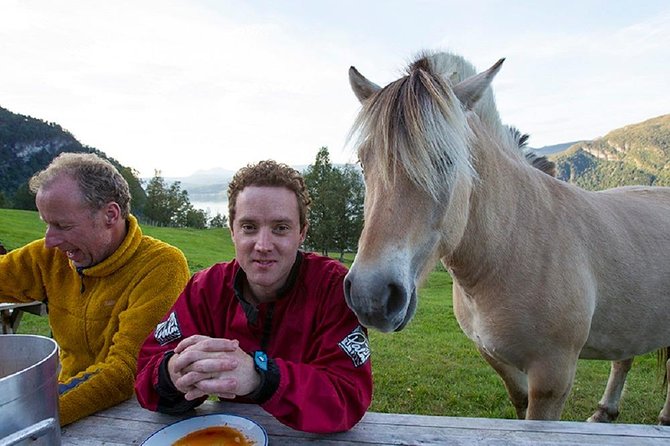
At $2,199.47 per person, this is expensive compared with a day kayak rental or a short fjord excursion. It is also much more than a standard hotel-based sightseeing tour.
The price makes more sense when you count what is included: five nights of camping, all camping equipment except your sleeping bag, every meal from lunch on day one to lunch on day six, kayak and paddling equipment, snacks, and a guide for the full trip. You are also paying for route planning, safety management, food logistics, and access to places that are difficult to reach without specialist equipment.
The small group improves the value. With only eight people at most, the guide can pay closer attention to ability and conditions than on a large commercial outing. You also get a more social trip, with the same group sharing meals, paddling, and camp work for nearly a week.
Still, the value depends on what you want. If your goal is to see Geirangerfjord with minimal effort, a boat trip or short excursion will cost less and suit you better. If you want a physically demanding route that combines kayaking, camping, local culture, and several days of outdoor life, the price is easier to justify.
Who should choose this six-day expedition?
You are a good fit if you:
- Can paddle for several hours a day
- Are comfortable sleeping in a tent for five nights
- Can swim
- Have strong general fitness
- Enjoy changing plans when weather requires it
- Are willing to help with boats, tents, cooking, and camp work
- Want quiet fjord scenery rather than a quick sightseeing stop
You should think twice if you have limited fitness, dislike wet weather, need private accommodation, or want a fixed schedule with guaranteed stops. The tour is also not ideal if you want to travel independently each day. The group shares the route and the daily routine.
The experience is particularly well suited to people who like the process as much as the destination. Reaching Geiranger matters, but so does the paddle toward it, the evening camp, the conversations, and the gradual change from coast to fjord.
Practical details worth checking
The activity is offered in English, and confirmation is provided at booking. It is generally suitable for people who can reach the start near public transportation.
The advertised duration is about five days and five hours, while the name describes it as a six-day trip. That reflects the lunch-to-lunch structure, but you should confirm the exact start and finish times.
This booking is non-refundable and cannot be changed after purchase. The trip also needs a minimum number of people to operate. If that minimum is not met, Norway Adventures says it will offer another date or experience, or provide a full refund.
Because transport from Geiranger is not included, confirm the final meeting point and onward travel plan before booking. This is the one logistical detail I would not leave vague.
Should you book the Ålesund to Geiranger kayak trip?
Book it if you want a real outdoor expedition through western Norway, not a soft sightseeing holiday. The combination of small-group guiding, included food and equipment, island camping, cultural stops, and a gradual paddle into Geirangerfjord gives the trip a clear sense of purpose.
I would especially recommend it to fit hikers, paddlers, couples, families with older active children, and friends who enjoy sharing camp duties. I would not recommend it to anyone hoping for luxury, a guaranteed weather window, or an easy way to see the fjords.
Before you commit, confirm the exact finish in Geiranger, ask which guide is assigned, and make sure your fitness matches several hours of paddling per day. If those points work for you, this is one of the more personal ways to experience Norway’s fjords, with the scenery arriving slowly and honestly, one paddle stroke at a time.
FAQ
Where does the kayaking trip start?
The trip starts at Volsdalen Camping, Sjømannsvegen 1, 6008 Ålesund, Norway. The scheduled start time is 10:00 a.m.
Where does the route go?
The route begins around Ålesund and heads through Storfjord and Geirangerfjord toward Geiranger village. The trip includes views of waterfalls such as the Seven Sisters.
How long does the activity last?
The stated duration is approximately five days and five hours, and the trip is described as a six-day kayaking expedition. Meals run from lunch on day one through lunch on day six.
What camping equipment is provided?
Five nights of camping and all camping gear are included. You need to bring your own sleeping bag.
What kayaking equipment is included?
You receive a single or double kayak, paddle, paddling vest, and waterproof luggage bag.
Do I need to be fit and able to swim?
Yes. You need a strong physical fitness level, and every participant must be able to swim. Past trips included about five hours of paddling per day and roughly 100 kilometers in total.
Is transport to and from the kayaking route included?
Travel to Norway and to Ålesund is not included. Travel from Geiranger is also not included. The meeting-point details should be confirmed directly because they also state that the activity ends back at the meeting point.
Newest paddling trips we have reviewed in Norway
- Sea Kayaking Rental★ 5.0 · 40 reviews
- Guided Kayak Tour Bergen★ 5.0 · 108 reviews
- Vossevangen: Nærøyfjord Full-Day Guided Kayaking Trip★ 4.5 · 17 reviews
- Kayak Tour with Waterfall Views in Geiranger★ 4.5 · 45 reviews
- 3-Hour Kayak Tour in Åndalsnes★ 5.0 · 6 reviews
- 2-Hour Guided Kayak Experience in Geiranger★ 4.5 · 14 reviews
- Seakayak And Hike in Ålesund★ 5.0 · 11 reviews
- Svolvaer: Sea Kayaking Experience★ 4.8 · 25 reviews
Norway Kayaking Tours, compared.
Winter Sea Kayaking Tour with Wildlife Sightings
Read our review →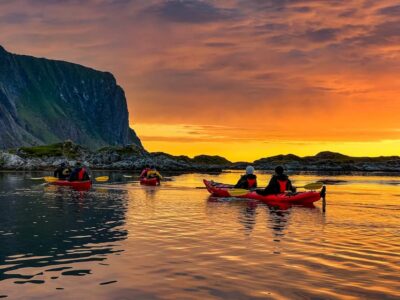
Browse the lists this tour appears in